

Search is no longer just about earning a blue link.
Someone can now ask ChatGPT, Perplexity, Gemini, or Google a question and get an answer without scrolling through ten search results first. Sometimes that answer includes a handful of cited sources. Sometimes one brand gets mentioned directly.
That changes what it means to be visible.
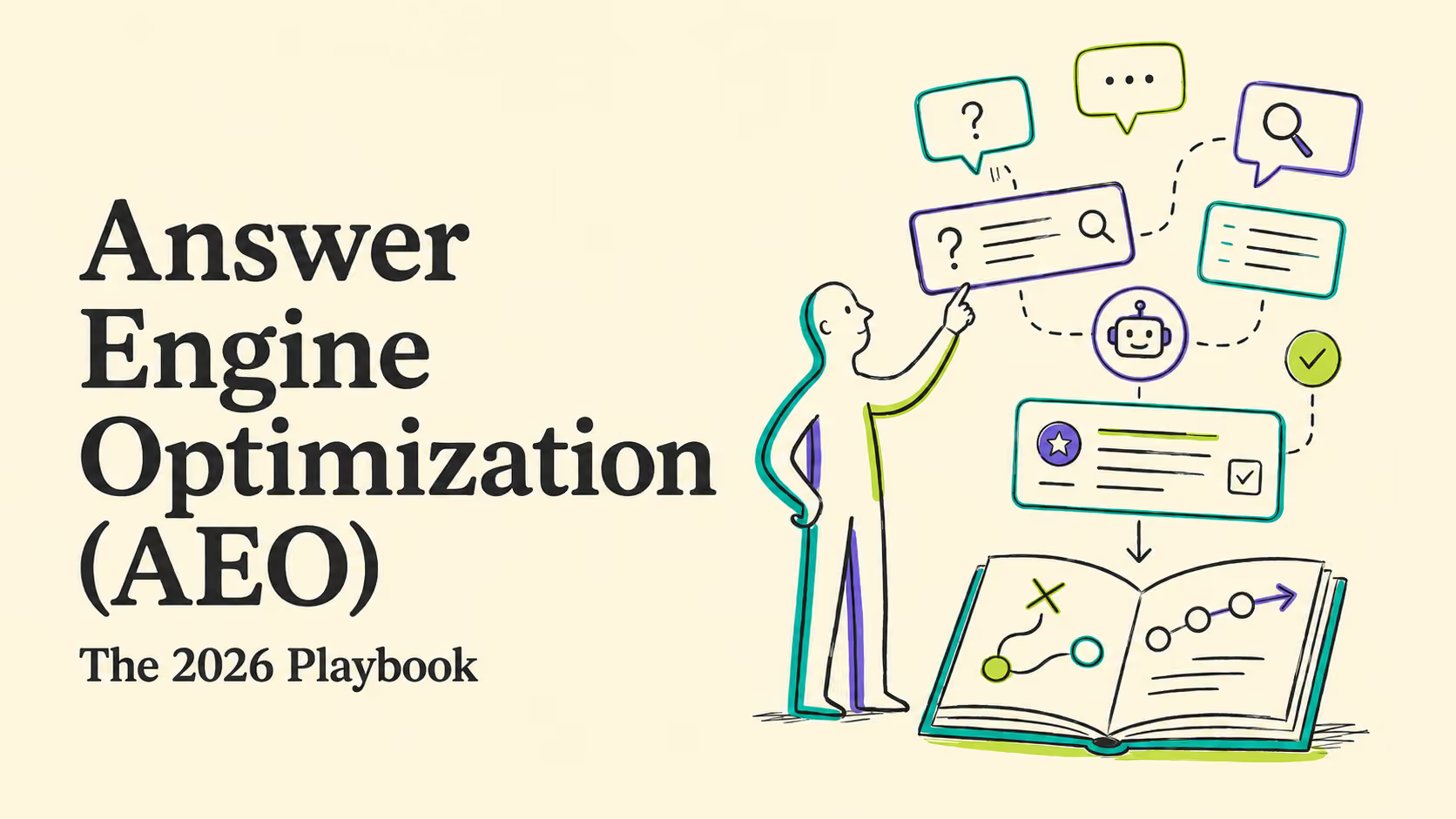
Answer engine optimization (AEO) is the practice of writing and structuring content so AI-powered search and answer engines can understand your page, extract a useful answer from it, and ideally cite your brand as the source.
The goal is not to write for robots. In fact, most good AEO practices make content better for humans too. Clear answers, useful headings, credible evidence, logical structure, and accessible pages help both.
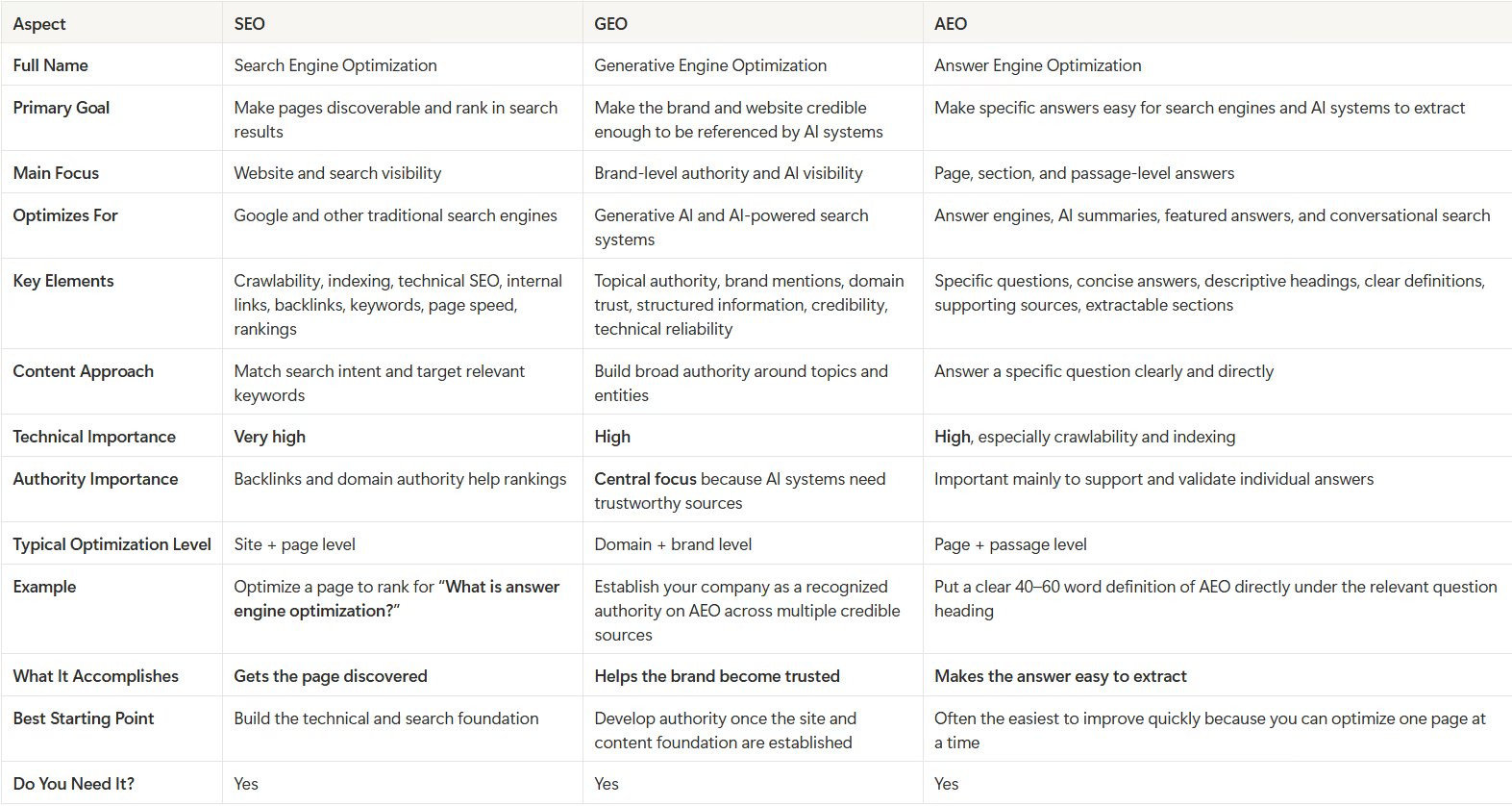
If you have also come across the term generative engine optimization (GEO), the difference is mostly about scope.
GEO is the broader strategy of making your brand visible and trustworthy across generative search systems. AEO is more tactical. It is what you do on individual pages and passages to make them easier to use as answers.
Cromojo's guide on building a website that AI wants to cite explores the wider trust and visibility side of that equation.
This guide focuses on execution.
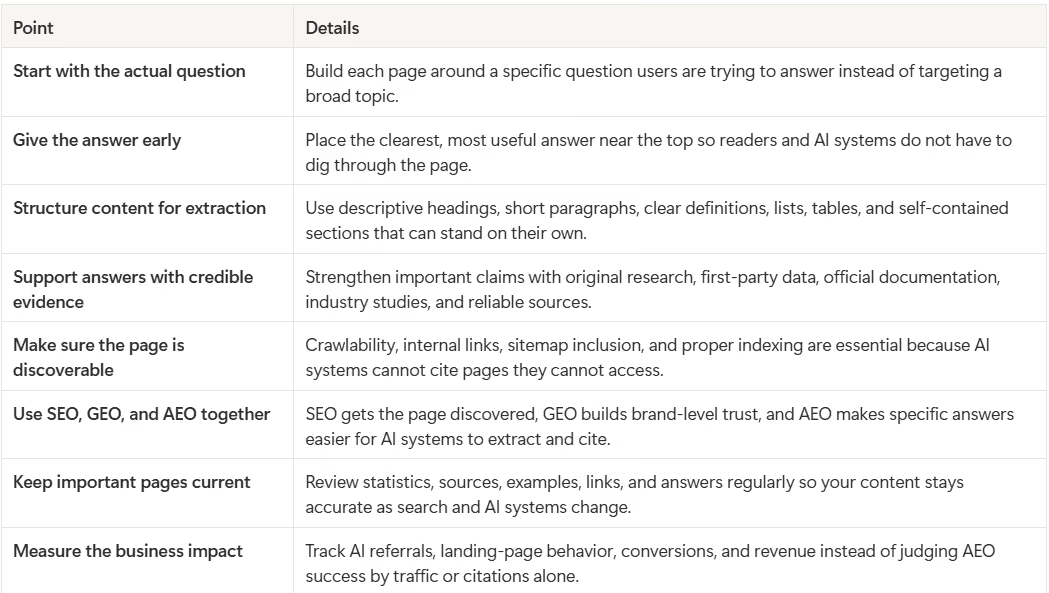
Key Takeaways
Answer engine optimization works best when content is easy to discover, understand, extract, verify, and cite, while still being genuinely useful to human readers.
What Is Answer Engine Optimization?
Answer engine optimization is the process of structuring web content so search engines and AI assistants can easily identify, understand, and surface a direct answer to a user's question.
That is the simplest definition.
Traditional SEO often asks:
How do we get this page to rank?
Answer engine optimization adds another question:
If an AI system reads this page, can it quickly identify the answer worth quoting?
That difference matters.
A search results page gives users a list of options. An AI answer often compresses those options into a single response. Your page may be one of several sources behind that response or it may never appear at all.
In other words, earning a citation is becoming its own form of search visibility.
Adobe's data also shows why those visitors matter. Earlier in 2025, AI-referred retail traffic generally converted below other traffic sources, but the gap kept narrowing. By October 2025, Adobe reported that visitors arriving from generative AI sources were 16% more likely to convert than visitors from non-AI sources.
That suggests an important shift: AI referrals may represent a smaller share of traffic today, but the visitors who do click through can arrive with more context and stronger intent.
What Is the Difference Between AEO, GEO, and SEO?
SEO builds discoverability
Search engine optimization is the foundation. It covers things such as:
- crawlability
- indexing
- technical site health
- internal linking
- backlinks
- keyword relevance
- page speed
- search rankings
Without these fundamentals, your content may never become discoverable in the first place.
If indexing is already a problem, start with Cromojo's Complete Guide to Google Indexing.
GEO builds AI visibility at the brand level
Generative engine optimization is broader.
It looks at whether your website and brand are credible, understandable, well-connected, technically reliable, and authoritative enough to become a source for generative AI systems.
Think domain-level trust, topical authority, brand mentions, structured information, and overall AI readiness.
AEO makes individual answers easy to extract
Answer engine optimization happens closer to the page and passage level.
It includes:
- targeting specific questions
- giving concise answers
- using descriptive headings
- defining terms clearly
- supporting claims with sources
- organizing information into extractable sections
- keeping pages crawlable and indexed
A simple way to think about it is:
SEO gets the page discovered. GEO helps the brand become trusted. AEO makes the answer easy to extract.
You need all three.
The good news is that AEO is often the easiest place to start because you can improve one page at a time.
The 2026 Answer Engine Optimization Playbook
Step 1: Start With the Actual Question
Do not begin with a broad topic.
Begin with the question someone is trying to answer.
A page called:
“Marketing Analytics Guide”
is much less specific than:
“How Do You Measure Revenue From AI Search Traffic?”
The second gives both the reader and the answer engine a clearer idea of what the page is supposed to resolve.
Before writing, ask:
What is the single most important question this page should answer?
Then make that question obvious in the title, introduction, or headings.
You can still cover related subtopics. But there should be a clear central question holding the page together.
Step 2: Give the Answer Early
Do not make readers or AI systems dig through six paragraphs before reaching the point.
After asking a question, answer it directly.
For example:
What is answer engine optimization?
Answer engine optimization is the practice of creating and structuring content so AI-powered search systems can easily understand, extract, and cite your answer.
Then expand.
Explain the context. Add examples. Introduce nuance. Support the answer with evidence.
But give the reader the useful version first.
This is one of the simplest AEO improvements you can make to existing content.
Take a page with a 300-word introduction and ask yourself:
Could the main answer be moved into the first 50 words?
Often, it can.
Step 3: Use Headings That Reflect Real Questions
Good headings do more than break up a page visually. They tell search systems what the section underneath is about.
Whenever it feels natural, use question-based headings such as:
- What is answer engine optimization?
- How does AEO work?
- Is AEO different from SEO?
- How do you optimize content for AI answers?
- How do you know if AEO is working?
You do not need to turn every heading into a question. That quickly becomes repetitive.
The goal is simply to make the relationship between a question and its answer obvious.
Descriptive headings also make long pages easier to scan for human readers, which is reason enough to use them.
Step 4: Make Important Passages Stand on Their Own
An answer engine may not interpret your article from beginning to end the way a human reader does.
It may retrieve one relevant section.
That means important paragraphs should make sense even when separated from the rest of the article.
Avoid writing things like:
“As mentioned above, this is why it matters.”
Instead, be specific:
“Fast indexing matters for answer engine optimization because a page cannot become a useful search or AI source until crawlers can discover and process it.”
The second sentence carries its own context.
This does not mean repeating your keyword in every paragraph. It means reducing vague references and making your ideas easier to understand independently.
Step 5: Support Claims With Evidence
If you want your page to become a source, treat it like a source.
Instead of writing:
“AI search traffic is more valuable.”
write something closer to:
“Adobe reported that generative AI referrals to U.S. retail sites were 16% more likely to convert than non-AI traffic in October 2025.”
Specificity creates credibility.
Where appropriate, support claims with:
- original research
- industry studies
- first-party data
- named experts
- government publications
- official documentation
- transparent case studies
Do not add statistics simply because they look authoritative. Use numbers when they genuinely help answer the question.
Your source quality matters too.
A clearly sourced fact from the organization that produced the data is more useful than a vague statistic copied from another blog that copied it from somewhere else.
Step 6: Build Useful Internal Links
Answer engine optimization does not happen on isolated pages.
Internal links help users explore related questions while giving crawlers clearer paths through your content.
For example, if your AEO article discusses indexing, do not explain the entire indexing process again. Point readers toward a deeper resource.
Cromojo has a detailed guide on how to check whether your website is indexed by Google.
If the issue is poor organic visibility rather than simply checking index status, see Why Your Content Isn't Ranking (And It's Not What You Think).
The important part is context.
Do not add ten internal links just to increase your link count. Link when another page genuinely answers the reader's next question.
That creates a useful content network rather than a collection of disconnected articles.
Step 7: Make Sure the Page Is Actually Indexed
You can write the clearest answer on the internet and still get nowhere if crawlers cannot find the page.
Publishing is not the same as indexing.
A URL can exist on your website without being properly discovered or retained in Google's index.
That is why indexing should be part of the publishing workflow rather than something you check weeks later when traffic fails to appear.
Cromojo's article on why publishing faster will not save your SEO strategy explains the problem well: scaling content production without scaling discoverability can leave a growing number of pages effectively invisible.
For AEO, that means checking:
- Is the URL crawlable?
- Is it accidentally marked
noindex? - Is it included in your sitemap?
- Do other pages link to it?
- Has Google actually indexed it?
- Can important crawlers access the content?
- Is the page still indexed after future updates?
Cromojo can automate indexing workflows and monitor index status so teams do not have to rely entirely on manual checks.
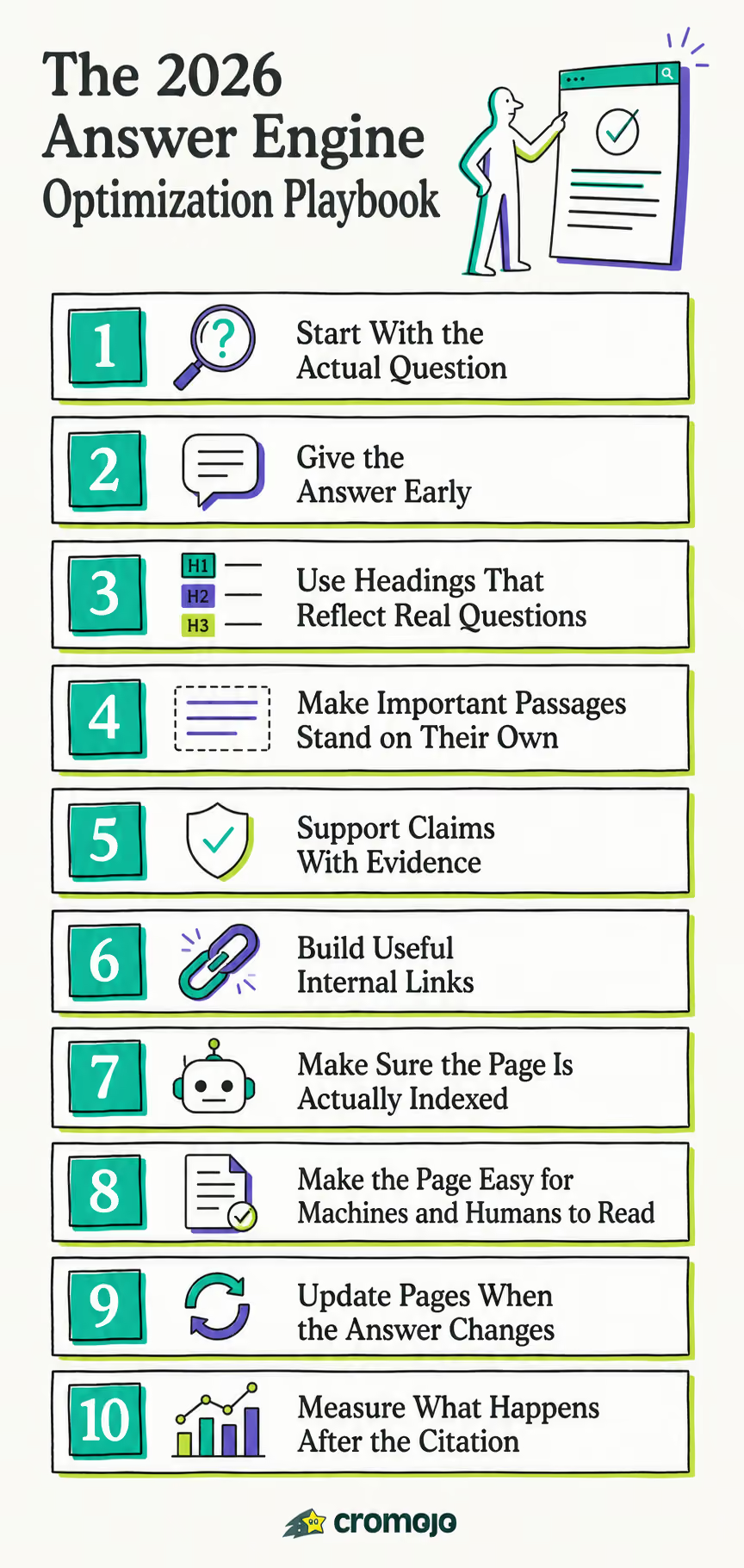
[Image: Five- or seven-step AEO checklist showing question targeting, direct answers, headings, evidence, internal links, indexing, and measurement]
Step 8: Make the Page Easy for Machines and Humans to Read
Do not confuse AEO with stuffing pages full of schema, keywords, or robotic definitions.
AI-readable content is usually just well-organized content.
Use:
- short, focused paragraphs
- descriptive H2 and H3 headings
- lists where lists make sense
- tables for genuine comparisons
- clear definitions
- logical internal links
- meaningful anchor text
- descriptive page titles
- accessible HTML
- straightforward language
Avoid hiding the most useful information inside sliders, unnecessary interactions, vague visual elements, or marketing copy that never clearly explains what the product or topic actually is.
Clarity is not boring.
Clarity is useful.
And useful content is much easier to retrieve, summarize, and cite.
Step 9: Update Pages When the Answer Changes
Answer engine optimization is not a one-time project.
AI answers change. Search results change. Competitors publish better explanations. Statistics become outdated. Products gain or lose features.
A page that is useful today can become stale surprisingly quickly.
That does not mean changing the publication date every month without changing the content.
It means reviewing important pages and asking:
- Is the answer still correct?
- Are the examples still relevant?
- Are the statistics current?
- Do the cited sources still exist?
- Are internal links still working?
- Has the search intent changed?
- Is there a clearer way to explain the answer?
Freshness is valuable when the underlying information actually changed.
Step 10: Measure What Happens After the Citation
This is where AEO becomes harder.
Traditional SEO gives you familiar metrics such as rankings, impressions, clicks, and organic sessions.
AI visibility is less tidy.
Not every answer engine sends referral data in the same way. Some users may discover your brand through an AI answer and visit later through Google, direct traffic, or another channel.
So do not judge answer engine optimization using one metric.
Look at the surrounding signals:
- Are your important pages indexed?
- Are AI and search crawlers reaching them?
- Are relevant pages earning referral traffic?
- Which landing pages receive AI-referred visitors?
- What do those visitors do afterward?
- Which pages, keywords, sources, and campaigns actually generate revenue?
This is also why basic traffic reporting can leave blind spots. Cromojo's article on analytics blind spots explains why understanding what happens beyond the headline traffic number matters.
Cromojo can connect data from sources including Google Search Console, Stripe, and Shopify, then show which keywords, pages, traffic sources, and campaigns are associated with real revenue.
That gives AEO a better business question:
Not just “Did AI send us traffic?” but “Did that visibility contribute to revenue?”
Is Answer Engine Optimization a One-Time Project?
No.
Answer engine optimization is an ongoing process because content, competitors, search systems, AI models, and user questions continue to change.
Treat important pages as living assets.
Publish them.
Get them discovered.
Monitor them.
Update them when the answer changes.
Improve them when a competing page explains something better.
The brands that benefit most from AEO will probably not be the ones that run one large optimization project and forget about it. They will be the ones that build AEO into their normal publishing and content-maintenance workflow.
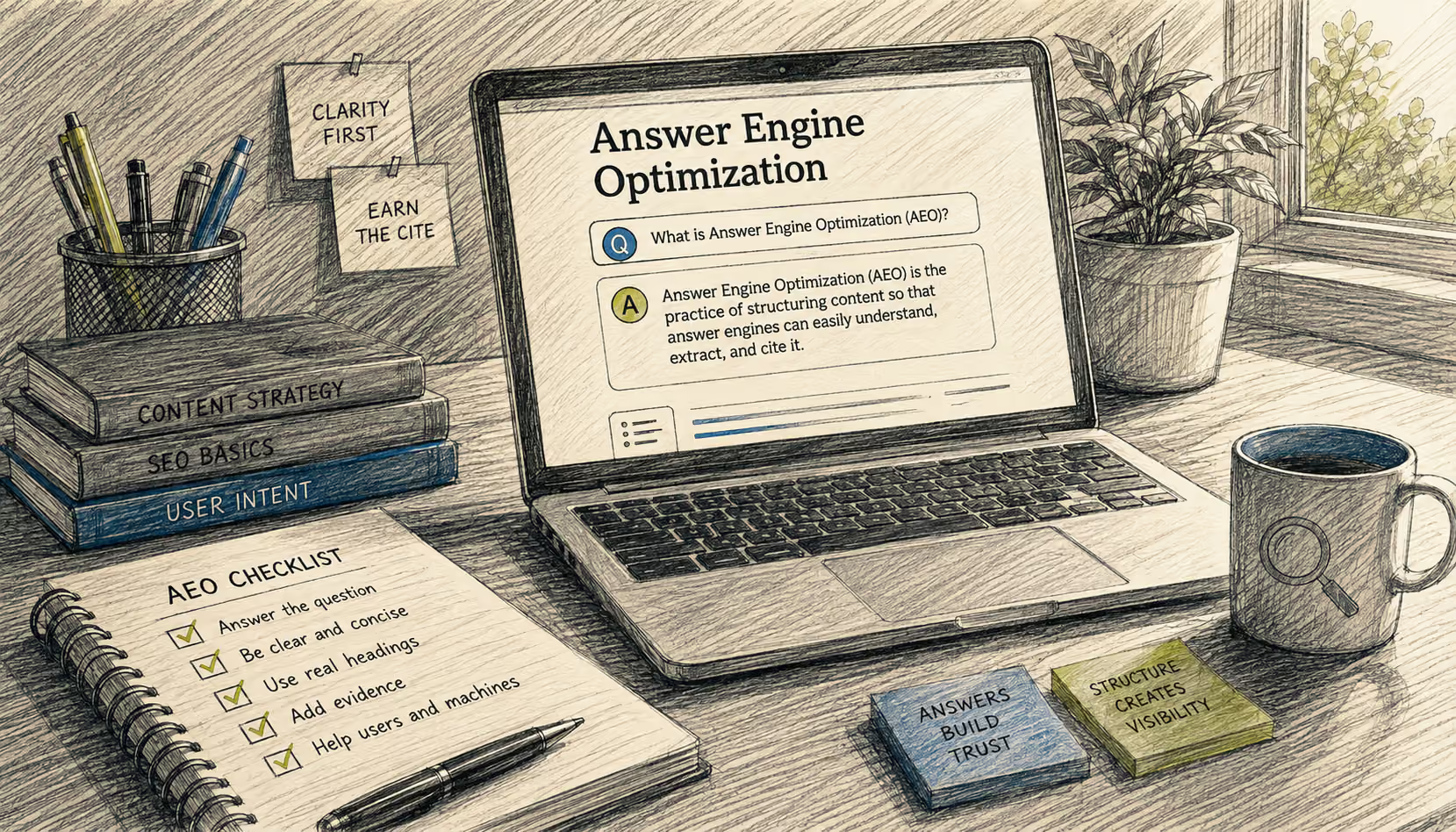
A Simple AEO Checklist
Before publishing a page, ask:
- Does the page answer one clear primary question?
- Is the answer visible near the top?
- Can a reader understand the main answer in a few sentences?
- Are headings descriptive and useful?
- Can important sections make sense on their own?
- Are important factual claims supported by credible sources?
- Are relevant internal links included?
- Can crawlers access the page?
- Has the page been submitted and indexed?
- Does the page provide something more useful than the pages already covering the topic?
- Is there a clear next step for the reader?
- Can you measure what happens after someone lands on the page?
If several answers are “no,” you probably have more AEO work to do.
AEO Starts With Being Findable
Answer engine optimization can sound like an entirely new branch of marketing.
Most of the fundamentals are not new.
People still want accurate answers.
Search systems still need to discover your pages.
Credible sources still matter.
Clear writing still wins.
What has changed is the format in which those answers are delivered.
Instead of fighting only for position one on a traditional results page, your content may now be competing to become one of the sources behind the answer itself.
That makes every step before the citation more important: discovery, indexing, clarity, credibility, accessibility, and measurement.
If your content is already strong but you are not sure whether your most valuable pages are being discovered, indexed, monitored, or turning visibility into revenue, Cromojo can help you build the infrastructure behind your AEO strategy.
Talk to the Cromojo team and see how automated indexing, website monitoring, and revenue-aware analytics can help turn search and AI visibility into measurable growth.