Build an SEO priority list you can explain.
Bring search visibility, indexing and organic revenue into the same review. Cromojo helps your team investigate opportunities and support recommendations with clearer website evidence.



Connect search performance with the work that follows.
Review demand, page visibility and business context before deciding which issue or opportunity deserves attention.
- Understand performance: Review Google Search Console data.
- Investigate visibility: Keep indexing and search findings in view.
- Explain the priority: Add organic revenue and page-experience context.
Your SEO backlog grows faster than your capacity.
Search, content and technical issues compete for the same time. It is difficult to prioritise when every report tells a different part of the story.
Visibility and value are reviewed separately.
Technical tasks lose their context.
Stakeholders want a reason to act.
Bring business context into the search review.
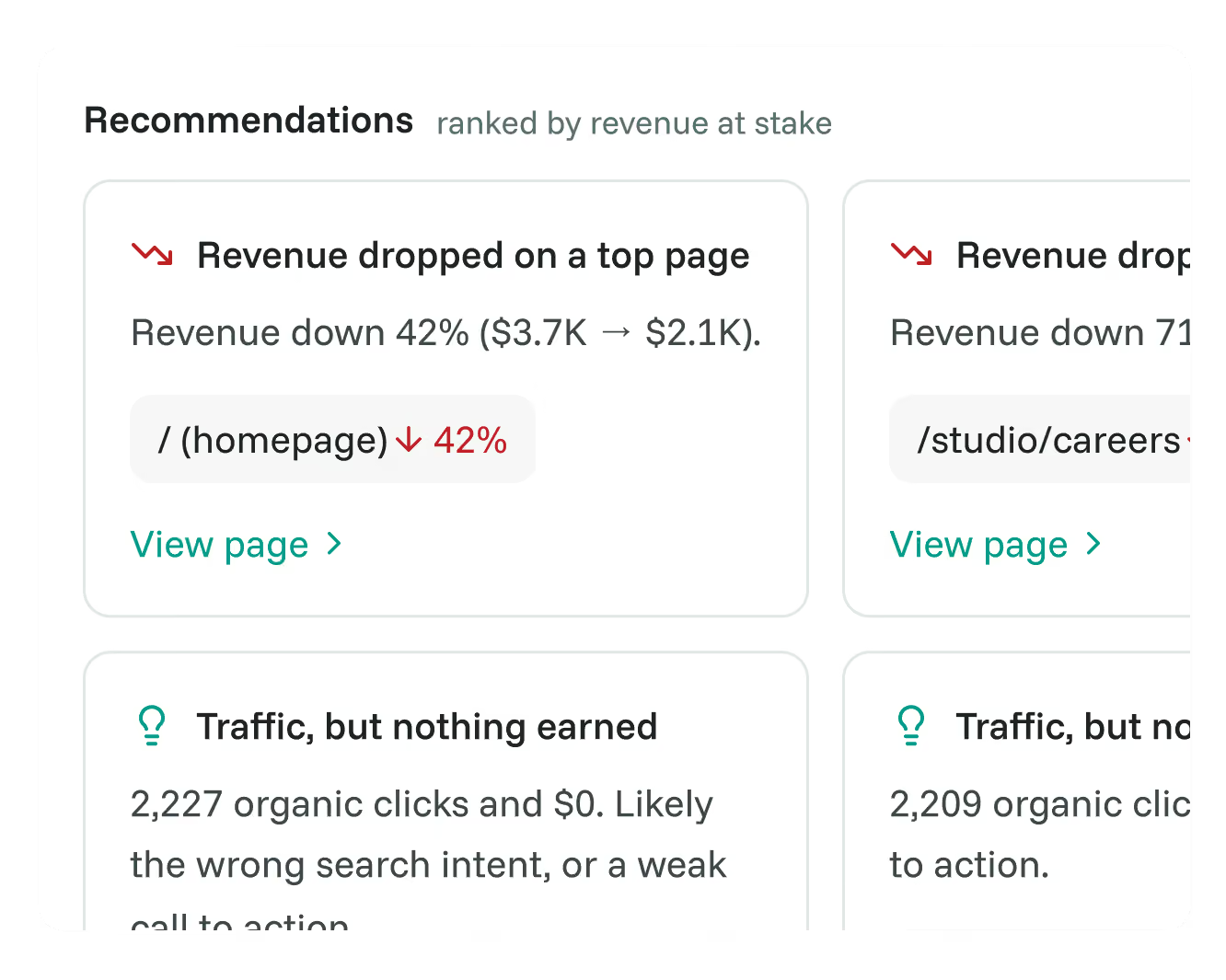
Compare Google Search Console performance with measured organic landing-page revenue. Use both views to explain why a page deserves investigation, while keeping estimates distinct from measured data.
- Review clicks, impressions and position.
- Compare organic landing-page revenue.
- Explain the evidence behind page priorities.
Keep the technical foundations in the picture.
Review supported indexing information and page-performance findings alongside search activity. Give technical work a clearer context before deciding which pages to investigate or submit through supported indexing workflows.
- Review supported indexing status.
- Investigate performance findings.
- Prioritise important pages for technical review.

Start the next review with specific questions.
Smart Insights surfaces search changes and opportunities that deserve attention. Explore the underlying evidence, then decide whether to investigate content, search intent or page overlap.
- Investigate under-clicked queries.
- Review competing pages for a search.
- Explore changes in non-branded demand.
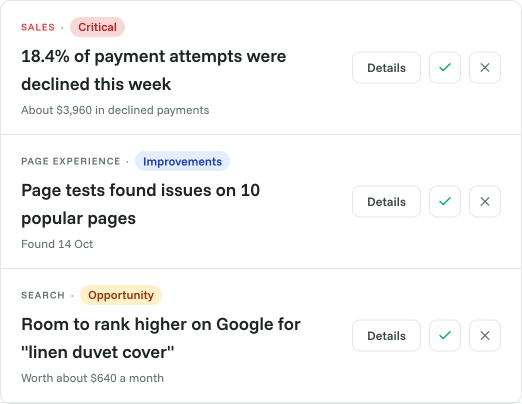
Make SEO recommendations easier to assess.
Frequently asked questions
Conversion optimization made simple