
.avif)

You publish content consistently. You follow SEO best practices. You optimize headlines, improve readability, and carefully target keywords with search volume. Yet despite all that effort, your pages still fail to rank.
For many website owners, this becomes incredibly frustrating because it feels like the system is broken. You invest time, money, and energy into creating valuable content, but the traffic never comes. Eventually, most people assume the issue is content quality. They believe the articles simply are not good enough.
In many cases, that assumption is wrong.

According to Ahrefs' analysis of 14 billion pages in 2023, 96.55% of all pages get zero traffic from Google, with only 3.45% receiving any organic search traffic at all”. The problem is not always the writing itself. Often, the real issue is discoverability.
Search engines cannot rank pages they have not properly discovered, crawled, or indexed. That sounds simple, but it is one of the most overlooked problems in modern SEO.
This issue becomes even more serious for websites operating at scale. Blogs with hundreds of pages, e-commerce stores with rotating inventory, multilingual websites, SaaS documentation hubs, and programmatic SEO campaigns all face the same hidden bottleneck. Publishing content is no longer enough. Getting search engines to consistently discover and index that content quickly has become just as important as creating it.
The websites growing fastest today are not only producing better content. They are also building stronger indexing and discoverability systems behind the scenes.
By the end of this article, you'll know exactly where your content is getting stuck in the indexing pipeline, why competitors are getting indexed before you, and the three-step system to make sure every page enters Google's index within hours instead of weeks.
Why Great Content Still Fails to Rank
Most SEO advice focuses heavily on content creation. You constantly hear phrases like “create high-quality content” or “write for the user first.” While that advice is still important, it leaves out a critical part of the process.
Great content does not automatically become visible.
One of the biggest misconceptions in SEO is the belief that quality content alone guarantees rankings. A decade ago, that approach was often enough. The internet was less saturated, and search engines had fewer pages competing for attention. Today, search engines process an overwhelming amount of content every day, including AI-generated articles, affiliate pages, programmatic landing pages, and massive publishing networks operating at scale.
Even genuinely useful content can struggle to gain visibility simply because there is so much competition.
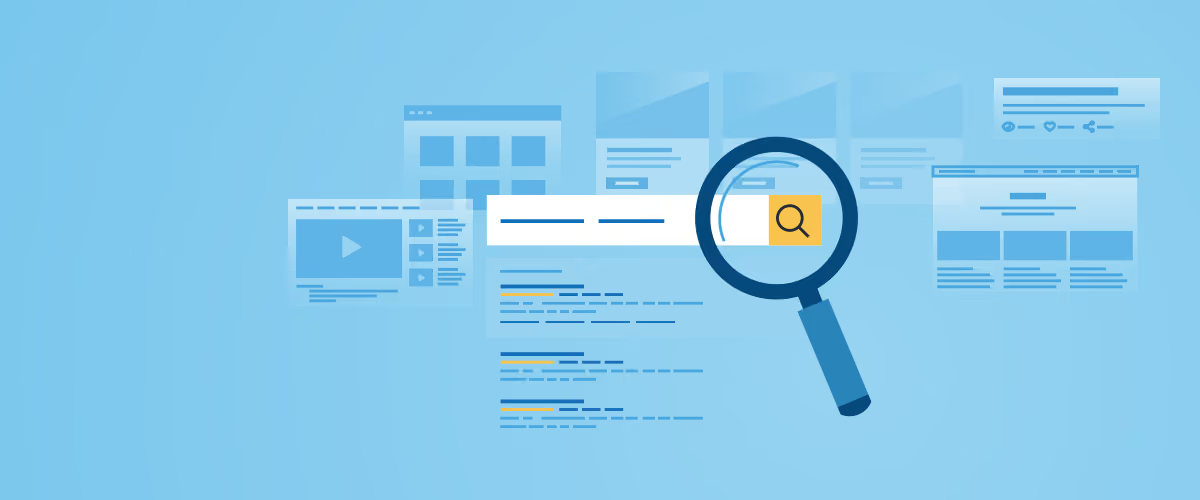
Many site owners assume publishing works like flipping a switch. They hit publish and expect Google to immediately process the page, evaluate it, and begin ranking it. In reality, search engines must first discover the page before any ranking process can begin.
This is where many websites quietly fail.
Google says crawling can take “anywhere from a few days to a few weeks,” and requesting a crawl does not guarantee instant inclusion in search results. That means a new article can sit undiscovered or unindexed while competing pages are already being crawled, ranked, and earning impressions.
Every delay creates a visibility gap:
- no indexation
- no rankings
- no search impressions
- no organic traffic
The frustrating part is that most content teams never realize this is happening. They assume the article performed poorly when the page never truly had the opportunity to compete.
This does not mean content quality is irrelevant. High-quality content still plays a major role in long-term rankings. However, quality alone no longer solves the discovery problem.
Before search engines can evaluate whether your content deserves rankings, they must first find it, crawl it, and decide whether it should even enter the index.
For smaller blogs publishing occasionally, this may not feel like a major issue. But once a website grows beyond a certain size, discoverability becomes increasingly difficult to manage manually.
This is especially true for:
- websites with hundreds of pages
- multilingual content libraries
- large e-commerce catalogs
- SaaS documentation hubs
- programmatic SEO campaigns generating thousands of URLs
At that scale, discoverability becomes the real SEO bottleneck.
Teams often rely on outdated workflows like manually submitting URLs through Google Search Console or waiting for search engines to revisit sitemaps naturally. As publishing velocity increases, these workflows become unreliable. Some pages are missed entirely. Others experience delayed crawling. Certain URLs never accumulate enough indexing signals to enter search results quickly.
The result is invisible content sitting idle across the website while competitors continue gaining momentum.
That is why faster discoverability matters so much. Faster indexing does not guarantee instant rankings, but it gives your content a faster opportunity to enter the ranking process and compete earlier.
What Actually Happens After You Hit Publish
Most people have a simplified view of how search engines work. They imagine that once a page goes live, Google immediately notices it and begins ranking it.
.avif)
The actual process is far more complicated.
When you publish a page, the URL first needs to be discovered by search engines. Google can find new pages through internal links, XML sitemaps, backlinks, RSS feeds, or indexing submissions. If those signals are weak or delayed, the page may sit unnoticed for an extended period.
.avif)
Even after discovery happens, crawling does not occur instantly. Search engines still decide when to visit the page and whether the URL deserves crawl resources. Larger websites especially run into crawl prioritization issues because search engines cannot process every page immediately.
After crawling comes indexing. This is another stage many site owners misunderstand. Google does not automatically index every crawled page. Instead, it evaluates the page based on quality, relevance, uniqueness, technical structure, and overall site trust.
That is why many URLs end up stuck in statuses like “Discovered - currently not indexed” or “Crawled - currently not indexed.” The page exists, but it still has not entered Google’s searchable index.
Only after indexing can rankings begin to develop.
This means your content may spend days or weeks trapped in the discovery and indexing process before it even has the opportunity to compete in search results.
Why Delayed Indexing Hurts Growth
The biggest problem with delayed indexing is that it slows down the entire SEO growth cycle.
Freshly indexed pages provide valuable data. They reveal which keywords generate impressions, which headlines attract clicks, and which topics resonate with users. This feedback allows SEO teams to improve content quickly and refine strategy over time.
When indexing gets delayed, those feedback loops slow down dramatically.
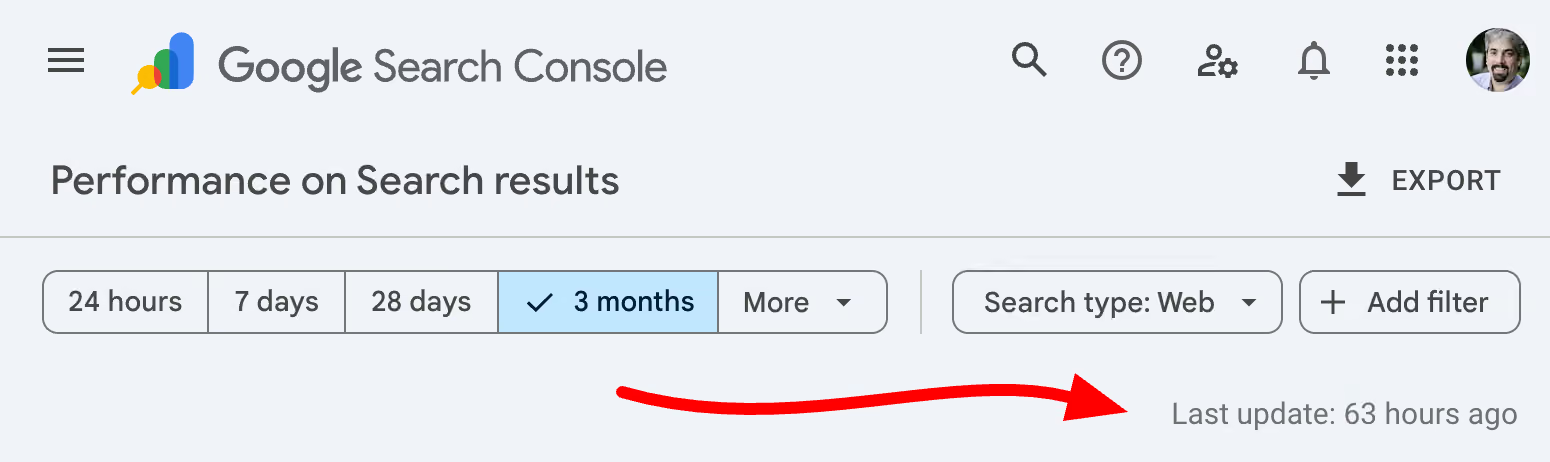
Instead of identifying opportunities within days, teams wait weeks for meaningful performance signals. That delay reduces agility and makes it harder to scale SEO efficiently.
Delayed indexing also impacts momentum. Search engines often test new pages temporarily to measure engagement and relevance. If your competitors get indexed first, they begin accumulating impressions, clicks, and behavioral signals earlier. By the time your page finally appears, they may already have a stronger position in the search results.
This creates a compounding disadvantage.
According to Ahrefs, only 5.7% of pages reach the top 10 search results within a year of publication. Every day spent waiting in the discovery and indexing pipeline reduces the window of opportunity to enter that 5.7%.
SEO success rarely comes from a single article ranking overnight. It comes from consistently building momentum across hundreds of pages over time. Every delay slows that momentum.
The Compounding Effect Most Websites Miss
One of the most underrated advantages in SEO is speed.
Faster indexing creates faster opportunities for visibility, faster learning cycles, and faster content optimization. Over time, these advantages compound significantly.
Imagine two websites publishing the exact same number of pages each month. One site gets indexed within hours, while the other waits several weeks for discovery and crawling.
The faster site gains more ranking opportunities throughout the year simply because its pages entered the search ecosystem earlier. It gathers more data, identifies winning content sooner, and improves performance faster.
This is why discoverability infrastructure matters so much for scaling websites.
The goal is not instant rankings. No indexing solution can guarantee that. The real advantage is reducing the delay between publishing and visibility.
That shortened timeline creates more opportunities for growth.
Why IndexNow and Bing Matter More Than Ever
Most indexing conversations focus entirely on Google.
That is a mistake in 2026.
Bing has quietly become one of the most important discovery engines on the internet because it now powers large parts of the AI search ecosystem, including Microsoft Copilot and search experiences connected to ChatGPT. As AI assistants increasingly generate answers directly from indexed web content, visibility inside Bing’s ecosystem matters far more than it did a few years ago.
This is where IndexNow becomes important.
Unlike traditional XML sitemaps, which rely on search engines periodically revisiting your site, IndexNow works as a real-time notification protocol. The moment a page is published, updated, or deleted, your website can instantly notify participating search engines about the change.
That creates a much faster discovery pipeline.
Instead of waiting hours, days, or even weeks for crawlers to naturally revisit your sitemap, search engines receive immediate signals that content exists and is ready to be crawled.
For websites publishing at scale, that speed matters significantly.
E-commerce stores constantly changing inventory, SaaS platforms publishing documentation updates, news websites, and programmatic SEO campaigns all benefit from reducing the delay between publishing and discovery.
Cromojo Automated Indexing launched native IndexNow and Bing support in April 2026, allowing every new URL to be submitted automatically the moment it goes live.
Instead of relying entirely on crawlers eventually discovering content through sitemaps or internal links, Cromojo proactively pushes URLs directly into the discovery pipeline across Google Search Console and Bing.
That means:
- faster discovery
- faster crawling
- faster indexing opportunities
- broader visibility across both traditional and AI-powered search ecosystems
As AI-driven search continues evolving, discoverability is no longer just about ranking in Google. It is becoming part of a much larger visibility infrastructure across the web.
AI Search Is Making Discoverability Even More Important
The rise of AI-driven search experiences is also changing how discoverability works online.
Traditional search engines are no longer the only platforms surfacing content. AI assistants, conversational search systems, and answer engines increasingly rely on indexed content to generate responses and recommendations.
If your pages are not discovered quickly and consistently, they become less likely to appear in these emerging search environments as well.
That means discoverability is no longer just about Google rankings. It is becoming part of broader digital visibility across the internet.
Websites that invest in stronger indexing infrastructure today will likely have a significant advantage as AI-powered search continues evolving.
How to Improve Discoverability in 4 Steps
If your content is struggling to rank, improving discoverability should become part of your SEO workflow, not an afterthought.
Here are four practical ways to reduce indexing delays and improve visibility across Google, Bing, and AI-powered search platforms.
1. Connect Your Sitemap to Google Search Console
Your XML sitemap helps Google understand which pages exist on your website and which URLs should be prioritized for crawling.
Without a properly configured sitemap, new pages may take significantly longer to enter the discovery pipeline.
Submitting your sitemap through Google Search Console ensures search engines receive a consistent feed of your published and updated content.
2. Set Up IndexNow for Bing and AI Search Ecosystems
IndexNow allows websites to instantly notify participating search engines whenever a page is published, updated, or deleted.
Unlike traditional sitemaps, which depend on crawlers periodically revisiting your website, IndexNow pushes changes in real time.
This is becoming increasingly important because Bing now powers large parts of the AI search ecosystem, including Microsoft Copilot and other AI-driven search experiences.
Faster discovery inside Bing’s ecosystem can improve visibility across both traditional and AI-powered search environments.
3. Monitor Indexing Status Regularly
Many websites lose traffic simply because important pages quietly fall out of the index.
Checking indexing reports weekly inside Google Search Console helps identify issues like:
- “Discovered - currently not indexed”
- “Crawled - currently not indexed”
- dropped or deindexed pages
- crawl anomalies and indexing delays
Catching these problems early prevents large sections of content from becoming invisible over time.
4. Automate the Entire Indexing Pipeline
Manual indexing workflows become unreliable as websites grow.
Submitting URLs individually, waiting for sitemap refreshes, and checking indexing statuses manually creates operational friction that slows SEO momentum.
Platforms like Cromojo Automated Indexing automate the entire process by connecting directly to Google Search Console and Bing through IndexNow, automatically submitting new URLs within seconds of publication.
That creates a faster and more reliable path into the discovery pipeline across both traditional search engines and emerging AI search ecosystems.
Stop Wondering Why Your Content Isn’t Ranking
If your content is not ranking, the issue may not be the quality of your writing.
It may not be your keyword strategy either.
Your pages might simply not be entering the search ecosystem fast enough to compete.
That is why indexing infrastructure matters.
Instead of hoping search engines eventually discover your content, automated systems like Cromojo Automated Indexing help ensure every new page is submitted immediately after publication.
This creates a faster and more reliable path to discoverability across Google, Bing, and emerging AI search engines.
For websites publishing at scale, that difference becomes significant. Faster indexing means faster visibility opportunities, faster SEO feedback loops, and faster long-term growth potential.
Most importantly, it ensures your content does not sit invisible while competitors gain momentum.
Stop wondering why your content is not ranking.
Make sure it gets discovered first.