
.avif)

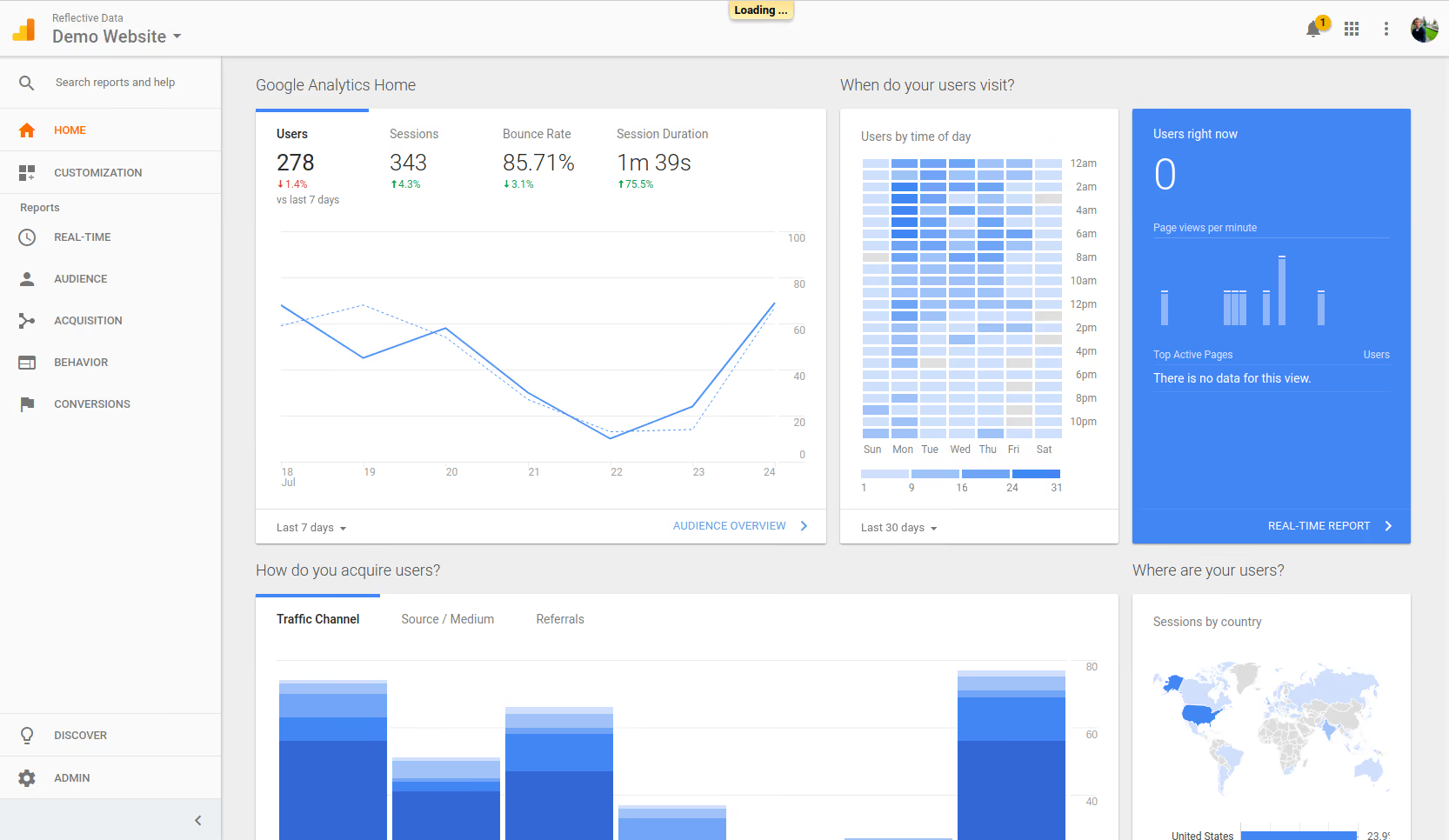
You check your analytics dashboard and everything appears to be going well. Traffic is up, conversions are steady, and the numbers show your efforts are paying off. It’s comforting to have something solid to rely on. Analytics make your business seem measurable and predictable.
However, that feeling of certainty can be misleading.
Analytics are built to show you what’s happening, not why it’s happening. They give you tidy charts and percentages, but rarely tell the full story behind the numbers. That’s why many founders and marketers start to see analytics as the whole truth, when really, it’s just part of the picture.
The issue isn’t that analytics are incorrect. The real problem is that they don’t tell the whole story.
If you rely on analytics without asking what’s missing, you risk focusing on the wrong things.
The Opportunities Your Analytics Are Hiding
When you look at analytics, you’re seeing behavior broken down into measurable events. You see visits, clicks, conversions, and exits, but you miss the human context behind those actions.
For example, analytics can show your website is getting more traffic, but they can’t tell you if those visitors actually care about what you offer. Someone who’s just browsing or distracted is counted the same as someone searching for a solution. Without knowing intent, analytics make you celebrate volume instead of relevance.
Similarly, analytics can show your conversion rate, but they can’t reveal how hard the process felt for the user. Someone might finish a purchase even if they felt confused or hesitant, and you’d never know. You might think your funnel works well just because it gets results, but you could be missing out on even better opportunities.
Even when analytics show where users drop off, they don’t explain why they leave. Maybe it’s unclear messaging, slow loading, lack of trust, or a gap between what users expect and what they find. Analytics can’t tell the difference, so you’re left guessing.
Another issue is that analytics focus on averages. When you check average session duration or conversion rate, you’re seeing a simplified version of reality. The best insights often come from outliers, users who act differently, convert quickly, hesitate longer, or leave suddenly. Analytics usually hide these details in the overall data, making it tough to spot important patterns.
Most importantly, analytics ignore emotion. They don’t capture trust, doubt, curiosity, or confusion, even though these feelings drive almost every user decision. You’re left with numbers that show what happened, but not why it happened.
What Analytics Cannot Show You
To see what analytics miss, remember that they always look backward. They show what’s already happened, so you’re always looking at the past. By the time a metric changes, the behavior behind it has already occurred.
This means analytics are a lagging indicator. They’re helpful for measuring results, but not for influencing them. If you want to shape decisions before they happen, you need to understand the experience that leads up to those choices, not just the final outcome.
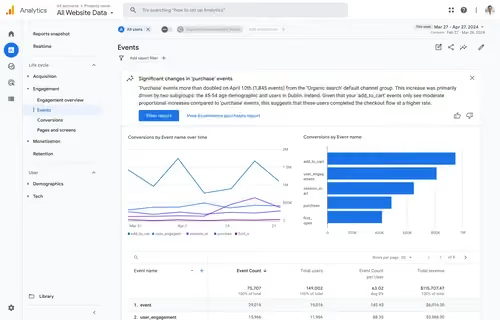
Another problem is that analytics depend on what you decide to measure. Every dashboard is built on assumptions about what matters. If you focus on clicks, your analytics will center on clicks. If you care about conversions, everything will be about conversion rates. This creates a feedback loop where you keep improving what you can see, even if it’s not the most important thing.
Because of this, analytics often show symptoms instead of causes. A drop in conversions might mean there’s a bigger problem with your positioning, messaging, or user experience, but analytics won’t tell you that. They only show what’s on the surface, leaving the real issue hidden.
Analytics also assume that users follow a clear, structured path, which they try to show with funnels. But in reality, users move in unpredictable ways. They jump between pages, compare options, leave and come back, and use different devices. Analytics turn this messy process into simple flows, but that means you lose the details that could give you important insights.
The most important layer that analytics fail to capture is the experience itself. They do not show hesitation before a click, confusion during navigation, or the moment a user loses trust. These are subtle but powerful signals that shape outcomes, yet they remain invisible in traditional analytics.
Moving Beyond Traditional Analytics
If analytics only show part of the picture, the answer isn’t to stop using them, but to look beyond them. You need a deeper view that connects the numbers to real user behavior.
This begins with a shift in perspective. Instead of asking what the numbers are, you start asking what they mean. When you see a click, you consider the expectation behind it. When you see a drop-off, you think about the experience that led to it. Analytics become a starting point rather than a conclusion.
To achieve this, you need to observe how users actually interact with your product or website. This means understanding where they hesitate, what they focus on, and what they ignore. It means recognizing patterns that are not immediately visible in aggregated data. By doing this, you begin to see the relationship between behavior and outcome.
When you have better visibility, it’s easier to make decisions. Instead of guessing, you can spot exactly where users struggle and fix those issues. You can match your messaging to what users want, smooth out your process to avoid confusion, and build an experience that helps people convert instead of getting in their way.
This approach turns analytics from a passive reporting tool into an active source of insight. It helps you stop just reacting to numbers and start understanding the people behind them.
That’s where real growth begins.
Discover What Your Analytics Are Missing
If you’ve been relying only on analytics to make decisions, you’re only seeing part of the story. The numbers might look right, but they’re not the whole picture. The real opportunities are in what your analytics don’t show.
When you start to find the gaps between data and real experience, you get a clearer sense of how users think, act, and decide. This understanding helps you improve not just your numbers, but the whole journey that leads to them.
If you want to move beyond traditional analytics and see what’s really driving your results, you can explore a better way to understand user behavior here: