
.avif)

Search behavior is changing faster than most website strategies. A few years ago, researching a product meant opening multiple tabs, reading reviews, and comparing alternatives. Today, many people hand that process to an AI assistant and ask for a direct recommendation.
.avif)
That shift creates a new referral channel. Instead of discovering a brand through a traditional search result, a user may first encounter it inside an AI-generated answer. That recommendation can shape the user's shortlist before they reach a website. By the time they click, they may already understand the product and feel confident about taking action.
For brands, this makes AI Citation an important form of visibility. Earning it is not simply a matter of publishing more articles. Before an AI system can surface a page confidently, that page must be discoverable, understandable, credible, accessible, and technically healthy.
The Rise of AI Citations as a Referral Channel
Traditional search gives users options to evaluate. AI search compresses the process by interpreting the question, comparing possible answers, and presenting a smaller set of recommendations. The response becomes an early decision-making layer.
.avif)
An AI Citation can influence a customer before website analytics record anything. Someone may learn about your brand, compare it with competitors, and form an opinion without visiting your site. When they finally arrive, the visit may appear direct, referral, or organic even though AI created the demand.
Trust determines whether a brand gets included in these answers. AI systems seek to provide useful responses while reducing uncertainty. Clear, consistent, accessible sources with recognizable trust signals are easier to rely on. Strong writing cannot compensate for poor indexing, unclear authorship, conflicting claims, or frequent technical failures.
This means AI visibility must be approached as a complete website system. Content quality matters, but it only becomes valuable when the content can be found, interpreted, verified, and accessed reliably.
The 4C Framework for AI Discovery
A useful way to understand how people evaluate websites is through four core principles: clarity, credibility, confidence, and convenience. These same principles also offer a practical framework for preparing content to be discovered, understood, and trusted by AI systems.
Clarity: Make Your Meaning Easy to Extract
For AI systems, clarity affects whether content can be interpreted accurately. Pages should use descriptive titles, logical headings, direct answers, consistent terminology, and well-structured explanations. Important information should not be hidden behind vague slogans or distributed across unrelated pages.
A clear page defines its subject, explains who it is for, identifies the problem being solved, and provides enough context to stand alone. This supports both human comprehension and machine understanding.
The page should also answer questions in language that matches how customers search. Instead of relying entirely on brand terminology, explain products, services, processes, and outcomes in specific terms. This gives search engines and AI platforms clearer information to extract and reference.
Clarity begins with discoverability. As Cromojo explains in Why Your Content Isn't Ranking, strong content cannot compete if search systems have not properly discovered, crawled, and indexed it.
Credibility: Give Every Claim a Reason to Be Believed
A credible website makes its expertise visible. It identifies authors, explains relevant experience, references dependable sources, updates outdated material, and keeps company information consistent. Case studies, transparent methods, and specific examples strengthen the page further.
.avif)
Credibility also depends on the wider website. One impressive article cannot compensate for thin service pages, contradictory information, or an anonymous brand presence. AI Citation is more likely when the source appears dependable at both the page and domain level.
This does not mean every article needs to sound academic. It means claims should be supported by something concrete. A business can demonstrate credibility through original data, expert commentary, detailed examples, customer outcomes, documented processes, or first-hand experience.
This is closely connected to E-E-A-T and content quality. Cromojo's article on understanding E-E-A-T and indexing explores why experience, expertise, authority, and trust can affect whether content earns visibility in the first place.
Confidence: Remove Signals That Create Doubt
Confidence is the feeling that information is current, accurate, and safe to act on. For a human visitor, confidence may come from polished design, consistent messaging, transparent pricing, working forms, security indicators, and proof from other customers.
For search and AI systems, confidence is reinforced by stable URLs, valid technical signals, accessible pages, and content that remains available. A page that disappears, redirects unexpectedly, returns errors, or drops out of the index becomes a weaker source.
An AI recommendation also transfers some of its perceived trust to the cited brand. A visitor may arrive already leaning toward the recommendation. The website's job is not to rebuild trust from zero, but to avoid breaking it.
Amateur design, conflicting claims, unavailable pages, unclear pricing, and confusing calls to action can quickly undo the confidence created by an AI Citation. The transition from AI answer to website experience should feel consistent.
Convenience: Make Information Easy to Access and Use
A useful source should load quickly, work across devices, present answers without unnecessary friction, and guide the visitor toward a logical next step.
For AI discovery, convenience means making content easy to crawl and retrieve. Important pages should be internally linked, included in clean sitemaps, accessible without unnecessary gates, and organized within a sensible site structure.
Content should not be isolated from the rest of the website. Supporting articles should link to service pages, service pages should reference useful resources, and related topics should form clear content clusters. These connections help users navigate the website while also giving crawlers more pathways to important URLs.
Visibility has little value if users cannot act on it. An AI Citation may create the opportunity, but the page experience still determines whether that opportunity becomes a signup, enquiry, or sale.
Why Most Brands Never Get Considered
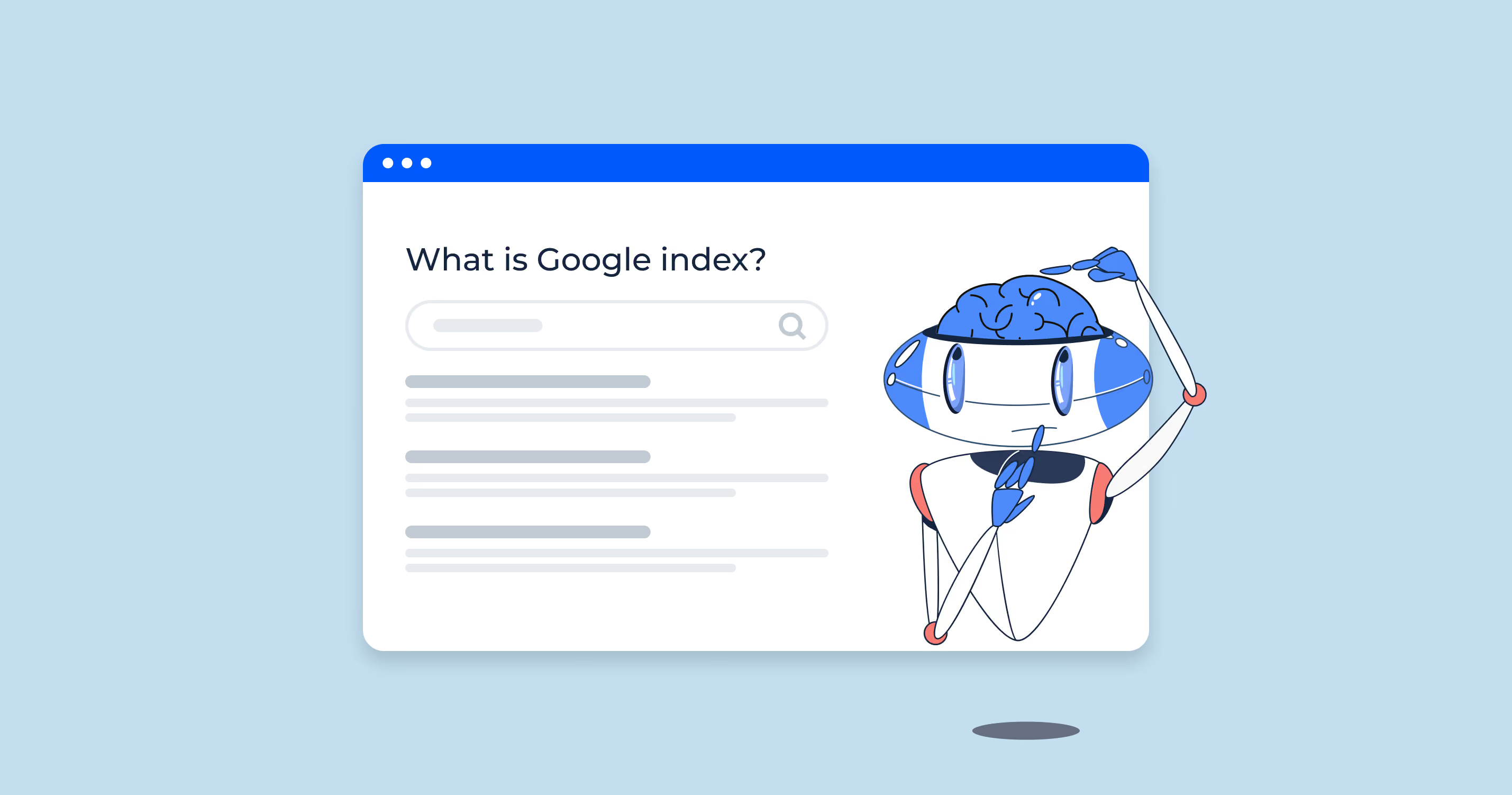
The first issue is indexing. Publishing a page does not guarantee that it will be found or retained in a search index. Weak internal linking, sitemap problems, canonical conflicts, noindex tags, crawl delays, and server errors can leave valuable content invisible.
Publishing Faster Won't Save You Unless You Fix This explains why increasing content output without fixing the indexing pipeline can simply create more invisible pages. A team may publish dozens of articles every month while only a portion of them become discoverable.
The second issue is weak trust signals. Generic articles, unclear authorship, unsupported claims, and outdated information make reliability difficult to judge. When many pages cover the same topic, the source that communicates stronger evidence and clearer expertise has an advantage.
.avif)
The third issue is a broken site experience. Downtime, expired certificates, broken links, redirect loops, and page errors do more than frustrate visitors. They can interrupt crawling, weaken confidence, and make important content unavailable at the exact moment a search or AI system attempts to access it.
Cromojo's guide to how website monitoring tools work shows why a green status light alone may not reveal the full health of a website. A server can technically remain online while important pages, forms, links, or resources are broken.
These problems are often silent, and monthly traffic reports may reveal the outcome long after the cause appeared. That is why most SEO reports can be misleading when they focus on historical charts but fail to show whether important pages are currently indexed, accessible, and visible.
Turning Visibility Into AI Citations
The path to AI Citation begins with faster discovery. New and updated pages need clear internal links, accurate sitemaps, active submission workflows, and regular index verification. Earlier discovery creates more opportunities to earn visibility, references, backlinks, engagement, and authority.
.avif)
Speed alone is not enough. A URL can be indexed today and disappear later because of a technical change, migration error, accidental directive, or server problem. Maintaining visibility requires attention to index status, page errors, redirects, uptime, and crawlability.
Brands must also monitor search and AI readiness rather than assume publication equals visibility. This means tracking whether priority pages are discovered, whether they remain indexed, whether their content is accessible, and whether website changes create new risks.
The objective is to identify problems before traffic declines. Waiting for a page to lose rankings or conversions means the problem has already affected the business.
As Why Your Competitors Rank Faster Than You explains, competitors may not always have better content. They may simply operate a more reliable system for discovery, indexing, and monitoring.
How Cromojo Helps Build an AI-Ready Website
Cromojo brings automated indexing, SEO and GEO visibility, and website monitoring into one workflow. Teams can create a repeatable process for submitting, checking, and protecting their most important URLs.
With Cromojo's automated indexing, new and updated pages can be submitted to Google and Bing, monitored for indexing status, and resubmitted when they drop out. This reduces the manual work needed to keep large collections of content discoverable.
By strengthening search discovery and page accessibility, brands also create a better foundation for visibility across AI-driven search experiences. AI systems cannot reference content that remains hidden, inaccessible, or poorly understood.
Cromojo combines index tracking with page-health information and actionable reporting. Teams can see which URLs are indexed, pending, or in need of attention instead of waiting for a ranking or traffic decline to reveal the issue. This makes visibility an ongoing operational process rather than a monthly reporting exercise.
Through website monitoring, Cromojo checks for downtime, SSL issues, broken links, redirect problems, and other failures that can damage user trust or prevent crawlers from accessing content. These alerts help teams resolve problems before they weaken search performance or disrupt visitors arriving through an AI recommendation.
Build the Trust Layer Before Chasing the Citation
AI visibility is not won through content volume alone. A brand becomes easier to cite when its pages are discoverable, clear, credible, technically reliable, and convenient to use. These qualities build confidence for machines and humans.
The businesses that succeed in this environment will treat AI Citation as the result of a healthy visibility system, not as an isolated optimization tactic. They will publish useful content, make it discoverable quickly, protect its technical health, monitor its status, and create a website experience that preserves the trust built before the click.
Cromojo helps teams put that system in place. Automate indexing, monitor page health, track visibility, and keep your most valuable content ready to be found and cited.
Start building a more discoverable and AI-ready website with Cromojo.