
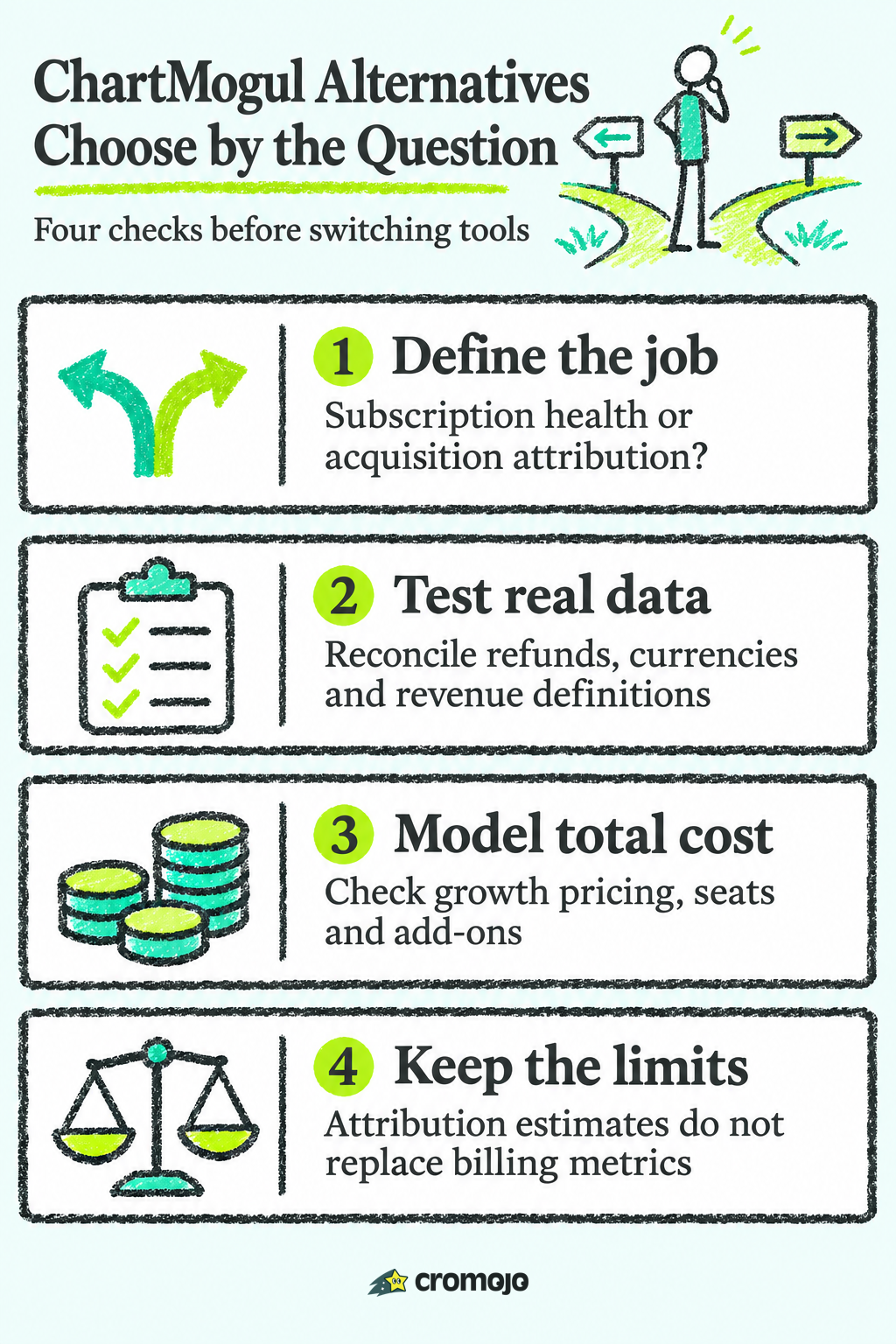
Start with the question: subscription health, billing operations, consolidated sales or acquisition attribution? This guide compares six alternatives: Baremetrics, ProfitWell Metrics, Maxio, Putler, RevenueCat and Cromojo, with ChartMogul as the baseline. They are not interchangeable. Match the data model and workflow first, then compare the total cost.
What ChartMogul does, and why people look elsewhere
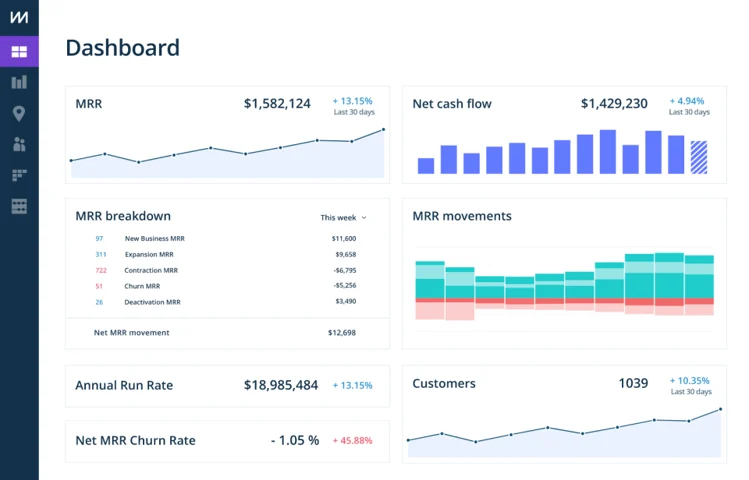
ChartMogul reports subscription metrics from connected billing data. Its current plans differ in billing-source connections, seats, CRM sync and warehouse access. Definitions and configuration affect MRR, churn and cohort reporting; reconcile a representative period before treating another dashboard as equivalent.
That is a lot of capability, and it explains the three most common reasons for a search like this one:
- Cost as you grow. ChartMogul lists free access up to $10,000 MRR, with paid pricing that scales with revenue and varies by plan and billing term. Use its live calculator for your expected revenue instead of an old price range.
- Analytics versus recovery. Check whether payment recovery and cancellation workflows live in the analytics product, your billing provider or an add-on. Reporting a failed payment is a different job from retrying it.
- A different question. MRR movements and cohorts describe subscription performance. Acquisition attribution needs additional visit, campaign or customer data and an explicit matching method. Check what each product actually connects before assuming it answers both questions.
The third reason is the one that sends many ecommerce owners and agencies looking at tools outside the subscription-analytics category entirely.
How to choose: the criteria that matter
Assess recurring-revenue definitions, cohorts, segmentation, currencies, history, exports and supported data sources against your use case. Confirm how refunds, trials, pauses, upgrades and cancellations are represented. Five questions narrow the shortlist:
- Where does your revenue come from? Recurring subscriptions, one-off ecommerce orders, or both?
- Which billing system do you use? Stripe only is a simple case. Several systems make integration depth more important.
- Who reads the dashboard? A founder checking daily needs something readable. A board or investor needs defensible definitions.
- Do you need acquisition data? Metrics tools rarely show which keyword or page earned a sale.
- What happens when you grow? Check how the price changes at 2x and 10x your current revenue or traffic.
Integration depth matters more than connector count. Test actual invoices, customer identifiers, currency conversion, refunds and backfilled history during the trial. Reconcile billing and accounting totals separately from attributed sales; they measure different things.
ChartMogul alternatives at a glance
Vendor pages were checked on 3 November 2026. Pricing can depend on tracked revenue, billing term, modules and seats. Where current pages are dynamic or inconsistent, confirm a written quote or checkout total rather than relying on an approximate third-party figure.
Baremetrics
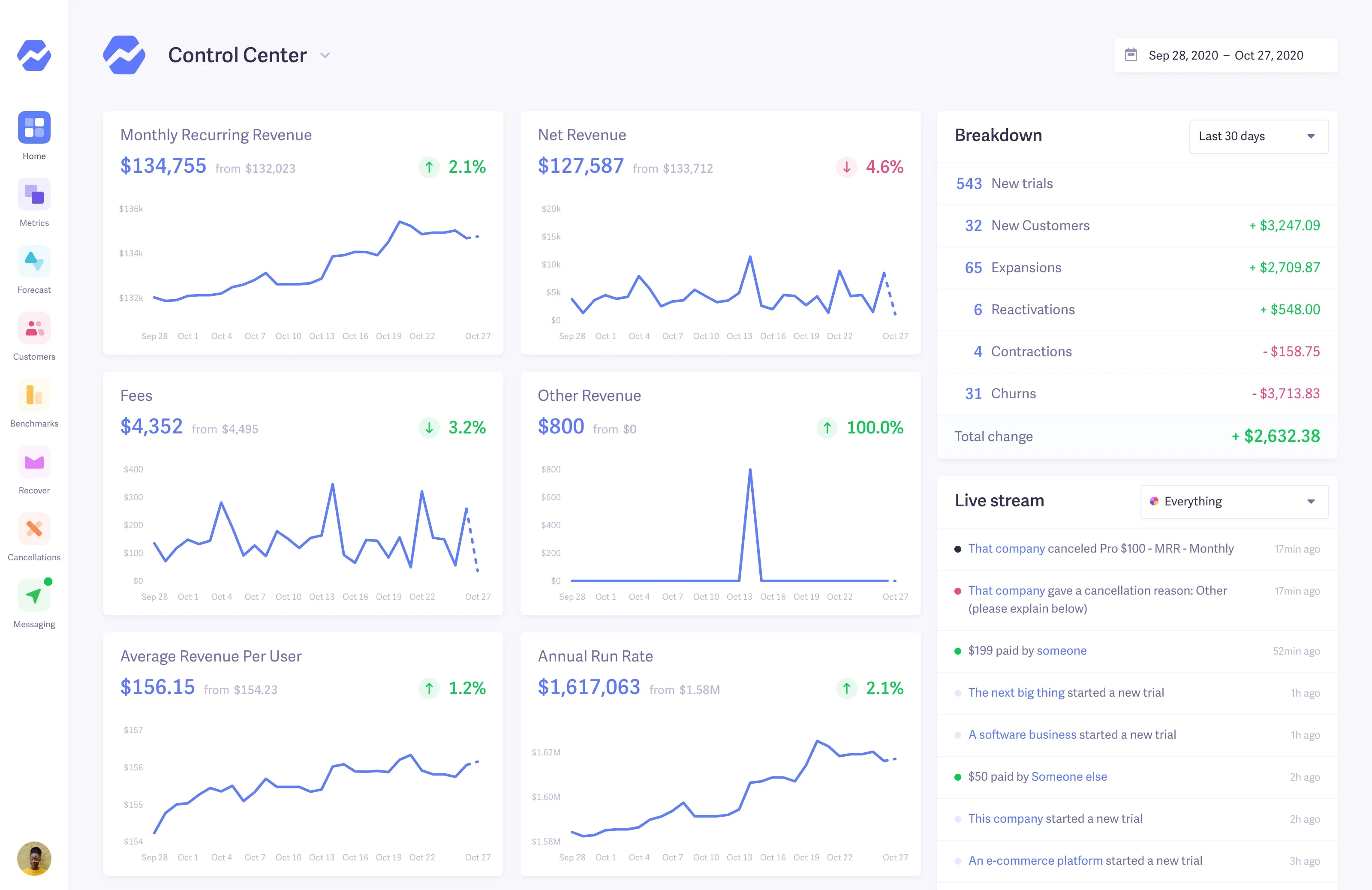
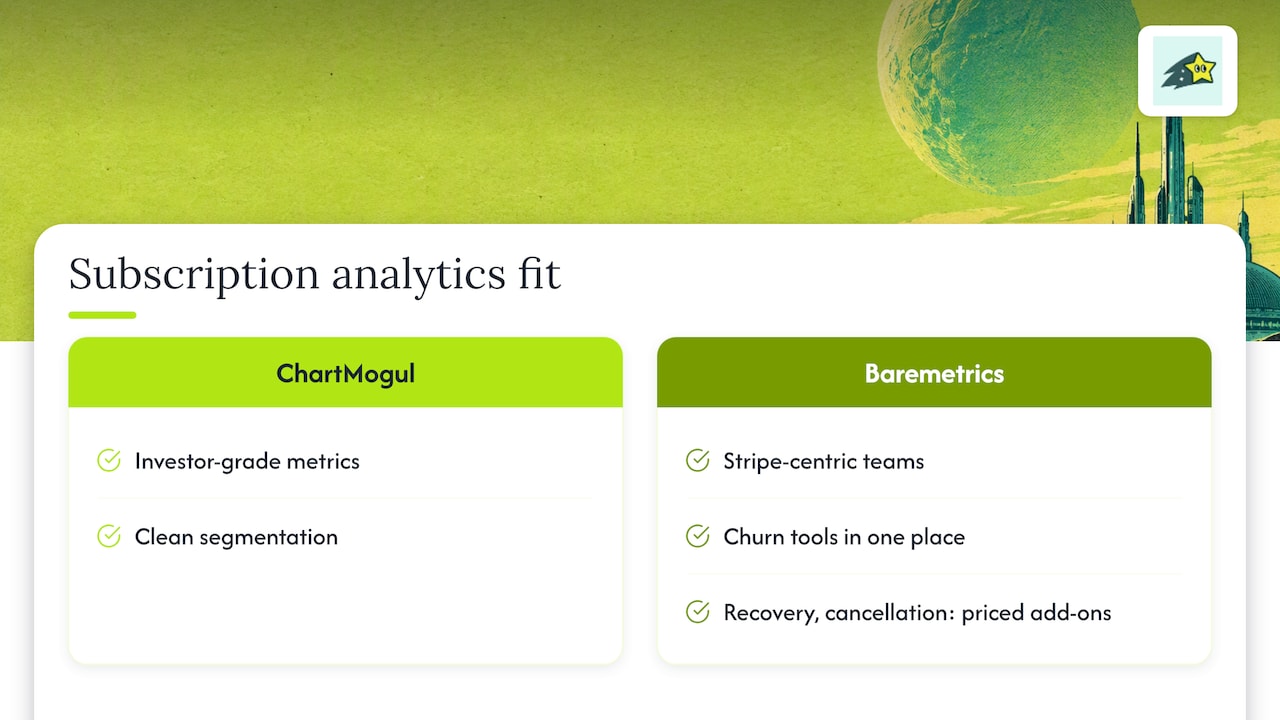
Baremetrics provides subscription analytics, with Payment Recovery and Cancellation Insights listed as separate add-ons. Its pricing page currently displays different starting figures in the plan cards and FAQ, so confirm the billing term and final quote. Check the required integrations and segment access for the proposed plan.
Consider it when your billing sources are supported and its reporting and recovery workflows fit the team. Trial both the metrics and any add-ons you intend to buy. A readable dashboard does not establish that its churn definitions match your existing reports.
ProfitWell Metrics
ProfitWell Metrics is offered by Paddle as free subscription analytics. Evaluate its supported integrations, reporting and available history against your requirements. Retention and other Paddle products have their own scope and commercial terms; free metrics does not mean every service is free.
It is worth testing when core subscription reporting is the main need. Verify segmentation, exports and treatment of your billing edge cases before concluding that a paid tool is necessary. Neither price nor setup simplicity establishes data accuracy for your particular account.
Maxio: billing and finance workflows
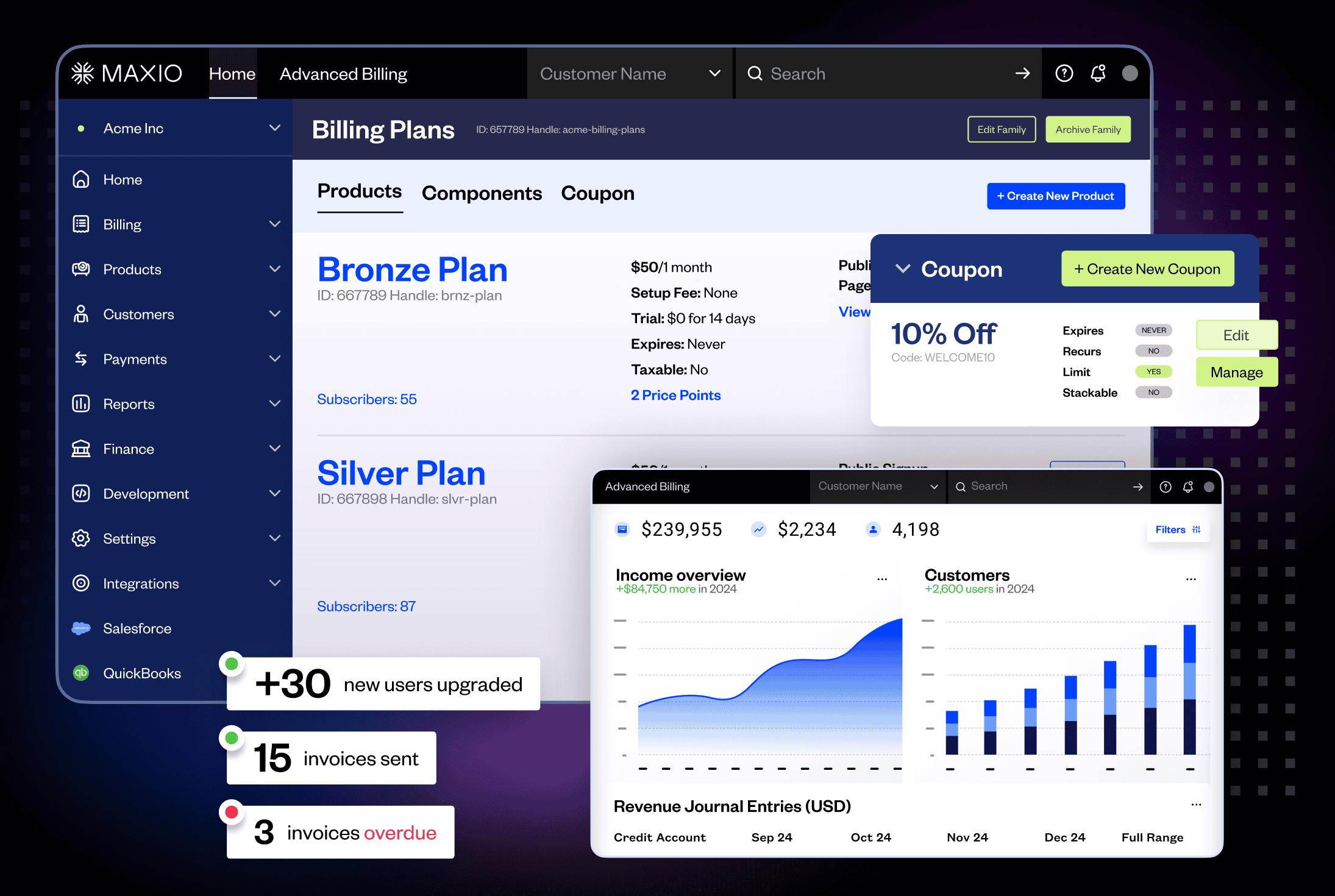
Maxio combines billing and finance workflows with metrics and reporting. Evaluate it when billing operations or revenue recognition are part of the problem, not only when you want another chart. Request scope and pricing for the modules you need. Other billing vendors are adjacent options, but are outside this six-option comparison.
A billing platform may change invoicing, collection and finance processes; an analytics layer can leave billing in place. Map the migration work, integrations, responsibilities and historical reporting before replacing either. Do not assume one platform will remove two tools without testing the required workflows.
Putler and RevenueCat: different sales channels
Putler suits evaluation for consolidating sales across supported stores and payment gateways. Its pricing scales with revenue; confirm the relevant tier, connections, historical import and treatment of duplicate customers or orders. Test subscription-specific definitions rather than assuming all sales dashboards match ChartMogul.
RevenueCat is the sixth alternative here, especially for app subscription infrastructure and analytics. Its page lists free use up to $2,500 monthly tracked revenue, then 1% of tracked revenue, with enterprise arrangements available. Confirm what counts as tracked revenue, which transactions are included and how that differs from MRR before comparing costs.
Cromojo: when the question is revenue by source
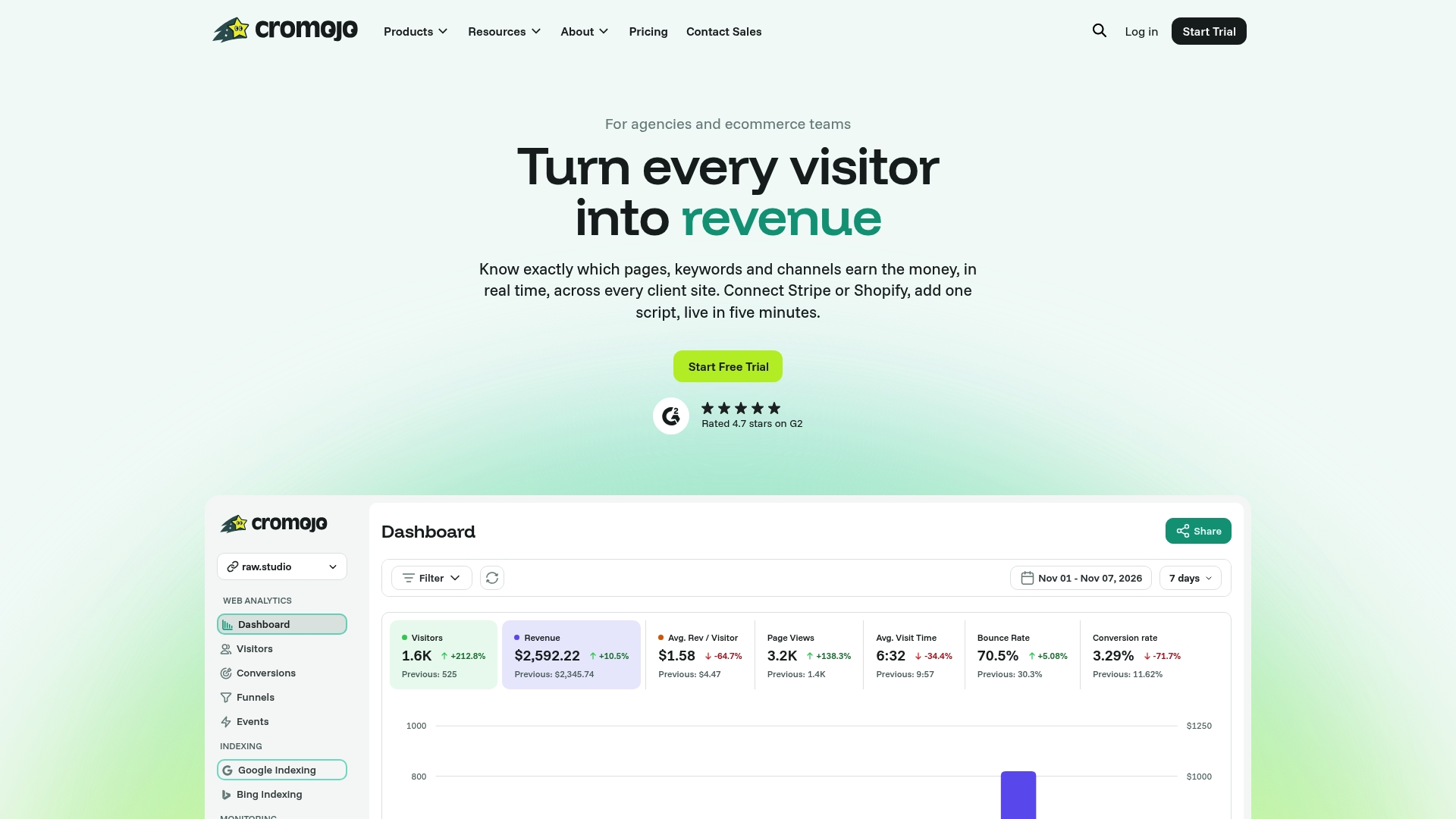
Cromojo connects recorded website activity with eligible Stripe and Shopify purchases. It supports attributed sales by page, source and campaign; organic keyword revenue uses estimates from Search Console. Matching depends on tracking and checkout configuration, and is not an exact query-to-order record or a replacement for MRR cohort reporting.
What that includes:
- Revenue context: attributed page, source and campaign sales, with estimated organic keyword revenue and setup-dependent coverage.
- Conversion funnels, visitor journeys, goal tracking and advanced segmentation.
- Tracking choices: cookie-free and returning-visitor modes have different device-storage behaviour. Review actual configuration, notices and applicable consent requirements.
- Monitoring: enabled domain checks and page scans with setup- and plan-dependent coverage and alert timing.
- URL submissions and index tracking: configured Google, Bing and IndexNow integrations, subject to eligibility, quotas and search-engine decisions. A submission does not guarantee indexing; ordinary product pages are not eligible for Google's restricted Indexing API.
- Actionable email reports so you do not have to open a dashboard daily.
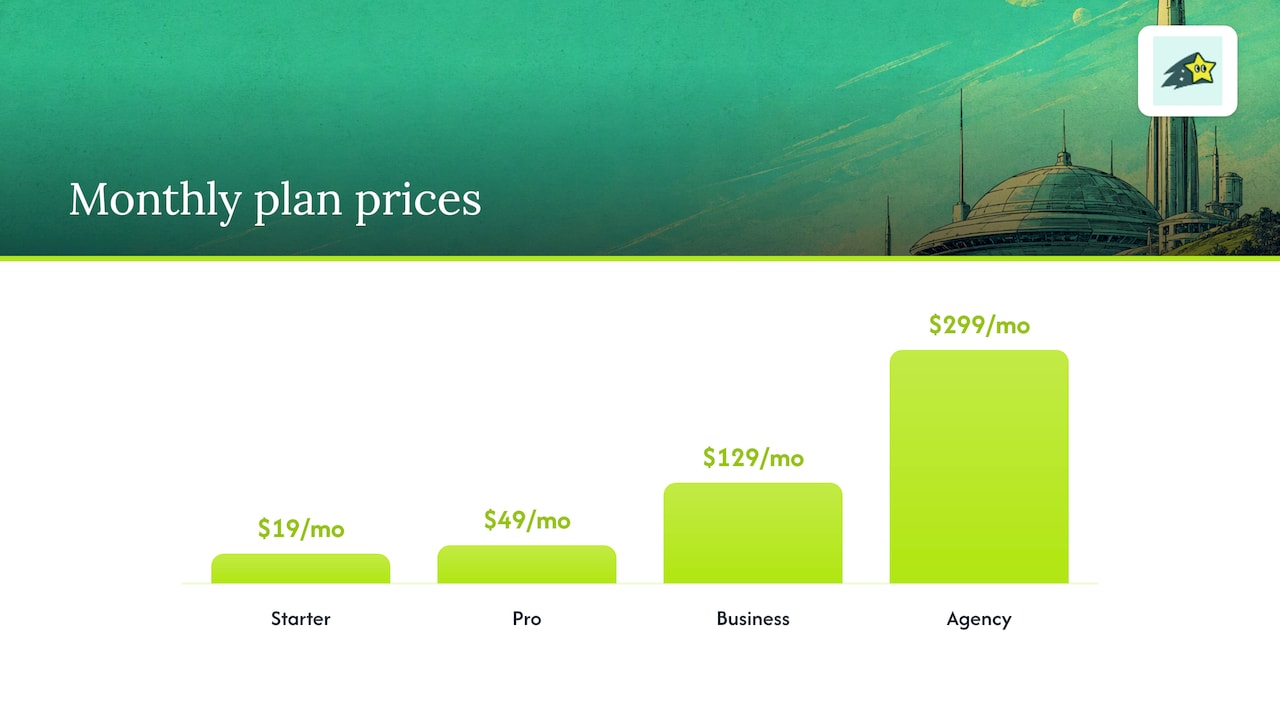
Compare current site, monitoring, impression and feature allowances on the Cromojo pricing page. A free plan is available, and monthly versus annual commitments differ. Paid overages are not available on every tier; check the specific plan before forecasting growth costs.
Consider Cromojo when you need website acquisition context alongside recorded sales. Keep a subscription metrics tool when the decision requires recurring-revenue movements, retention or cohorts. Attributed sales can complement those reports, but do not prove that a campaign caused incremental revenue.
Which one fits your situation
Why content and acquisition data belong in the picture
Subscription metrics describe recurring revenue and retention; acquisition data helps investigate how customers first found you. Connect the two only where the underlying identifiers and permissions support it. This is a measurement design task, not something a dashboard label settles.
Acquisition analysis needs recorded context and a supported link to the payment. Gaps, unknown sources and different attribution windows remain possible. Keep payment reconciliation separate and label organic keyword revenue as estimated.
Our perspective
Most teams we talk to do not have a metrics problem. They have an attribution problem. They can read their MRR to the dollar, but they cannot say which keyword or page paid for the last month.
We built Cromojo to bring recorded website activity, eligible payment matches and configured monitoring into one workflow. That helps teams investigate commercially important pages. It does not tie every visit or indexing event to a payment, and available insights depend on connected tools, enabled checks and data coverage.
Our advice is simple: pick the tool that answers the question you ask every Monday. If that question is "where did our revenue come from?", attribution, monitoring and indexing in one place cut the technical overhead and the number of tools you manage.
A short checklist before you switch
- Export your history. Confirm you can import historical data into the new tool and export it from the old one.
- Reconcile one month. Compare MRR, revenue or order totals between tools. Differences usually come from how each defines churn, refunds and plan changes.
- Model the price at growth. Calculate the cost at double your current revenue or traffic.
- Check add-ons. Recovery, cancellation tools and extra seats are often priced separately.
- Run a trial with real data. A sample account hides integration problems.
- Decide what stays. Keep billing-side metrics where you need investor-grade definitions, and add attribution where you need to act on acquisition.
Try revenue attribution on your own site
If your next decision is about content, ads or SEO, review the tracked pages and campaigns alongside matched sales and estimated organic keyword revenue. Confirm your tracking mode and checkout integration, then test known purchases and unknown cases. Compare current plans and the revenue analytics workflow.
For help improving the journey after the click, discuss the current scope and pricing of our conversion optimisation services.