

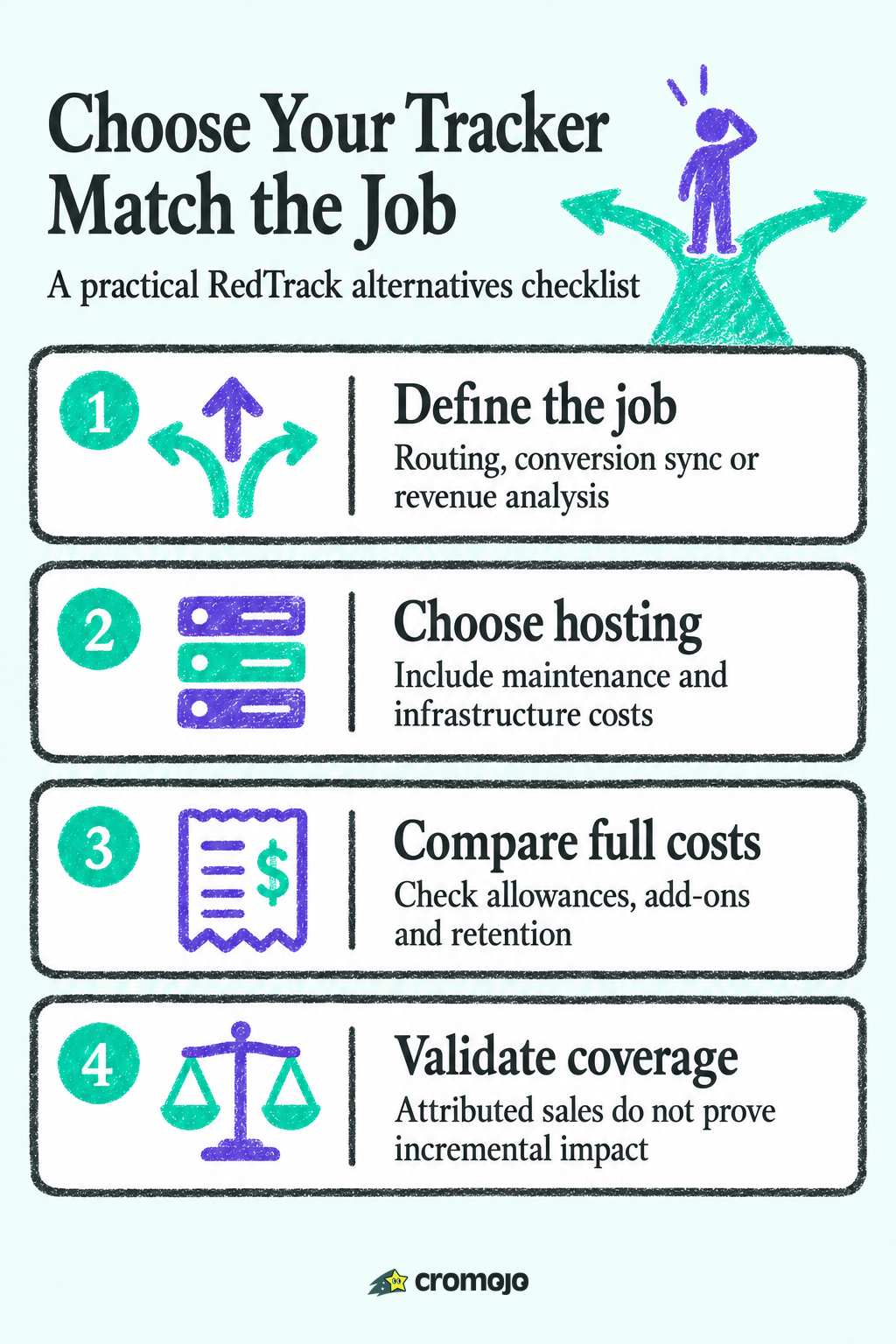
The best RedTrack alternative depends on the job you need done. Media buyers who run affiliate offers through traffic sources tend to look at Voluum, Keitaro or Binom. Ecommerce teams that want to know which pages, keywords and channels earn actual revenue are usually better served by a revenue analytics platform such as Cromojo, Triple Whale or AnyTrack. This guide sorts the options by use case, explains the real trade-offs, and shows how to choose without paying for features you will never use.
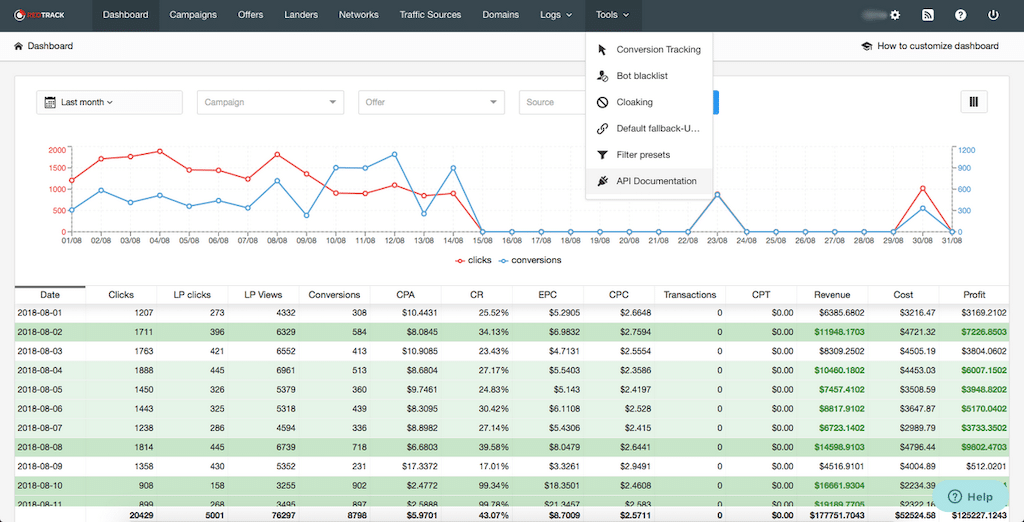
What RedTrack does, and why people look elsewhere
RedTrack is a cloud performance-marketing platform covering attribution, conversion APIs, cost and revenue sync, reporting and integrations with stores as well as affiliate networks. Its relevance is broader than affiliate traffic alone. Compare the workflows you actually use before deciding whether to replace it.
That focus is also why some people move on. The common reasons are:
- Fit. If you run a store rather than a network of affiliate offers, campaign routing, traffic-source templates and postback setups can be more machinery than you need.
- Pricing model. Cloud trackers are often priced by tracked events, so cost rises with volume. Technical comparisons describe this as the trade-off between operational simplicity and event-based pricing, against self-hosted tools that offer cost predictability but put server management on you.
- Scope. A tracker tells you about clicks and conversions. It does not necessarily tell you whether your pages are indexed, whether your site went down overnight, or which organic keywords bring paying customers.
- Privacy. Teams that want to avoid cookies in their analytics stack look for tools designed that way from the start.
None of this makes RedTrack a bad product. It means the right alternative depends on which of those four reasons applies to you.
RedTrack alternatives at a glance
We have deliberately left exact prices out of this table. Vendors change plans often, and a figure copied into a comparison goes stale. Each tool's own pricing page is the place to confirm the current number, and the section on cost below explains what to compare.
The alternatives in detail
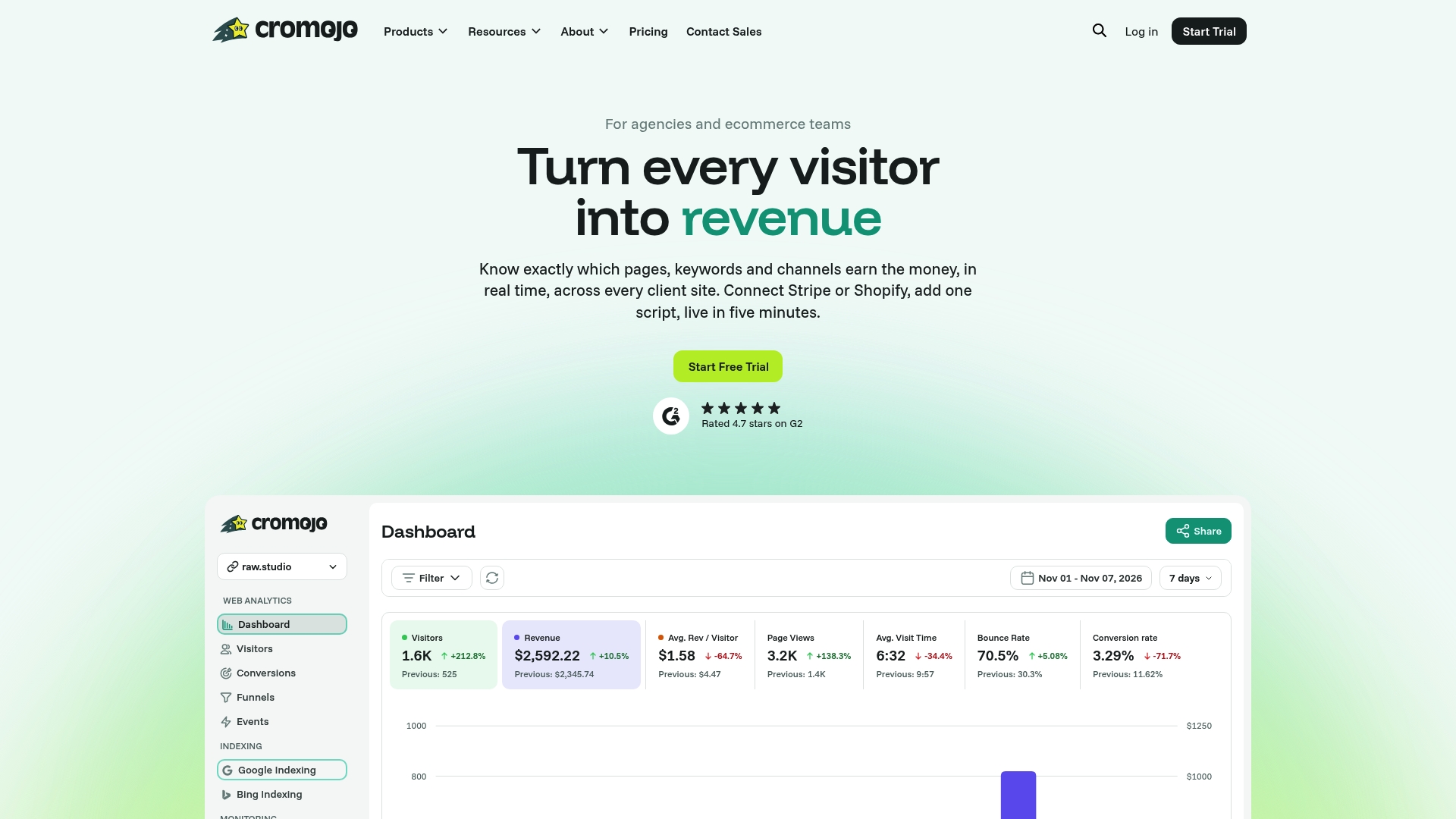
Cromojo: revenue analytics for ecommerce and agencies
We build Cromojo for teams reviewing traffic alongside attributed revenue. Its revenue analytics connects eligible Stripe or Shopify purchases with recorded activity using a supported checkout reference. Matching depends on implementation; organic keyword revenue is estimated from Search Console click share. Attribution credit does not establish incremental sales.
Cookie-free analytics is the default; optional returning-visitor tracking uses cookies and browser storage. Installation, browser restrictions and checkout compatibility affect coverage. Verify multi-site reporting and cross-domain behaviour for your setup rather than assuming every journey is joined.
Automated indexing supports eligible submissions through configured Google, Bing and IndexNow integrations. Verification, quotas and engine decisions apply; submission does not guarantee indexing, ranking or AI visibility. Website monitoring covers enabled checks and scanned-page audits, with configured email alerts. Coverage and timing depend on settings and plan.
Where it is not the right fit: if your daily work is routing paid traffic across landing pages and offers, splitting traffic between affiliate networks and receiving postbacks from them, a dedicated ad tracker is built for that and Cromojo is not.
Voluum: the closest cloud alternative
Voluum is a cloud ad tracker worth evaluating when you need campaign tracking, conversion postbacks and traffic management. It overlaps with RedTrack, but "closest" is a use-case judgement rather than a tested ranking. Check required integrations and usage allowances in a current quote.
The differences are in the details: which traffic sources have native integrations, how each handles conversion postbacks, how reports are built, and how pricing scales. Because both vendors update these regularly, run a trial of each with the same live campaign and compare the numbers against your ad platform and your payment processor. A tracker that cannot reconcile with your real revenue is a problem whichever logo is on it.
Migration is usually the practical worry. Expect to recreate campaigns, offers and traffic-source settings, update tracking links and postback URLs, and run both tools in parallel for a short period before cutting over.
Keitaro and Binom: self-hosted control
Keitaro provides ad tracking with a self-hosted model. Binom offers both self-hosted and cloud versions. For self-hosting, budget for installation, patching, backups, monitoring and capacity, not only the licence. Fixed licence pricing does not make infrastructure costs fixed.
Self-hosting can fit a team with an accountable technical owner. Compare the required deployment, support and recovery arrangements before deciding it is cheaper than a managed service.
AnyTrack: one tag across ads, funnels and networks
AnyTrack offers conversion tracking, attribution and conversion delivery to ad platforms across ecommerce, affiliate, lead-generation and funnel use cases. Test its supported integrations and purchase events; one-tag positioning does not mean every integration needs no configuration.
Triple Whale: ecommerce attribution for ad-heavy brands
Triple Whale offers ecommerce measurement, attribution, marketing-mix modelling and incrementality tools, alongside reporting and data products. Its current site also lists AI visibility reporting, so describing it as having no search-related features is too broad. Check plan access, integrations and which measurement method answers your question.
SegMetrics: funnel analytics for info businesses
SegMetrics connects marketing activity with contacts, purchases and customer value across funnels. It is worth testing for lead nurture, subscriptions or long customer journeys when its integrations fit. It is not restricted to one business model; check your payment and CRM connections.
Cloud convenience versus infrastructure control
Choose hosting after defining the tracking job. Managed services handle infrastructure but still need configuration, permissions and data-quality ownership. Self-hosted options add server operations. Pricing can depend on events, revenue, allowances, licences or other terms; neither hosting model guarantees the lower total cost.
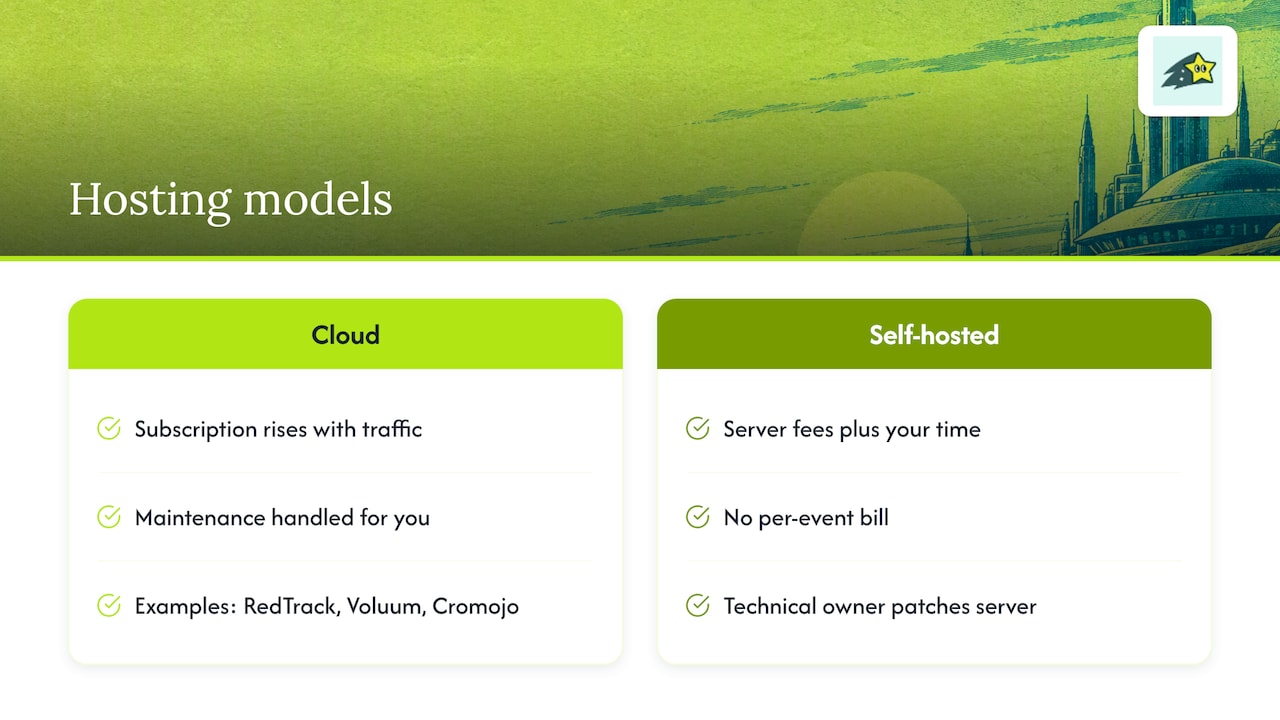
A useful rule: if you cannot name the person who will patch the server, pick cloud. If you have steady, high, predictable volume and a technical owner, price self-hosted properly. Whichever you choose, the tracker is only as good as the campaigns behind it, so it pays to get ad management handled well before you blame the numbers.
What to compare before you switch
Use this checklist on any shortlist, including ours.
- What counts as the billing unit? Check users, events, clicks, pageviews, sites, revenue or licences as applicable, plus allowances, overages and add-ons. Confirm current terms for the exact plan.
- Where does revenue come from? Reconcile unique orders, statuses, currency, refunds and reporting dates. Payment integrations do not guarantee every purchase can be attributed to a visit.
- What data and storage does tracking use? Review browser storage, server-side identifiers, consent settings and applicable requirements. Cookie-free does not automatically mean consent-exempt or complete coverage.
- Do you need traffic routing? If yes, you need an ad tracker. If you only need to know which sources pay off, an analytics platform is simpler.
- Who will run it? Self-hosting needs an owner. Cloud tools need configuration, data-quality and billing owners.
- How many sites or clients? Agencies should look at multi-site pricing and reporting rather than per-site cost alone.
- How fast can you leave? Check data export before you commit.
How the cost models differ
Request quotes using the same workload and retention needs. Include tracked volume, integrations, domains, client access, history, exports, support and hosting. A low entry price is not a like-for-like comparison when allowances or features differ.
Use this checklist when comparing current pricing pages, including Cromojo's:
Confirm current limits and feature access on the Cromojo pricing page; do not assume an older comparison lists today's plans.
Our view: most stores need answers, not routing
We have talked with enough small ecommerce teams to see a pattern. They adopt a powerful ad tracker because it is what performance marketers use, then spend weeks configuring it and still cannot say which blog post or keyword produced last month's sales.
Some teams need campaign routing and conversion delivery; others need site and revenue reporting, and some need both. Cromojo uses recorded activity and eligible purchase matching rather than reconstructing every buyer journey perfectly. Keep unknown purchases visible and distinguish estimated keyword revenue from observed campaign data.

We also think search visibility belongs in the same place. If a page that earns money is not indexed, or your site was down during a campaign, an attribution report cannot warn you after the fact. That is the reason indexing and monitoring sit beside the revenue data.
Our honest advice: if you buy traffic through networks and optimize offers daily, test Voluum or a self-hosted tracker. If you sell products or run client stores and want to see what earns money, start with a revenue tool. Many teams end up running both, each for its own job.
Try revenue-first analytics with Cromojo
If you want traffic and eligible purchase reporting together, review the supported Stripe or Shopify checkout setup, install the snippet and test a purchase before relying on attribution. Use the analytics dashboard to inspect recorded activity and allow for matching and processing dependencies.
Review current subscriptions on the pricing page. If you need implementation and conversion support, confirm scope and fees for conversion optimisation services separately.
How to choose in five minutes
- You run affiliate offers and buy traffic daily: Voluum, or RedTrack if it already works for you.
- You have a developer and high steady volume: Keitaro or Binom.
- You run a Shopify store with a large paid budget: Triple Whale, or Cromojo if organic search matters as well.
- You manage several client sites: Check Cromojo's current multi-site reporting and plan limits.
- You need conversions synced back to ad platforms: AnyTrack.
Pilot a representative campaign and purchase flow for a period that covers your conversion lag. Reconcile orders, currencies, refunds, time zones and attribution windows, including unmatched purchases. Bank payouts differ from gross sales and attributed revenue, so matching a bank total is not by itself a quality test.