


Choose a ProfitWell alternative around the question you need answered. Baremetrics and ChartMogul focus on subscription health; Stripe Billing analytics and Sigma offer different ways to inspect Stripe data; Cromojo focuses on recorded traffic and eligible purchase attribution. This guide compares six tools, including ProfitWell as the baseline, rather than treating them as interchangeable replacements.
Why people look for a ProfitWell alternative
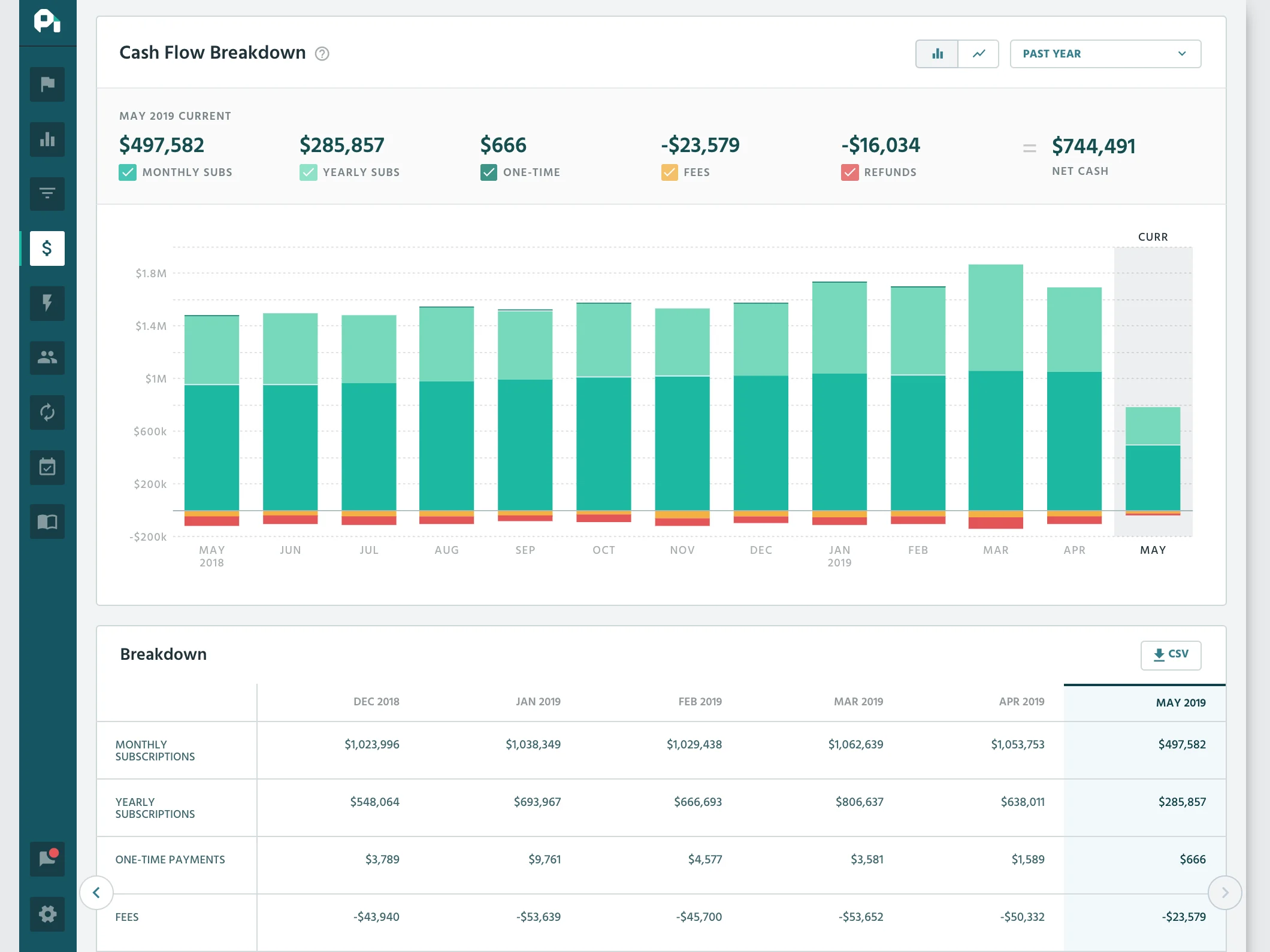
Paddle's ProfitWell Metrics offers subscription KPIs including MRR, churn, customer lifetime value and active customers. Paddle currently markets Metrics as free. Check supported billing integrations, data import and metric definitions against your account before relying on it.
So why leave? The reasons we hear most often are these:
- Billing system fit. Verify the exact supported processor, product version, historical import and custom-data options rather than assuming every integration behaves the same way.
- Product direction. Ask the vendor about the features and support relevant to your deployment. A third-party opinion about roadmap investment is not evidence that a product is being discontinued or neglected.
- Marketing context. Subscription platforms may support segmentation, customer attributes and CRM data. Check whether the acquisition data you need is actually collected and joined; a subscription dashboard is not automatically a complete attribution system.
- Different business model. Not every business has recurring revenue. A store selling one-time purchases gets little from MRR and churn charts.
The second and third points pull in different directions, which is why the list below mixes two kinds of tools.
What to check before you choose
Before comparing logos, answer these five questions:
- Do you have recurring revenue? If yes, you need MRR, churn and cohort reporting. If not, you need revenue per page or channel.
- Where does your billing data live? Stripe, Paddle, Shopify, Chargebee or something else. Check native connectors, supported imports and any custom integration work.
- Do you need to see marketing sources? Subscription tools generally measure the customer after payment. Attribution tools measure the visit that led to it.
- How will pricing scale? Some tools price by revenue band, others by pageviews or tracked sites. Read what happens when you grow.
- Who will read the dashboard? A founder, a marketing team and an agency's clients each need a different level of detail.
ProfitWell alternatives compared
Prices change, so confirm each on the vendor's own pricing page before you buy.
Baremetrics
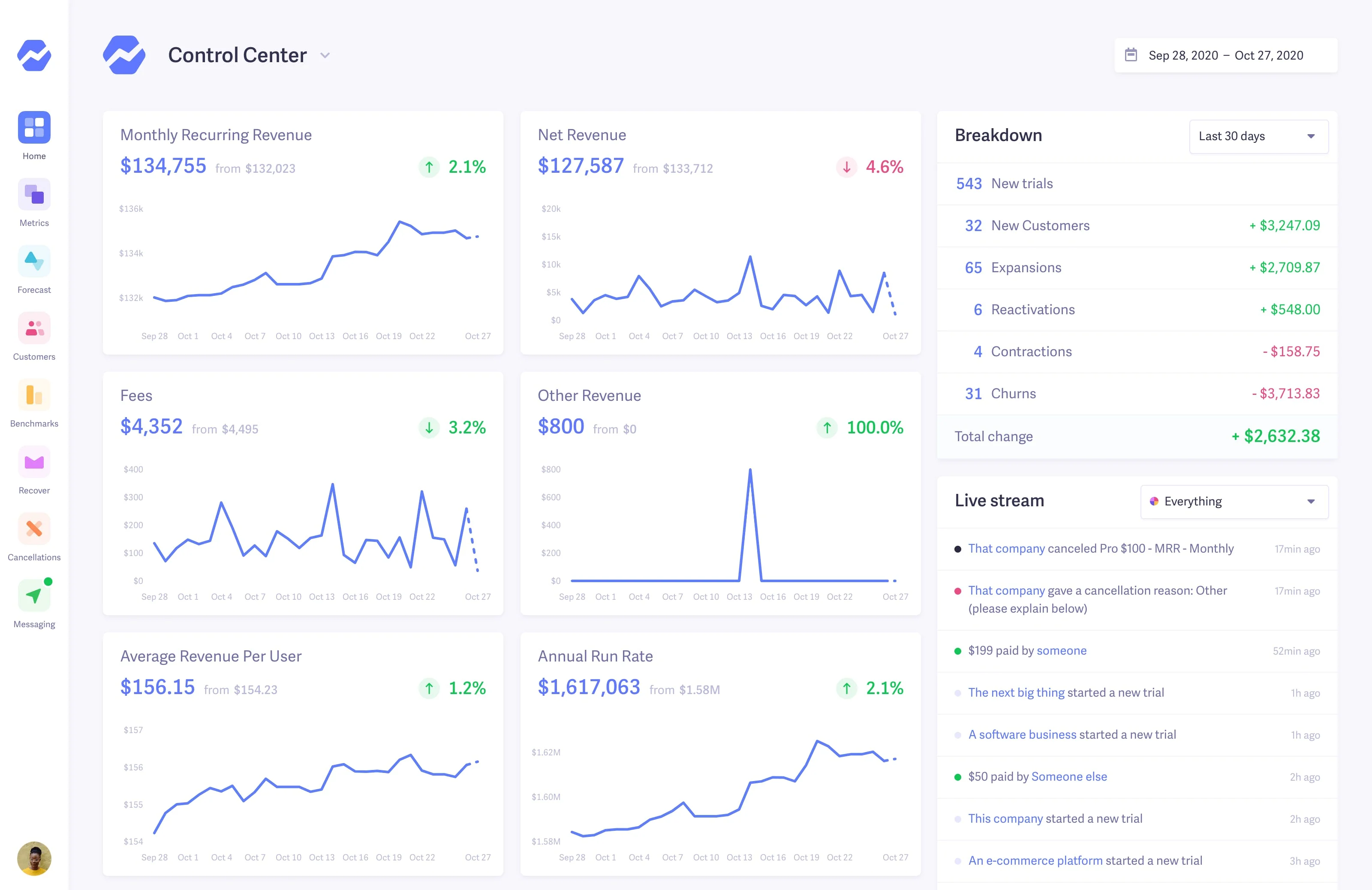
Baremetrics provides subscription analytics with plan-dependent reporting, forecasting and integrations, plus payment-recovery and cancellation products. Test its metric definitions and billing connections against your business rather than assuming it is only useful with Stripe.
Baremetrics pricing, checked on 30 October 2026, scales with tracked revenue and selected features. The page displays different monthly and annual figures, so confirm the chosen billing term and quote. Payment Recovery and Cancellation Insights are listed separately at $129 per month each; verify current terms, currency and inclusions.
Where it wins: a clean interface, Stripe depth and built-in tools for recovering failed payments.
Where it may not fit: there is no free tier, and add-ons raise the total cost quickly. It also stays focused on subscription finance, not on traffic sources.
ChartMogul
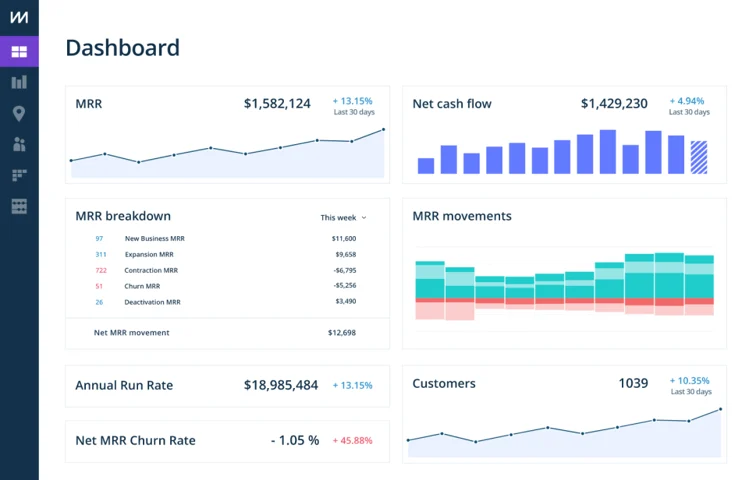
ChartMogul supports subscription reporting, segmentation and multiple billing sources on relevant plans. Compare imports, customer identifiers and exports for your actual setup. Subscription metrics and deferred-revenue accounting are different jobs; do not assume revenue recognition is included without verifying the product.
ChartMogul's current pricing, checked on 30 October 2026, lists a Free plan up to $10,000 MRR ($120,000 ARR). Paid pricing scales with revenue and billing term. Starter targets a single billing system; Pro includes multiple billing systems and warehouse export. Check current connector coverage and the quote for your revenue band.
Where it wins: flexibility, data export and a free entry point for early-stage companies.
Where it may not fit: the depth is more than a small team may use, and it still measures revenue after the sale, not the marketing that caused it.
Stripe's own reporting
Stripe Billing analytics provides recurring-revenue metrics, filters and downloadable reports within the Stripe Dashboard. Review how Stripe defines MRR and churn, and whether those definitions match your reporting needs. This can be a useful baseline for Stripe-only billing; it does not automatically unify other processors.
Stripe Sigma
Stripe Sigma is a separate custom-reporting product for querying Stripe data using SQL and supported natural-language features. It can answer questions beyond the standard dashboard, but queries need validation and ownership. Sigma has a trial and separate usage-based pricing; it is not universally included at no extra charge. Check regional pricing and data freshness.
Cromojo
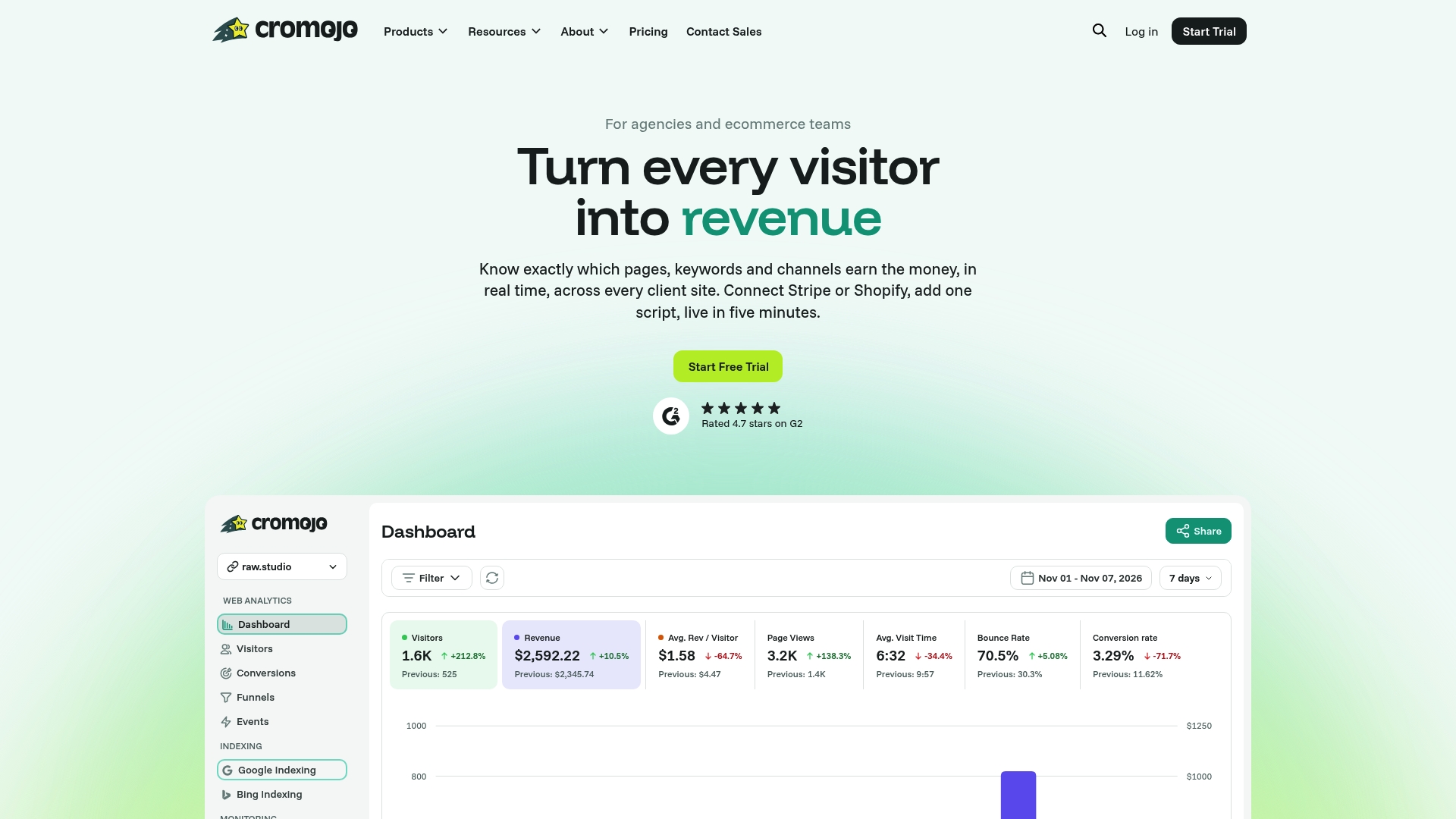
Cromojo focuses on web activity and eligible purchase attribution. It matches recorded activity to Stripe or Shopify purchases through a supported checkout reference. Coverage depends on implementation and available data; organic keyword revenue is estimated from Search Console click share. It is not a substitute for subscription accounting or a complete MRR and churn system.
What you get:
- Revenue attribution by recorded page, source and campaign, with estimated organic keyword revenue.
- Real-time analytics with conversion funnels, visitor journeys, goal tracking and advanced segmentation.
- Automated indexing supports eligible submissions through configured Google, Bing and IndexNow integrations. Verification, quotas and engine decisions apply; submission does not guarantee indexing, rankings or AI visibility.
- Website monitoring reports enabled domain checks and scanned-page audits, with configured alerts. Coverage and timing depend on setup and plan.
- Cookie-free analytics is the default. Optional returning-visitor tracking uses cookies and browser storage. Browser restrictions, installation and checkout setup affect coverage; cookie-free does not automatically remove privacy obligations.
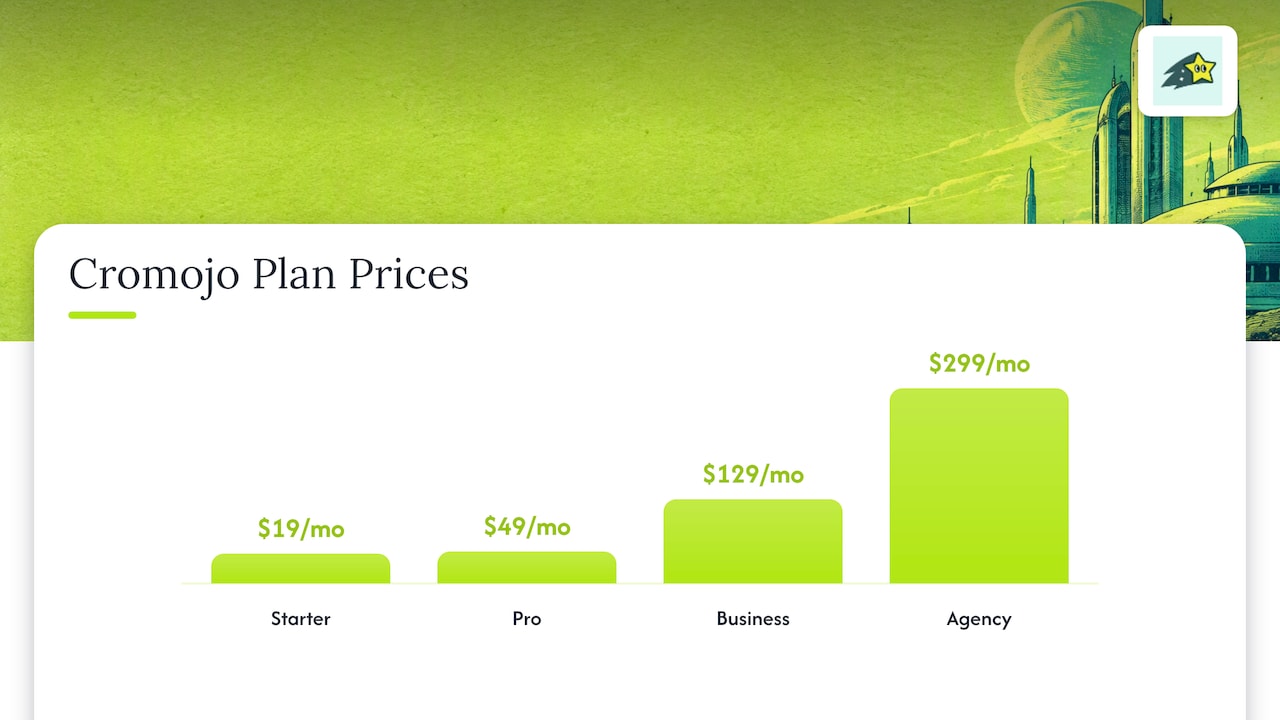
Confirm current subscription limits, feature access, billing terms and any usage charges on the Cromojo pricing page.
Where it can fit: reviewing recorded acquisition activity alongside eligible purchases and site checks. Unmatched purchases remain possible; attribution is not proof that the marketing activity caused a sale.
Where it may not fit: if your main need is MRR waterfalls, churn cohorts and dunning for a pure SaaS product, a dedicated subscription tool is the better primary choice.
ProfitWell vs Baremetrics vs ChartMogul in short
These two head-to-head questions come up constantly, so here is the compact answer.
ProfitWell vs Baremetrics. Compare the free ProfitWell baseline with the Baremetrics plan and optional recovery features you need. Check definitions, integrations and costs rather than assuming a paid product is automatically more accurate or deeper in every area.
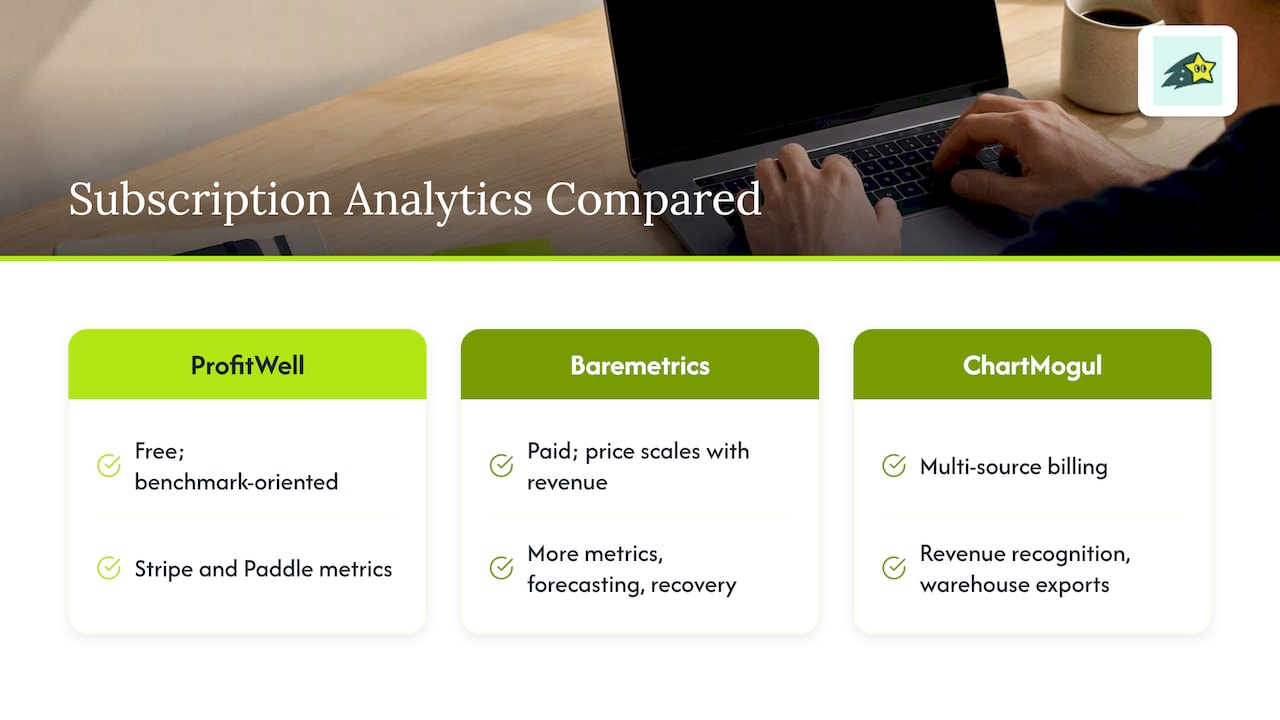
ProfitWell vs ChartMogul. Compare your supported billing sources, segmentation and export needs. ChartMogul's multi-source and warehouse capabilities vary by plan. Validate historical results before selecting either product.
Either one vs Cromojo. The comparison is not like for like. The subscription tools answer "how healthy is our recurring revenue?" Cromojo answers "which of our pages and campaigns produced it?"
Which one fits your situation
- Early SaaS on Stripe, tight budget: start with ChartMogul's free tier or ProfitWell, depending on your billing system.
- SaaS that wants recovery and cancellation tools: Baremetrics, with the add-on costs in your budget.
- Multiple billing sources or investor reporting: ChartMogul.
- Ecommerce store, content-led growth or SEO: Cromojo, because the question is which pages sell.
- Agency with several client sites: Check Cromojo's current multi-site access, reporting and plan limits.
- SaaS that also runs content marketing: pair a subscription tool with revenue attribution. Linking spend to revenue is the core of , and subscription dashboards alone don't do it.
Our perspective
Traffic volume alone does not establish business value. Subscription analytics and acquisition reporting can complement each other: one tracks recurring-revenue health, while the other connects recorded marketing activity with eligible purchases. Some subscription tools can also use acquisition attributes, so evaluate the data flow rather than assuming they are silent about marketing.
That is why we don't think of ourselves as a drop-in ProfitWell replacement, and we would rather say so. If you need MRR and churn math, use a tool made for it. If you need to know where revenue comes from, and you would like indexing and site health checks in the same dashboard instead of three separate subscriptions, that is the gap we fill. Our rule of thumb: pick the tool that answers the question you ask every Monday morning.
Try revenue attribution on your own site
To evaluate Cromojo, install the snippet, connect Stripe or Shopify, configure the supported checkout reference and test a purchase. Compare matched and unmatched orders and review estimated keyword reporting separately. Technical setup may be needed; connecting a payment account alone does not reconstruct every journey.
Review current plans and feature access on the Cromojo pricing page before choosing a subscription.