

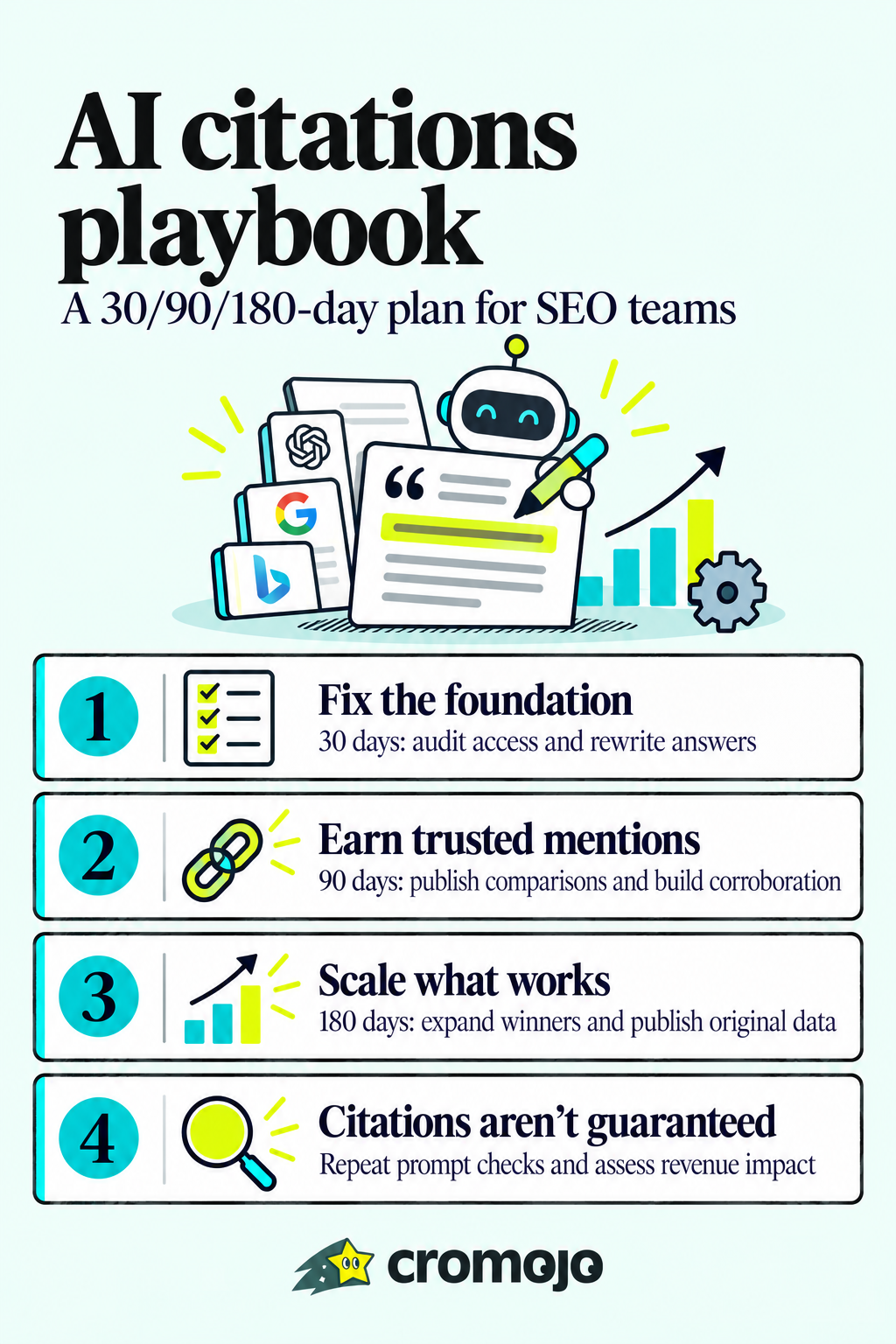
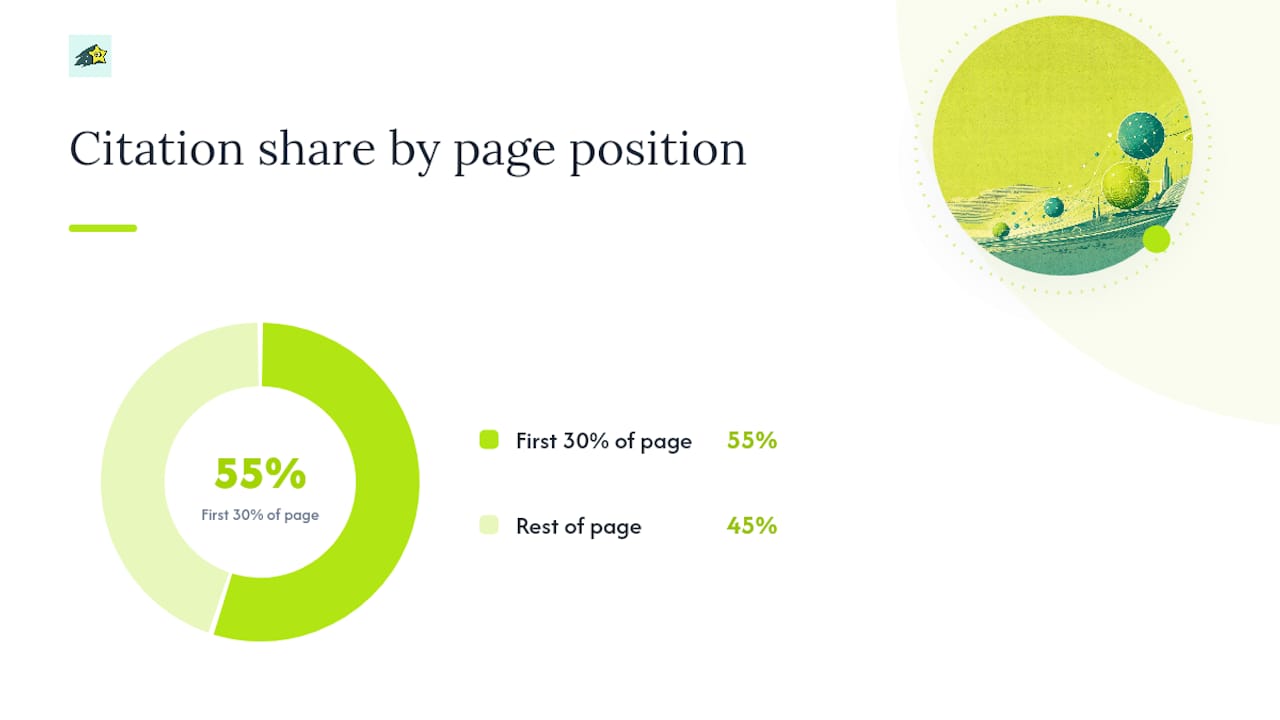
The fastest path to getting cited by AI comes down to three moves: write short, quotable answer passages near the top of your pages, remove every technical barrier that keeps AI crawlers from fetching those passages, and earn corroboration from third-party lists and expert hubs. Roughly 55% of AI Overview citations come from the first 30% of a page, and clear markup like Schema helps confirm what you're saying and who is saying it. None of this is guaranteed. Citation is probabilistic, so you track it with repeated prompt checks, not a single test.
See Which SEO Efforts Drive Revenue
Cromojo connects search visibility, website performance, and actual sales, helping teams understand which pages and channels contribute to revenue. Contact Cromojo.
What the Evidence Says About Which Signals Move Citations
Topic doesn't drive citation rate nearly as much as query type does. Commercial and "best/compare" prompts get cited at dramatically higher rates than basic definitional questions. One analysis found commercial queries were cited roughly nine times more often than plain definitional prompts across the same sample set. That single fact should reshape how you prioritize content. If you're writing a glossary entry explaining what a term means, you're competing for scraps. If you're writing "best X for Y" or "X vs Y," you're writing the format AI models actually reach for when they need to answer someone's question with a defensible list.
Source type distribution also varies sharply by engine, and this is where a lot of content teams waste effort chasing the wrong placements. An analysis of 8,000 AI citations found Wikipedia making up a large share of ChatGPT's citation pool, while Google's AI Overviews and Gemini lean more heavily on blogs, product content, and community platforms like Reddit. That's not a minor footnote. It means the exact same piece of content can perform very differently depending on which engine you are trying to reach:
- ChatGPT tends to pull from reference-style, encyclopedic sources and established authority sites.
- Google AI Overviews and Gemini cite blogs, news, and Reddit threads more freely, rewarding fresher and more specific content.
- Perplexity is citation-first by design. It surfaces numbered sources constantly and rewards dated, quotable lines placed near the top of a page.
Quick stat: In one 100-page study of Google AI Overview citations, 55% of the quoted material came from the first 30% of the source page. That's the single strongest structural signal in the data.
Front-loading isn't a stylistic preference. It's a retrieval mechanic. Most AI systems don't read your entire page before deciding what to lift. They scan, chunk, and grab whatever states the fact most cleanly and fastest. A page that buries its actual answer under three paragraphs of setup is handing the citation to a competitor who didn't.
Authority and corroboration then decide who wins ties. A page ranking on page one of Google still might lose the citation to a page ranking on page three, if that lower-ranked page is echoed across multiple independent sources and the top-ranked page stands alone. Models increasingly favor claims that show up in more than one place, which is why corroboration functions almost like a second ranking signal running parallel to search position.
Technical Eligibility Checklist for AI Citation
Before any content strategy matters, your site has to be physically retrievable by the bots doing the fetching. This is the part teams skip because it feels like plumbing, not marketing, and it's usually the actual reason a page never shows up in an AI answer despite ranking well in Google.
- Allow the named crawler agents. Check your robots.txt and any firewall or bot-management rules for GPTBot, ClaudeBot, PerplexityBot, and Google-Extended. A rule blocking "bad bots" often catches these by accident, especially on sites using aggressive CDN-level bot protection.
- Server-side render your answer passages. If your core facts load only after a JavaScript framework hydrates the page, many crawlers never see them. The safest bet is rendering the actual answer text in the initial HTML response, even if the surrounding page uses a JS framework elsewhere.
- Confirm stable 200 responses. Pages that intermittently 403 or 503 under load, or redirect chains that hop three times before landing, quietly drop out of crawl budgets. Check server logs, not just uptime dashboards.
- Fix canonicalization and sitemaps. Duplicate or conflicting canonical tags confuse which version of a page gets indexed, and a bloated or outdated sitemap wastes crawl attention on dead URLs.
- Add visible datePublished and dateModified markup. Freshness signals matter more for AI retrieval than they used to for traditional search, and a visible, accurate date gives models a reason to trust a claim over a stale competitor.
Pro Tip:Run a "fetch as bot" test using a tool like Google's URL Inspection or a curl request with GPTBot's user agent string. If the returned HTML is missing your answer text, that's your bug, not a ranking problem.
Once you've made those fixes, validate them. Pull server logs weekly and look for actual crawler hits from the named bots above, not just assumed traffic. Cromojo's automated indexing tools can shorten the gap between publishing a fix and having it re-crawled, which matters because a stale cached version of your page can keep getting cited (or ignored) for weeks after you've fixed the underlying problem. Finally, test the real outcome directly: run the target prompt in ChatGPT, Perplexity, and Google's AI Overview, and see whether your fixed page shows up at all. Technical audits that stop at "the crawler can access it now" without confirming actual retrieval are only half finished.
How to Structure Content So Models Can Lift a Quotable Passage
The single highest-leverage writing habit for AI citation is the answer capsule: one clear claim per H2, with the first two sentences doing all the work. State the fact, name the entity or number involved, and stop hedging. A model deciding whether to quote your paragraph is scanning for a clean, standalone statement it can lift without editing, and hedged, qualifier-heavy prose rarely survives that scan intact.
Keep paragraphs short after that opening claim. Long, winding paragraphs bury the supporting detail a model might want as a second citation point. Where a fact is time-sensitive, attach a dateline or source line right next to it. "As of this update" attached to nothing is useless. "As of the research cited above" attached to an actual date and source is exactly the kind of clarity these systems are trained to prefer.
Comparison-style prompts favor tables and lists specifically, because that's the format the model's own output needs to take. If your content buries a comparison inside prose, you're forcing the model to do extraction work it would rather skip in favor of a competitor's page that already did it for them.
FAQ blocks deserve their own attention here, separate from the FAQ section at the end of this article. Marking your on-page FAQ with FAQPage schema doesn't guarantee a rich result, but it does give models a clean, pre-chunked question-and-answer pair to match against a user's follow-up prompt, which is exactly the retrieval pattern conversational AI tools run constantly.
The rule of thumb that ties all of this together: assume the model reads roughly the first third of your page and decides most of its judgment there. If your best evidence, your sharpest number, and your clearest claim are sitting in paragraph nine, you've written a good article that a model will mostly ignore.
Where to Earn Placements and Corroboration
Third-party placement is arguably a bigger lever than on-page optimization, and it's the one teams underinvest in because it doesn't feel like "content work." Ranked list pages and independent roundups account for a disproportionate share of citations across engines. In some samples, list-style pages made up a very large share of citations for ChatGPT and Claude specifically. That means your own perfectly optimized page might matter less than whether you appear on someone else's "best of" list.
The tactical outreach plan looks different from traditional link building, though it borrows some of the same muscles:
- Pitch targeted inclusion, not generic backlinks. Identify the five or ten roundup and comparison pages that already rank and get cited for your category, and pitch a specific reason your product or data point belongs in an update, not a vague guest post offer.
- Optimize your review profiles. Google Business Profile, G2, Capterra, or category-specific review hubs feed directly into the corroboration signal models look for. A thin, outdated profile is a missed citation opportunity sitting in plain sight.
- Write contributor pieces for niche hubs your buyers already trust. A single well-placed guest article on a respected industry site often out-earns a dozen mediocre ones on generic guest-post networks.
- Show up authentically in community spaces. Reddit threads, Quora answers, and LinkedIn discussions get pulled into citation pools directly, especially for Google's AI Overviews and Gemini, which lean on community content more than ChatGPT does.
- Treat YouTube as a citation surface, not just a traffic channel. Video transcripts and descriptions are quotable text. A clearly written description with a direct, plainly stated claim performs the same job as a strong opening paragraph on a blog post.
One overlooked tactic ties all of this together: language alignment. If the roundup pages that already get cited for your category describe the space using specific wording, matching that wording in your own content increases co-occurrence signals that help models connect your page to the same topic cluster. Fighting for a completely novel phrase might win you a content award. It rarely wins you a citation.
How to Measure AI Mentions and Interpret the Signals
Measurement here means running the same prompts repeatedly and tracking what changes, not checking once and moving on. Build a frozen set of ten to twenty prompts that represent how your actual buyers ask questions, and run them consistently across ChatGPT, Perplexity, Gemini, Claude, and Google's AI Overviews. Record three outcomes for each: whether you were mentioned by name, whether you were actually cited with a link, and which specific URL got the citation.
- Referral traffic from AI surfaces is real but undercounted. Many AI-driven visits arrive with weak or missing referral data, so segment what you can identify and treat the number as a floor, not a ceiling.
- Watch for proxy signals, like a sudden increase in branded search queries, which often indicates AI-driven exposure even when the click never lands directly.
- Automate the scan where you can. A tool like aiseotracker can run the Mentioned/Cited/Cited URL check on a schedule instead of manually, which matters because citation status shifts week to week as models refresh.
Statistic to watch: Citation studies consistently show homepages account for only a small share of total AI citations, compared to deep, specific pages and third-party list entries. If your tracking only checks your homepage prompt, you're measuring the wrong page.
The KPIs that actually matter are citation rate per prompt (how often a given question surfaces your brand across a rolling 30 day window), the count of distinct third-party corroborations you can point to, and indexing time, meaning how fast a patched or updated page gets re-crawled and reflected in a fresh citation check. Log every experiment change against these three numbers, or you'll never know which fix actually moved the needle.
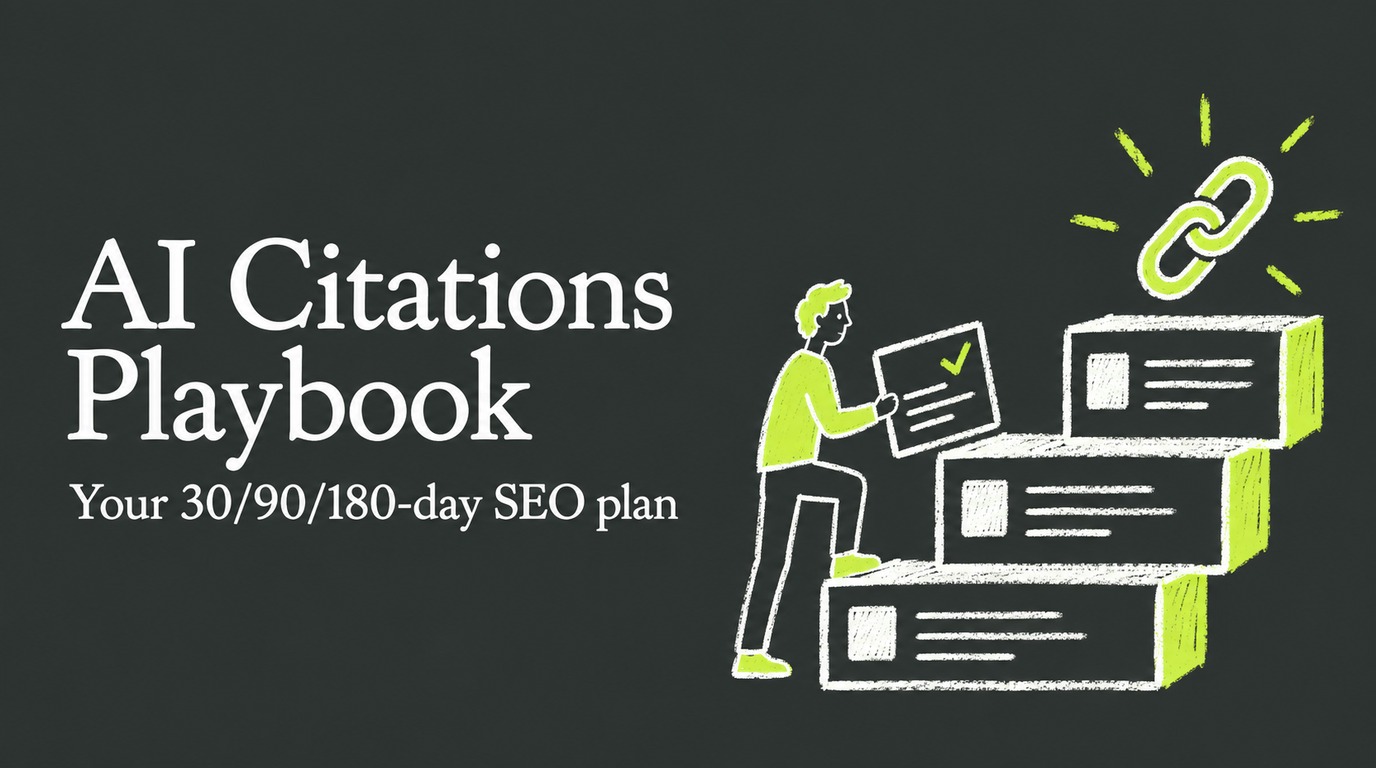
A Prioritized 30/90/180 Plan to Increase AI Citation Odds
Days 0 to 30: Fix the foundation.
- Audit robots.txt and firewall rules for GPTBot, ClaudeBot, PerplexityBot, and Google-Extended access.
- Confirm server-side rendering on your highest-traffic, highest-revenue pages.
- Rewrite the opening two sentences of your top ten pages into tight answer capsules with a named entity or figure where one is available.
- Run your first frozen prompt-set baseline across the major AI engines so you have a "before" snapshot.
Days 31 to 90: Build citable assets and placements.
- Publish two or three original data-driven listicles or comparison pages in your category, using tables where the prompt type calls for one.
- Identify the top five third-party roundup pages already cited for your niche and pitch targeted inclusion.
- Secure at least two to three genuine corroborations, whether that's a review platform update, a contributor piece, or a community mention that sticks.
Days 91 to 180: Scale and institutionalize.
- Turn your best-performing pages into a repeatable production template and apply it across the next tier of content.
- Pursue PR placements that generate independent mentions you don't control directly, which is exactly the kind of corroboration models weigh heavily.
- Publish first-party benchmark data or case studies. Original numbers that don't exist anywhere else are some of the most citable material you can produce, because no other source can say it first.
Pro Tip:Prioritize pages by revenue potential, not traffic volume alone. A page driving actual purchases through a smaller but more qualified audience deserves the answer-capsule rewrite before a high-traffic blog post that never converts. Assign clear ownership for each 30 day block. Citation work stalls fastest when it's "everyone's job," because it always ends up nobody's.
How Cromojo's Tools and Data Support Citation-Ready Content
Getting content cited depends on speed almost as much as quality. A perfectly rewritten answer capsule sitting on a page that takes two weeks to get re-crawled is a wasted rewrite. This is where the mechanics behind Revenue Analytics and indexing tools become directly relevant to the tactics above, not just a side benefit.
- Automated indexing and re-indexing shortens the window between publishing a fix (an answer capsule rewrite, a new comparison table, an updated date stamp) and having AI crawlers actually see it. That gap is often where citation opportunities quietly die.
- Site monitoring flags the downtime, error codes, and rendering problems that silently break crawler access, the same issues covered in the technical eligibility checklist above.
- Revenue-linked case studies built from real attribution data give you original, first-party numbers to publish, which is exactly the kind of citable fact models prefer over recycled industry statistics.
- Consistent publisher identity across your pages, meaning named authors, visible bios, and matching organization details, reinforces the authority signals models weigh when deciding between two similar claims.
None of this replaces the writing and outreach work. It removes the delay between doing that work and having it actually reach the systems deciding what gets quoted.
How AI Models Actually Select Sources for Citation
Models don't rank sources the way search engines rank pages. They retrieve a set of candidate passages, often through a hybrid of search results and their own trained knowledge, then score those passages for how directly they answer the specific prompt. A page can rank first on Google and still lose a citation to a page ranking fifth, if the fifth-ranked page states the exact fact more plainly and closer to the top.
Corroboration then acts as a confidence check. If three independent sources state the same fact in similar terms, a model has more reason to trust and surface that claim than a single unconfirmed source, even an authoritative one. This is part of why ranked list pages dominate citation pools: they aggregate multiple data points into one place, giving the model a single passage that already carries built-in corroboration.
Recency plays a role too, though it varies by engine and query type. A time-sensitive prompt (pricing, current statistics, "as of" questions) leans harder on freshness signals like a visible dateModified tag. A stable, evergreen prompt (how something works, what a term means) weighs authority and clarity more heavily than publish date.
None of this is a fixed algorithm you can reverse-engineer once and forget. Engines update their retrieval methods regularly, and what got cited reliably six months ago can quietly stop working without warning. That instability is exactly why ongoing prompt checks matter more than a one-time optimization pass.
Best Practices for Authoritative, Trustworthy Content That Gets Cited
Authority in AI citation isn't about credentials alone. It's about whether a claim is stated plainly enough, and confirmed widely enough, that a model treats it as safe to repeat. A few habits consistently separate content that gets cited from content that doesn't.
State facts as facts, not as hedged possibilities. A sentence like "some experts suggest this might help" gives a model nothing clean to lift. A sentence stating the claim directly, with a named source backing it, gives the model exactly what it's built to extract.
Name real people and real organizations behind your content. Author bylines, visible credentials, and consistent publisher details across your site build the kind of trust signal that both traditional SEO and AI retrieval systems reward, though for slightly different reasons. Traditional SEO uses it for E-E-A-T scoring. AI retrieval uses it as a shortcut for "is this claim coming from someone with a track record."
Keep your facts current and mark them that way. A page that hasn't been touched in two years, with no visible update date, is a weaker citation candidate than a competing page updated last month, even if the underlying information is technically still accurate.
Corroborate your own claims where you can. Linking out to the primary data or study behind a statistic, rather than just asserting the number, signals that your content is built on verifiable ground rather than repeated hearsay, and that habit tends to compound: the more your content plays that game well, the more other sites and models treat you as a safe source to echo.
Why Citation Odds Differ Across AI Platforms and Query Types
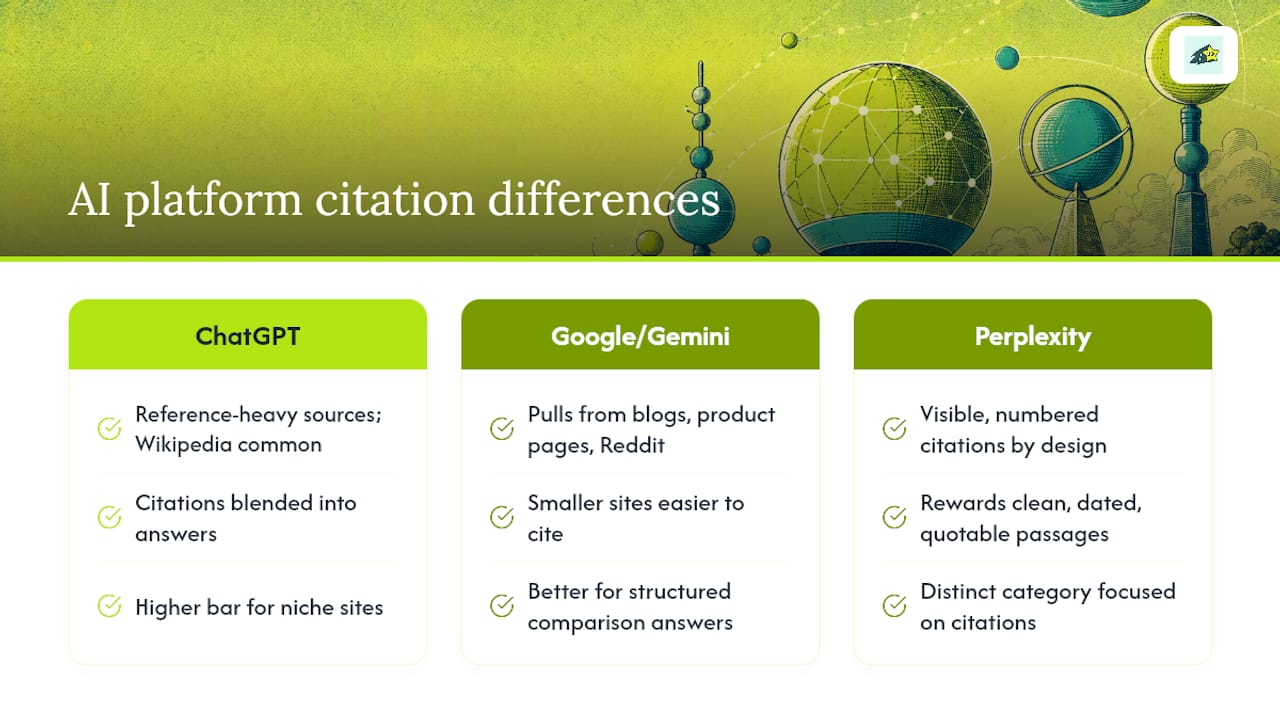
Not every AI surface behaves the same way, and treating them as one target wastes effort. ChatGPT's citation pool leans toward reference-heavy, encyclopedic sources, which is part of why Wikipedia shows up so often in its citations. That doesn't mean ChatGPT ignores blogs and niche sites entirely, but it does mean the bar for a smaller, specialized site to break through is generally higher there than on other engines.
Google's AI Overviews and Gemini pull more freely from blogs, product pages, and Reddit threads, which creates more opportunity for smaller, well-optimized sites to earn a citation without needing Wikipedia-level authority first. Perplexity sits in its own category: it's built around visible, numbered citations by design, and it rewards clean, dated, quotable passages more consistently than engines that blend sourcing into a single conversational answer.
Query type shifts the odds even further within any single engine. Commercial and comparison prompts, the "best X" and "X vs Y" queries, get cited at dramatically higher rates than plain definitional questions. A glossary-style page answering "what is X" is competing in the most crowded, least differentiated part of the citation pool. A well-built comparison page answering "which X should I use for Y" is competing in the part of the pool models actively need fresh, structured answers for.
The practical takeaway: audit your content mix by query type before you audit it by topic. A site full of definitional content, no matter how well written, is starting from a structural disadvantage that no amount of schema markup will fully offset.
Author Perspective: Weighing Citation Work Against Other Channel Goals
Chasing AI citations is a brand-reach play more than a direct traffic play, and treating it otherwise sets you up for disappointment. A citation with no click still shapes what a buyer believes about your category before they ever land on your site, which is real value, just not value that shows up cleanly in a sessions report. Test this on your highest-revenue topics first, not your entire content library. You want to know whether citation work moves the metrics that matter, branded search lift, assisted conversions, before you scale it across a hundred pages that may never justify the effort. Treat citeability as one lever among several, tied back to what actually drives revenue, not a goal chased for its own sake.
How Cromojo Supports the Tactics in This Playbook
Cromojo is the operational layer behind everything in this playbook, not a replacement for the writing and outreach work itself. Every tactic above depends on speed: how fast a rewritten answer capsule gets re-crawled, how quickly a broken render gets caught, and whether the pages you're investing citation effort into are the ones actually driving revenue.
Cromojo's automated indexing tool submits updated and new pages to Google, Bing, Yandex, Baidu, and AI search systems automatically, closing the gap between fixing a technical blocker and having it actually reflected in a fresh citation check. Paired with site monitoring for downtime and rendering errors, and revenue attribution that shows which pages your Stripe or Shopify sales actually trace back to, you get a clear answer to the question this whole playbook keeps circling back to: which pages deserve the answer-capsule rewrite first?
Start with the Automated Indexing feature page to see how instant indexing notifications work, or check the pricing page for current plan details if you want to run this on a smaller site before scaling up.