


Google Analytics is still one of the most capable analytics platforms available.
It is also more analytics than many small teams actually need.
That is the tension behind most searches for a Google Analytics alternative. People are not necessarily leaving GA4 because it is bad. They are often looking for something that answers their questions faster, requires less configuration, fits their privacy approach better, or connects website activity more clearly to business results.
A founder checking the dashboard on Monday morning may not need another exploration report.
They may simply want to know:
Where did our customers come from, and what actually made money?
Other teams have completely different priorities. A product company may need session replay and feature experimentation. A privacy-focused organization may care most about self-hosting. A small content site may want little more than reliable visitor and referrer numbers.
That is why calling any analytics platform the "best" without context is not especially useful.
The better question is:
Best for what?
Here is how the main Google Analytics alternatives compare in 2026, including the areas where they genuinely outperform Cromojo.
Key Takeaways
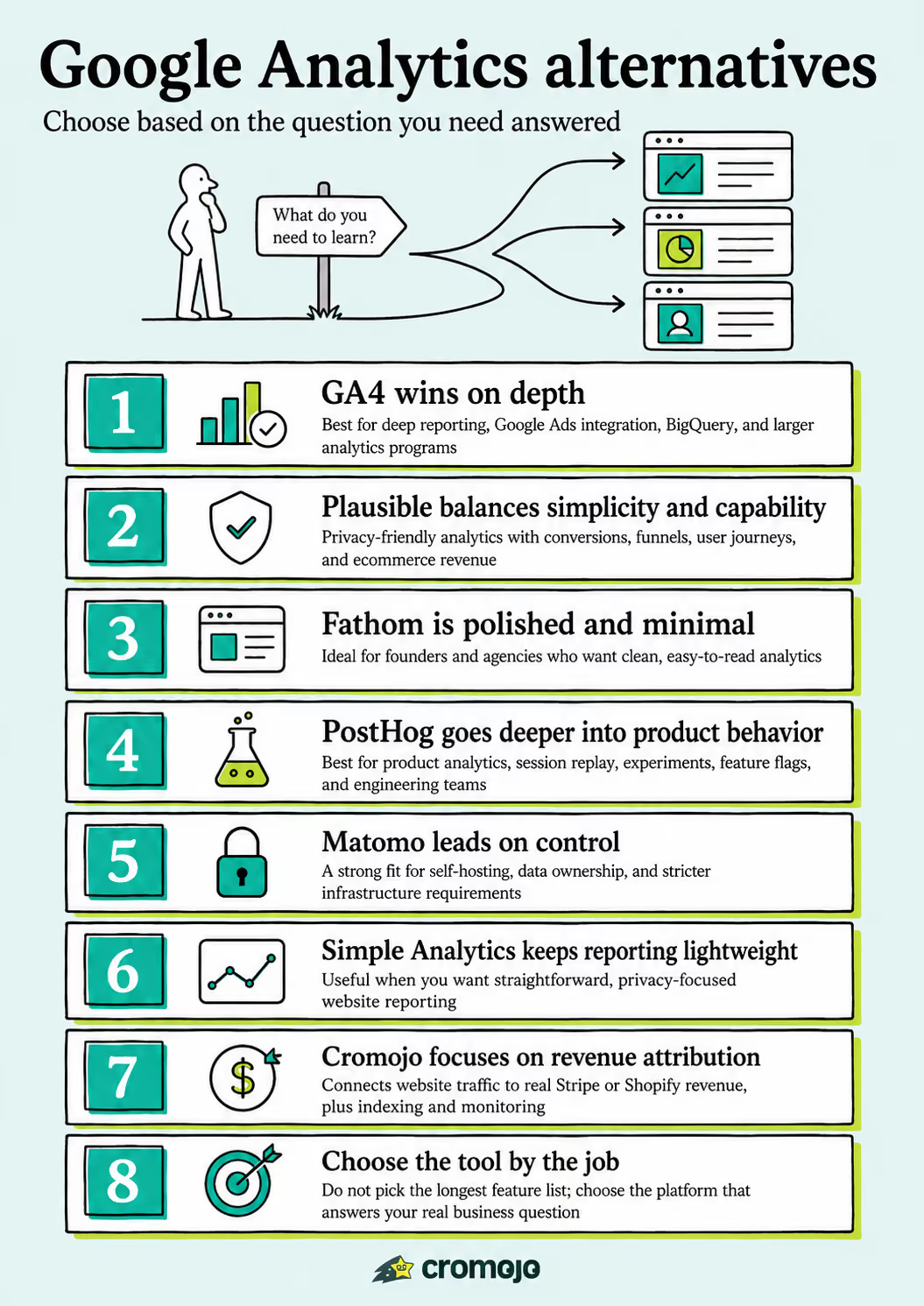
The best Google Analytics alternative depends on the problem you need to solve, whether that is simplicity, privacy, product analytics, self-hosting, or connecting marketing activity directly to revenue.
Why Do Teams Look for Google Analytics Alternatives?
For most teams, the reasons fall into a few familiar categories.
The first is complexity.
GA4 is extremely flexible, but that flexibility comes with a learning curve. Even fairly ordinary questions can involve configuring events, dimensions, explorations, filters, or custom reports.
That is worthwhile if your business needs that depth.
It can feel excessive if all you want is a clear picture of where visitors came from, what they did, and whether they became customers.
The second reason is privacy and consent management.
GA4's standard web implementation uses first-party cookies, and Google provides Consent Mode to adjust how tags behave according to a visitor's consent choices. Exactly what your site needs depends on your location, configuration, advertising setup, and applicable privacy laws.
For teams that would rather begin with a cookieless analytics setup, privacy-focused alternatives can simplify the technical side of measurement.
The third reason is focus.
GA4 is designed to serve an enormous range of businesses and use cases. That means the interface needs to accommodate everything from a small marketing website to a global company sending analytics data into BigQuery.
A smaller analytics tool can afford to be much more opinionated.
And sometimes that is exactly what a small team wants.
If you are deciding whether a privacy-first setup makes sense in the first place, Cromojo's guide to first-party analytics explains the trade-offs in more detail.
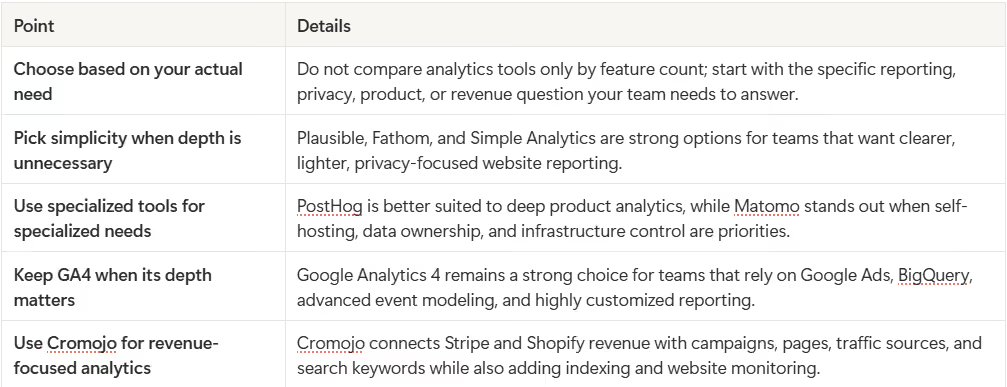
The Short Version: Which Tool Is Best for What?
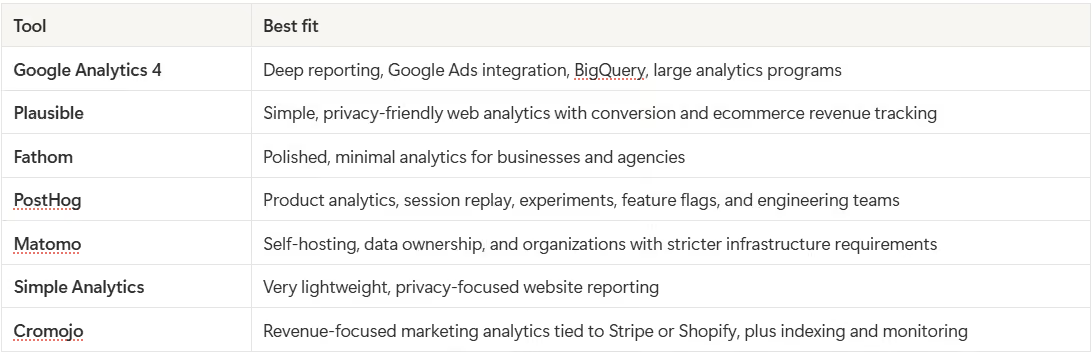
That table is the quick answer.
The details matter, though.
Where Does Plausible Win?
Plausible has earned its reputation for simplicity.
Its dashboard is clean, the tracking script is lightweight, and the platform is designed around privacy-friendly analytics without cookies or personal-data collection.
But describing Plausible as a tool that only shows traffic would no longer be accurate.
Plausible supports goals, custom events, funnels, user journeys, and ecommerce revenue tracking. You can use it to see which referral sources, landing pages, and campaigns are associated with revenue.
That makes it considerably more capable than the basic visitor counter it is sometimes portrayed as.
Where Plausible really wins is the balance between simplicity and capability.
It gives you substantially more than pageviews without turning the interface into something that requires an analytics specialist to operate.
It is also open source and can be self-hosted, which matters if you want more control over where your analytics infrastructure lives.
So when should you choose it?
If you want clean web analytics, privacy-friendly measurement, campaign reporting, and ecommerce revenue tracking in a simple interface, Plausible is a very strong choice.
The difference with Cromojo is mainly one of focus. Cromojo connects directly to Stripe and Shopify and is designed around attributing actual revenue to pages, campaigns, sources, and individual search keywords. It also includes indexing and website-monitoring tools.
For a more focused comparison of the privacy-first options, see Cromojo vs Plausible vs Fathom vs Simple Analytics.
Where Does Fathom Win?
Fathom occupies a similar part of the market but has its own strengths.
It is polished, privacy-focused, cookieless, and deliberately easy to read.
For a founder who wants to open an analytics dashboard and immediately understand what is happening without building reports first, that simplicity has real value.
Fathom is also appealing to agencies and teams managing multiple websites. Its straightforward reporting makes it easier to give clients access without first teaching them how to navigate a complicated analytics interface.
It supports events and goal values, and it also offers uptime monitoring.
That last point is worth mentioning because Cromojo is not the only analytics product combining analytics with monitoring.
Where Cromojo goes further is revenue attribution. It connects directly to Stripe and Shopify and focuses on showing revenue by keyword, page, source, and campaign alongside broader website growth tools.
Choose Fathom if polished, uncomplicated analytics is your main goal.
Choose Cromojo if you want that analytics layer to sit closer to revenue attribution, search data, indexing, and site health.
Where Does PostHog Win?
PostHog is the easiest tool on this list to recommend when the problem is not really a marketing analytics problem.
If you are building a software product and need to understand what people do inside the product, PostHog has a much deeper toolkit.
Its platform includes product analytics, web analytics, session replay, feature flags, experiments, surveys, error tracking, data warehousing, and other developer-focused tools.
That gives product and engineering teams the ability to ask questions such as:
- Which users adopted a new feature?
- Where do users abandon onboarding?
- What happens after someone encounters an error?
- Did experiment B improve activation?
- Which features correlate with retention?
That is a fundamentally different job from asking which Google search query or marketing campaign generated revenue.
PostHog can also work with revenue data and external data sources, including Stripe. It should not be dismissed as a product that "only tracks events."
Its trade-off is that all of that power creates a larger platform.
If you are an engineering or product team instrumenting a SaaS application, that is usually a benefit.
If you are a founder running an ecommerce store and mainly want to know where this week's sales came from, much of that depth may be unnecessary.
In many businesses, PostHog and Cromojo are not even direct substitutes. One can handle product behavior while the other focuses on acquisition and revenue attribution.
Where Does Matomo Win?
Matomo is one of the strongest options when control over your analytics data is the priority.
Its biggest differentiator is the option to self-host.
With Matomo On-Premise, the analytics infrastructure can run on your own servers. That gives organizations much more control over data storage and access than a conventional hosted analytics platform.
For companies with strict internal requirements around hosting, data residency, governance, or infrastructure, that can outweigh almost everything else on this list.
Matomo is also not a bare-bones analytics product. It supports ecommerce reporting and a broad range of analytics functionality.
The trade-off is operational responsibility.
Self-hosting means somebody has to manage the infrastructure, updates, security, backups, and performance.
For a company with the technical resources to do that, it may be exactly the point.
For a five-person startup without infrastructure staff, it can become another system to maintain.
Choose Matomo when ownership and deployment control are requirements rather than nice-to-have features.
Where Does Simple Analytics Win?
Simple Analytics is built around a very different philosophy: collect less and make the resulting analytics easier to understand.
That is appealing for websites that do not need dozens of reports.
If you mainly want to know how much traffic you received, where it came from, which pages people visited, and whether important actions converted, a deliberately smaller analytics product can be refreshing.
Simple Analytics also emphasizes privacy and avoids the sprawling configuration associated with larger platforms.
Its biggest strength is restraint.
Not every website needs behavioral analytics, session recordings, elaborate attribution models, or an enterprise reporting layer.
Sometimes the best analytics tool is the one people on your team will actually open.
If that sounds like your situation, Simple Analytics deserves serious consideration.
Cromojo becomes more relevant when you want to move beyond simple site measurement into revenue attribution, search data, indexing, and website monitoring.
Where Does Google Analytics Still Win?
A fair comparison also has to acknowledge that replacing Google Analytics is not always the right decision.
GA4 remains extremely strong in areas that smaller analytics tools deliberately do not try to match.
Its integration with Google Ads is an obvious advantage.
So is BigQuery.
If your organization already has analysts working with exported event data, custom models, complex segmentation, advertising integrations, and reporting infrastructure, moving to a simpler analytics platform can actually mean losing useful capabilities.
GA4 is also free for standard use, which makes its breadth difficult to compete with on price alone.
The important distinction is that GA4 gives you flexibility, while many alternatives give you focus.
If you need deep event modelling, Google ecosystem integrations, and the freedom to build highly customized reporting, GA4 may still be the right tool.
If your team spends more time trying to understand GA4 than acting on what it tells you, that is when an alternative becomes worth considering.
Cromojo's Top 5 Web Analytics Tools in Digital Marketing for 2026 looks at some of these trade-offs from a broader analytics perspective.
So Where Does Cromojo Fit?
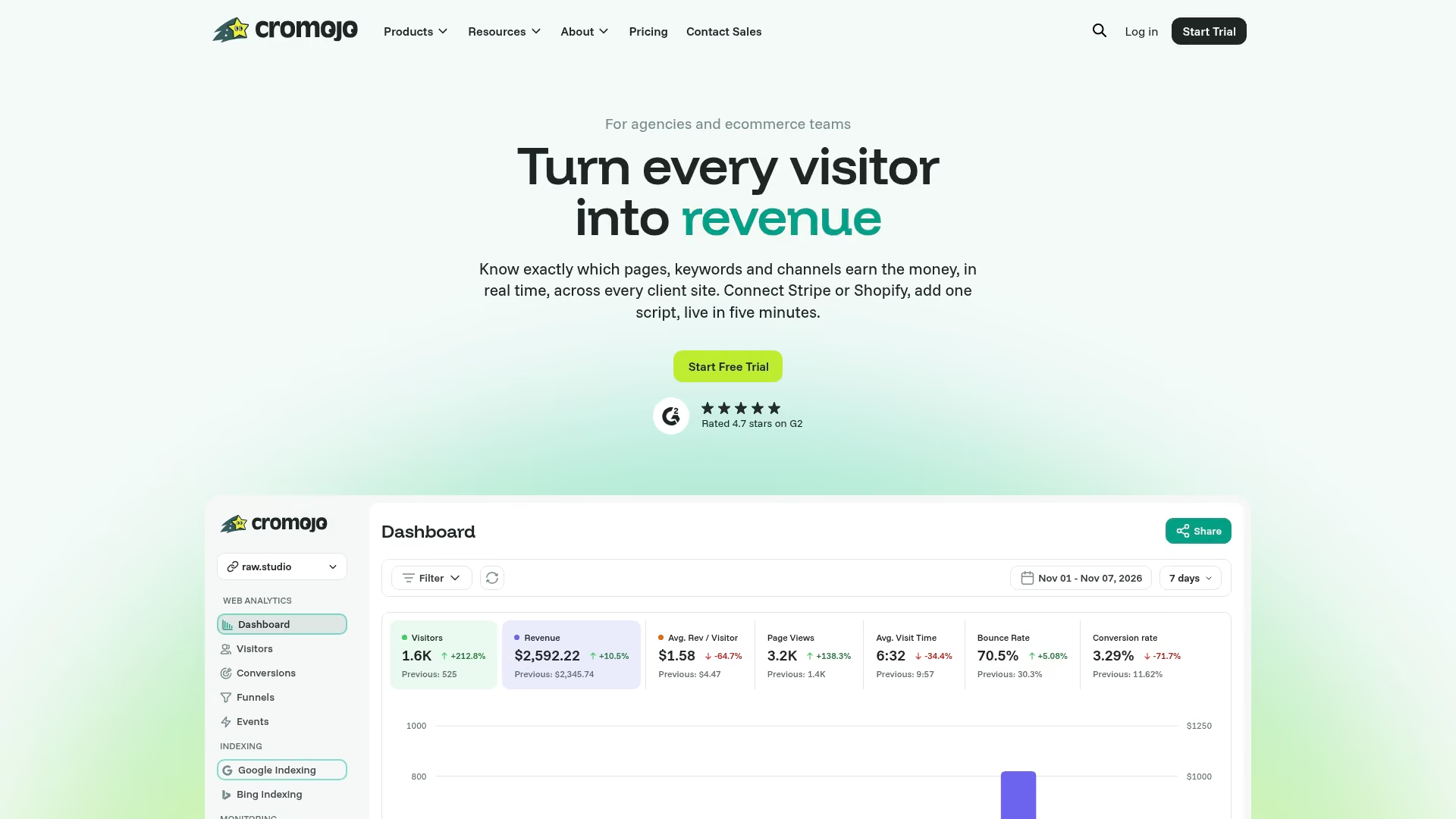
Cromojo is not trying to be another GA4.
Its strongest use case is narrower:
help founders and marketers see which traffic is actually producing revenue.
Cromojo connects website analytics with real transaction data from Stripe or Shopify.
That means the dashboard can answer questions such as:
Which campaign generated revenue?
Which landing page produced sales?
Which traffic source brought customers rather than visitors?
Which search keywords are associated with revenue?
That last point is one of the more distinctive parts of the platform. Connecting Google Search Console keyword data with transaction data gives teams a way to evaluate search performance by the money it generates, rather than ranking and clicks alone.
This changes the conversation around marketing.
A page with 10,000 visits is not automatically more valuable than one with 2,000.
A keyword ranking in position three may matter more to the business than another sitting in position one.
Traffic becomes useful in the context of what happens after the visit.
For teams thinking about attribution more broadly, Cromojo's User Journey Mapping That Ties Every Visit to Revenue explains how acquisition data and transaction data fit together across a customer journey.
Cromojo Is More Than an Analytics Dashboard
The other difference is scope.
Cromojo currently brings together three areas that companies often manage with separate products:
Analytics, for visitors, sources, campaigns, conversions, journeys, funnels, and revenue.
Indexing, for helping teams track and manage whether pages are being discovered by search engines.
Monitoring, for keeping an eye on issues such as uptime, SSL, performance, and broken links.
That combination will not matter to everyone.
A product team using PostHog probably does not care whether its analytics platform also handles indexing.
A large organization running Matomo on its own infrastructure may already have dedicated monitoring and SEO systems.
But a small marketing team may prefer one place to answer:
Is the site getting found?
Is it working?
Where is the traffic coming from?
And which of that traffic is making money?
That is the specific problem Cromojo is trying to solve.
For agencies, the same idea is covered in more depth in Analytics for Agencies: The Revenue-First Playbook.
What About Privacy?
Privacy is one of the biggest reasons this category has grown, but it is also an area where marketing claims can become oversimplified.
"Cookieless" does not automatically mean "no privacy obligations."
And using cookies does not automatically mean a tool cannot be configured responsibly.
The exact requirements depend on what you collect, how you use it, where your visitors are located, which other marketing technologies are running on the site, and the laws that apply to your business.
GA4 can adjust collection through Google's Consent Mode.
Plausible, Fathom, Simple Analytics, and Cromojo all take privacy-focused approaches that avoid traditional analytics cookies in their standard setups.
Matomo gives you considerable control over the configuration and, when self-hosted, over where the data itself lives.
PostHog gives teams more flexibility and deeper user-level product analysis, which also means you need to think carefully about how you configure identification and consent.
The practical advice is simple: choose the analytics setup that collects what you genuinely need, then review the privacy implications of your entire stack, not just the analytics product.
If you want to understand the first-party side of this decision, read First-Party Analytics: A Privacy-First Guide for Marketers.
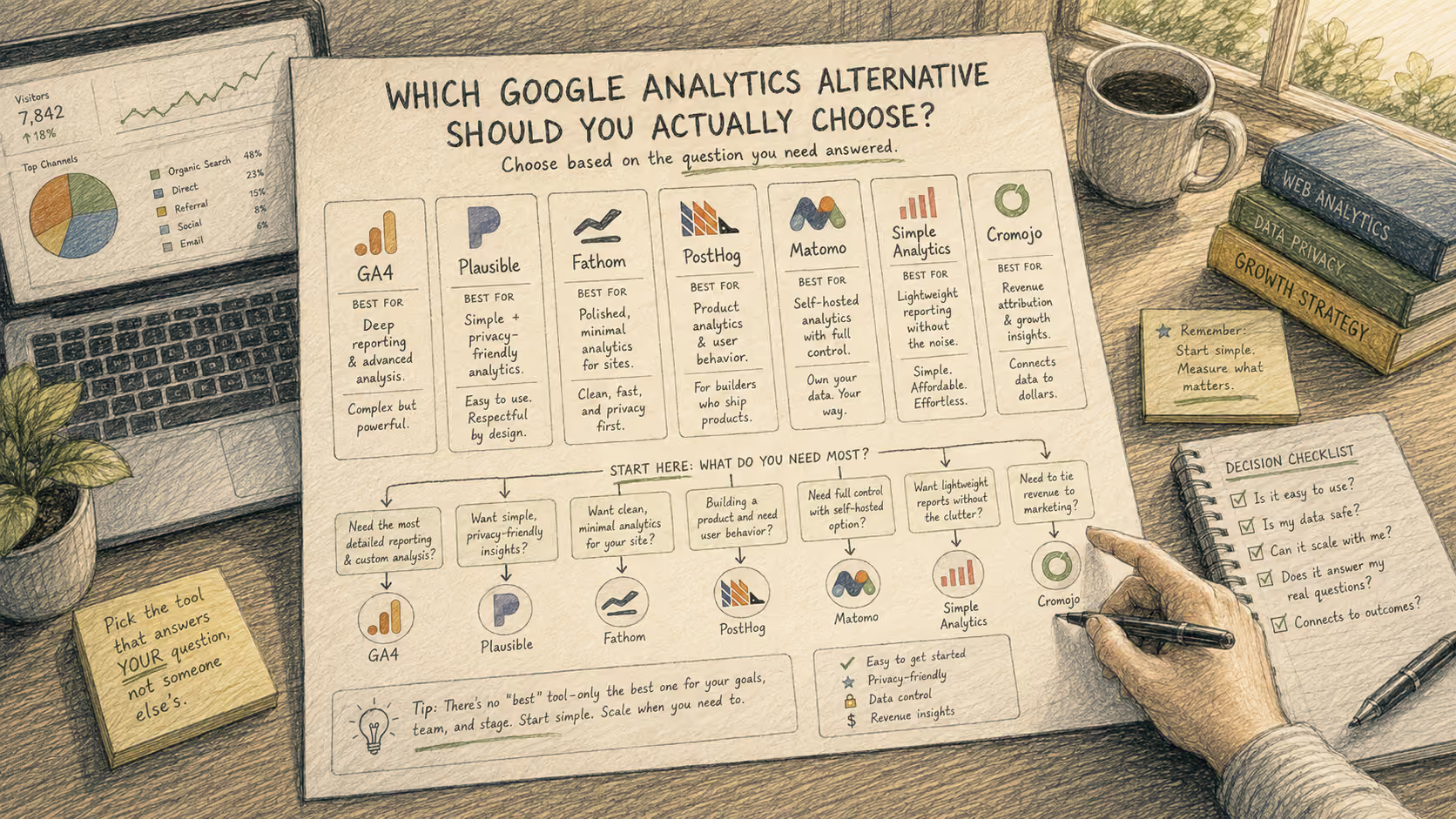
Which Google Analytics Alternative Should You Actually Choose?
Start with the problem you are trying to solve.
If you want a clean, capable, privacy-friendly analytics dashboard, Plausible is difficult to fault.
If you care most about a polished and minimal experience, especially across multiple websites, Fathom is a strong choice.
If you are building a software product and need to understand user behavior inside it, PostHog offers substantially more depth.
If self-hosting and infrastructure control are requirements, Matomo should be near the top of your list.
If you want deliberately simple website reporting with strong privacy principles, look at Simple Analytics.
If your business already depends heavily on Google Ads, BigQuery, and custom event reporting, you may not need to leave GA4 at all.
And if your main question is:
"Which pages, campaigns, sources, and keywords are actually making us money?"
that is where Cromojo makes the strongest case.
For an even broader shortlist, Cromojo's guide to the 10 Best Free Web Analytics Tools to Use in 2026 covers additional options.
Do Not Pick an Analytics Tool Based on the Longest Feature List
It is easy to compare analytics products by counting checkmarks.
That rarely tells you which one you should actually use.
A feature is only valuable if it helps your team answer a question or make a decision.
The right analytics platform should make your important numbers easier to understand, not create another reporting job.
For one company, that means PostHog and a deeply instrumented product.
For another, it means Matomo running on infrastructure they control.
For another, it is a single-screen Plausible or Fathom dashboard.
And for a founder trying to decide where the next marketing dollar should go, it may mean putting revenue next to the campaign, page, source, or keyword that generated it.
The goal is not to replace Google Analytics for the sake of replacing Google Analytics.
The goal is to end up with analytics your team can trust and actually use.
Want to see your website analytics through a revenue lens? Talk to Cromojo to see how your traffic, keywords, pages, and campaigns connect to real Stripe or Shopify sales.