
.avif)

A landing page has one job: make the right visitor feel like they are in the right place. When that does not happen quickly, trust begins to fall apart. The problem is that many businesses still use one generic landing page for every product, campaign, and audience. They send paid traffic, organic search visitors, social media clicks, AI referrals, and returning customers to the same page, then wonder why conversion rates stay flat.
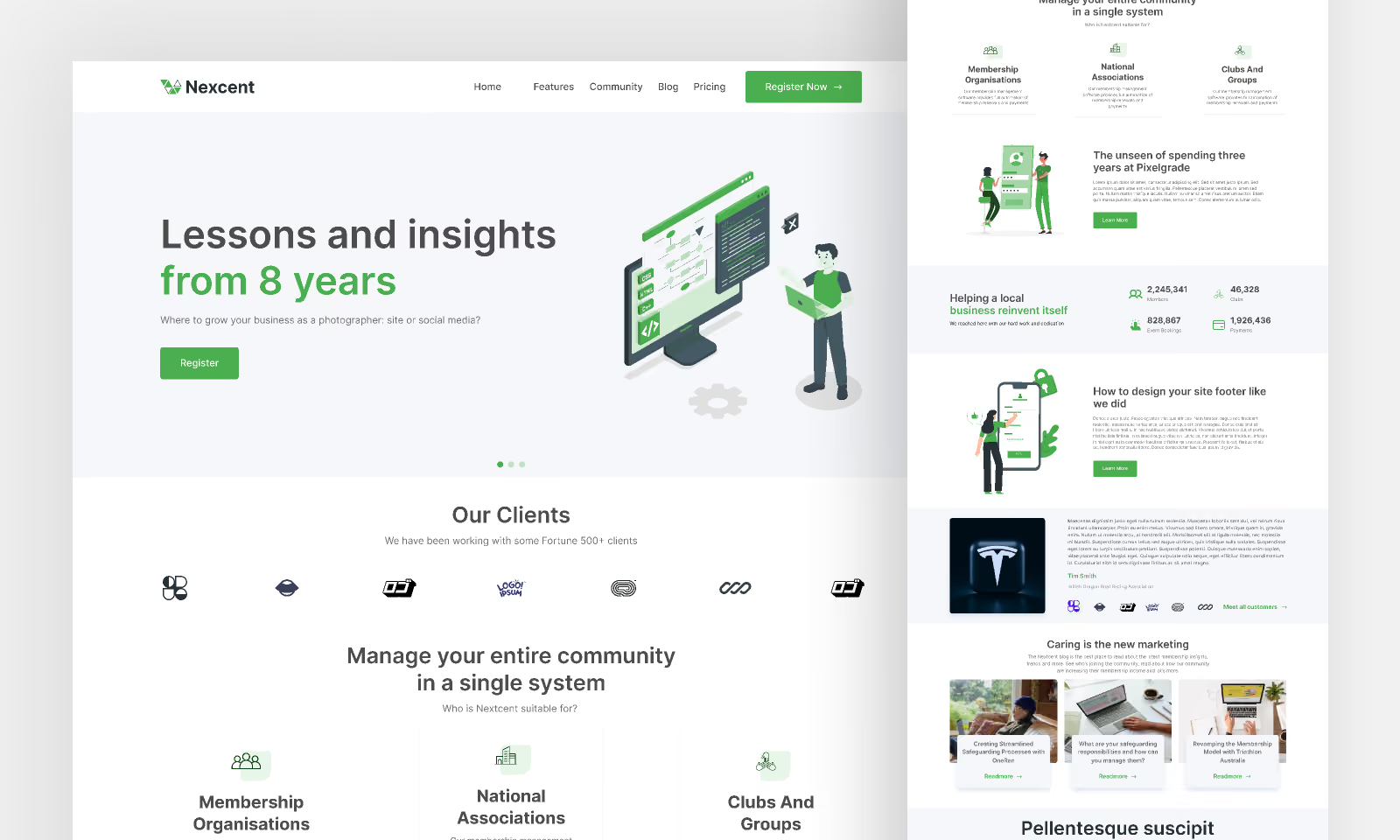
This approach used to be easier to justify. When websites were simpler and buying journeys were more linear, a single page could explain the offer, list a few benefits, and push users toward a form or checkout. But buyers now arrive with more context. They compare brands across search, social platforms, reviews, AI tools, and third-party content before they ever land on a website. By the time they click, they already have expectations.
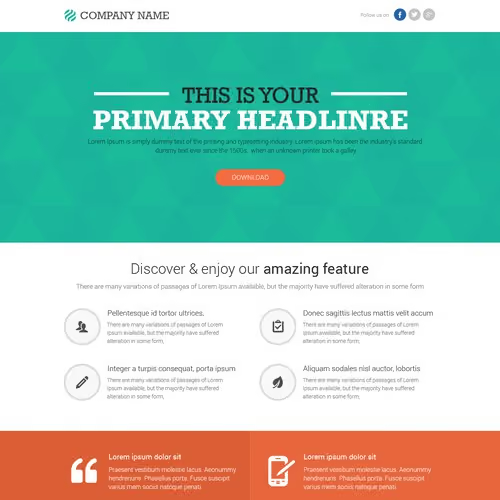
That is why generic landing pages lose trust. They fail to match the visitor's intent. They make people work harder to understand the offer. They often speak too broadly, which makes the brand feel less relevant and less credible. The solution is not just better copy or better design. The solution is better website analytics, stronger audience segmentation, and a continuous optimization process that connects page performance directly to conversion outcomes.
I. The Problem with One-Size-Fits-All Pages
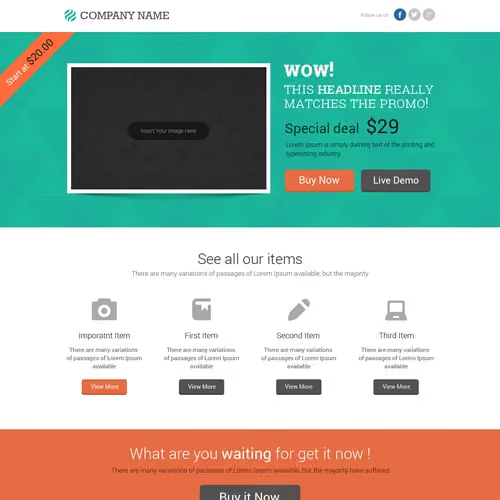
A one-size-fits-all landing page usually tries to speak to everyone at once. It explains the product in general terms, uses broad benefits, and avoids getting too specific because the business does not want to exclude anyone. On the surface, that feels safe. In reality, it makes the page weaker.
When a page speaks to everyone, it often connects deeply with no one. A visitor who arrives with a specific problem does not want a broad overview. They want to know whether this product or service solves their exact issue. If the page forces them to interpret the offer for themselves, the experience starts to feel uncertain.
Lower Relevance Creates Immediate Friction
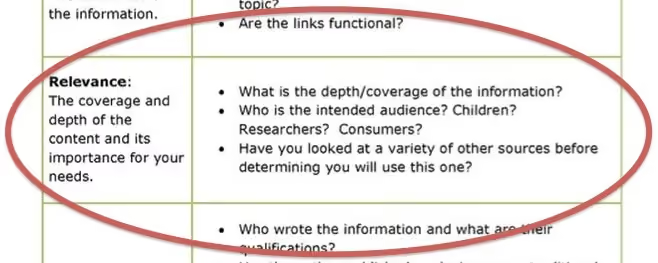
Relevance is one of the first trust signals a visitor evaluates. If someone clicks through from a campaign about a specific product, feature, use case, or pain point, they expect the landing page to continue that conversation. If the page suddenly becomes generic, the visitor feels a disconnect.
They may not consciously think, "I do not trust this brand," but they feel friction. The page does not reflect what brought them there. The message feels too broad. The benefits feel less personal. The call to action feels premature because the visitor has not yet been properly convinced.
This is where many landing pages lose conversions before users even scroll. The page may look polished, but the visitor does not feel understood.
Reduced Trust Comes From Poor Message Match
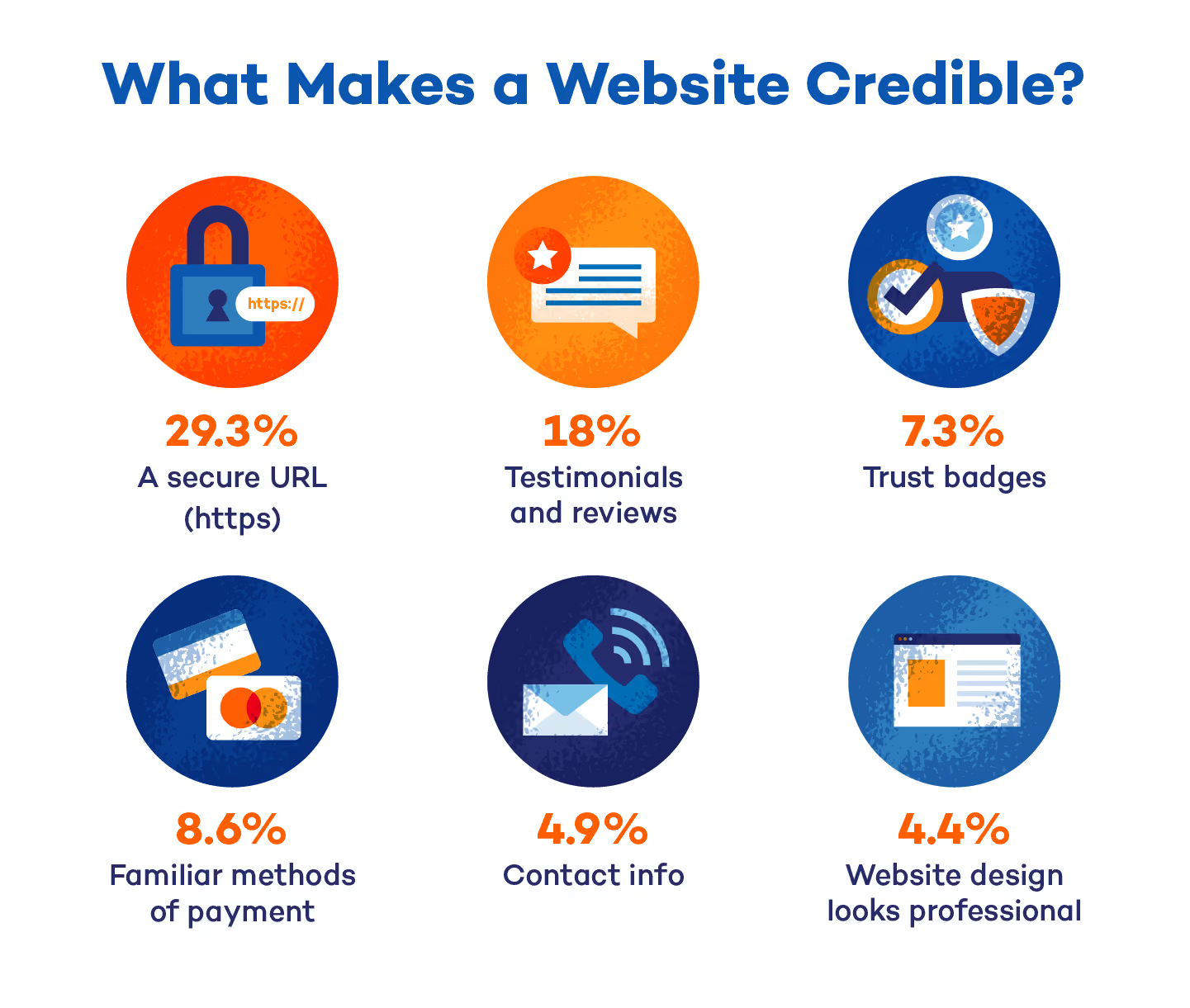
Trust is not only created through testimonials, logos, or security badges. It is also created through message match. When the promise in an ad, search result, social post, email, or AI recommendation matches the page experience, trust increases.
When that promise breaks, trust decreases.
For example, if a user clicks on a page expecting a solution for ecommerce conversion tracking but lands on a generic analytics page, they may question whether the product is really built for their situation. Even if the product can help them, the page has failed to show that clearly.
This is why website analytics is so valuable. It helps teams see whether visitors from different sources behave differently. If one traffic segment bounces quickly while another converts, the issue may not be the product. It may be the message.
Lower Conversion Is Usually a Trust Problem
Businesses often treat low conversion as a design problem, a copy problem, or a traffic problem. Sometimes it is. But many conversion issues are trust issues.
Visitors do not convert when they are unsure. They do not convert when they cannot see themselves in the page. They do not convert when the message feels disconnected from their problem. They do not convert when the offer feels generic.
Cromojo's article on Conversion Rate Optimization explains why conversion should be measured through clear goals rather than assumptions. Good conversion work starts by understanding what users actually do, where they hesitate, and what prevents them from taking action.
II. Product and Audience Segmentation
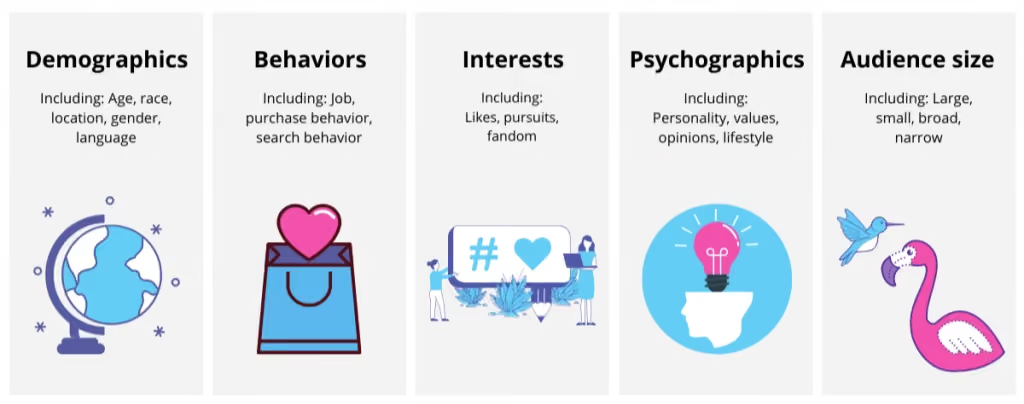
Different buyers do not make decisions in the same way. A founder comparing website analytics tools does not think like an SEO agency managing dozens of client websites. An ecommerce brand trying to improve product page conversion has different concerns from a SaaS team trying to understand trial signups.
Even when the same product can serve all these groups, the landing page should not speak to them in exactly the same way. Each audience has different fears, motivations, objections, and success criteria.
A founder may want speed and clarity. An agency may want reporting, scale, and client visibility. A marketer may want funnel insights and campaign performance. A technical team may want reliability, tracking accuracy, and integration details.
The product may be the same, but the buying journey is different.
Product Pages Should Behave Like Landing Pages

Product pages are often treated like static information pages. They list the product name, features, pricing, and a call to action. But in a modern buying journey, product pages often receive visitors who are already close to making a decision.
That means every product page should behave like a landing page.
It should explain the product clearly, show who it is for, address objections, present proof, and guide the visitor toward the next step. It should not rely on the homepage to do all the trust-building work. Many visitors may never see the homepage at all.
This was one of the key points from the transcript: product pages should be tailored to the product and audience rather than forced into one repeated template. A page for one product should feel different from a page for another product if the audience, emotional trigger, and decision process are different.
Messaging Alignment Makes the Page Feel Personal
Audience segmentation is not only about demographics. It is about intent. Why did the visitor arrive? What problem are they trying to solve? What do they already believe? What do they need to see before they trust the brand?
A segmented landing page aligns the message with that intent. For example, a page for website analytics could be positioned in several ways:
For marketers, it may focus on understanding which campaigns drive qualified conversions.
For founders, it may focus on replacing confusing dashboards with simple growth insights.
For agencies, it may focus on showing clients which pages are working and which pages need improvement.
For ecommerce teams, it may focus on finding where shoppers drop off before purchase.
The same product can support all these use cases, but the page should emphasize the most relevant outcome for each audience.
Better Segmentation Also Supports Search Visibility
Segmentation is not only useful for conversion. It also supports search visibility. Specific landing pages can target specific queries, problems, and audience needs. A generic page has to compete for broad terms, while a tailored page can become highly relevant for a narrower intent.
Cromojo's article on Why Your Content Isn't Ranking explains that strong content still needs to be discovered, crawled, and indexed before it can perform. A tailored landing page only becomes valuable when search engines can find it and understand its purpose.
This is why segmentation, indexing, and analytics should work together. A business needs specific pages, clear visibility, and data that shows which pages are actually contributing to growth.
III. Measuring What Resonates
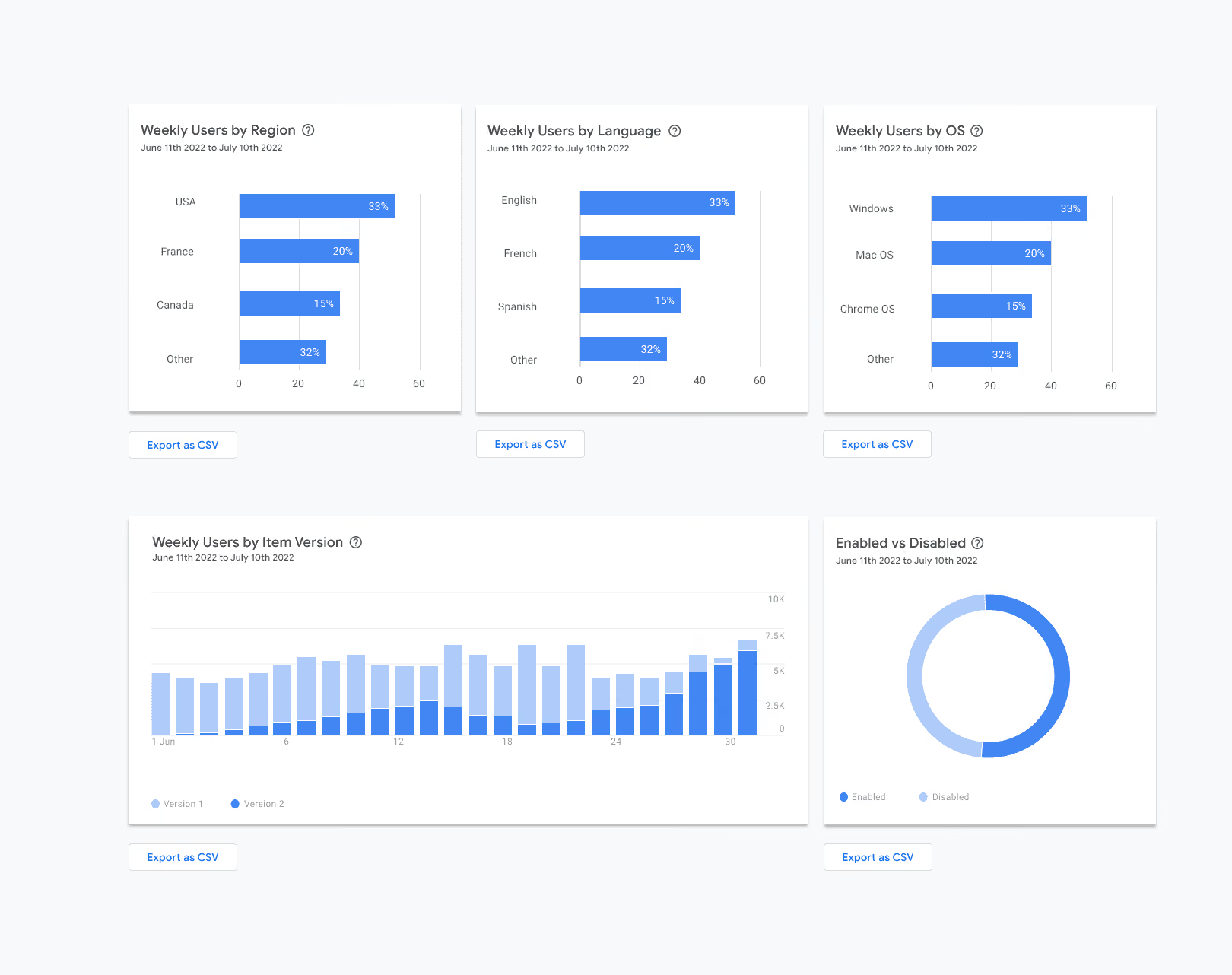
Landing page optimization should not be based only on opinions. A team may debate headlines, visuals, testimonials, and page structure, but website analytics shows what users actually do.
Good analytics can reveal which pages attract the right visitors, which pages create engagement, which pages contribute to conversions, and which pages create friction. This is the difference between redesigning based on preference and improving based on evidence.
The goal is not to collect more data for the sake of it. The goal is to understand what resonates with real users.
Conversion Paths Show the Full Journey
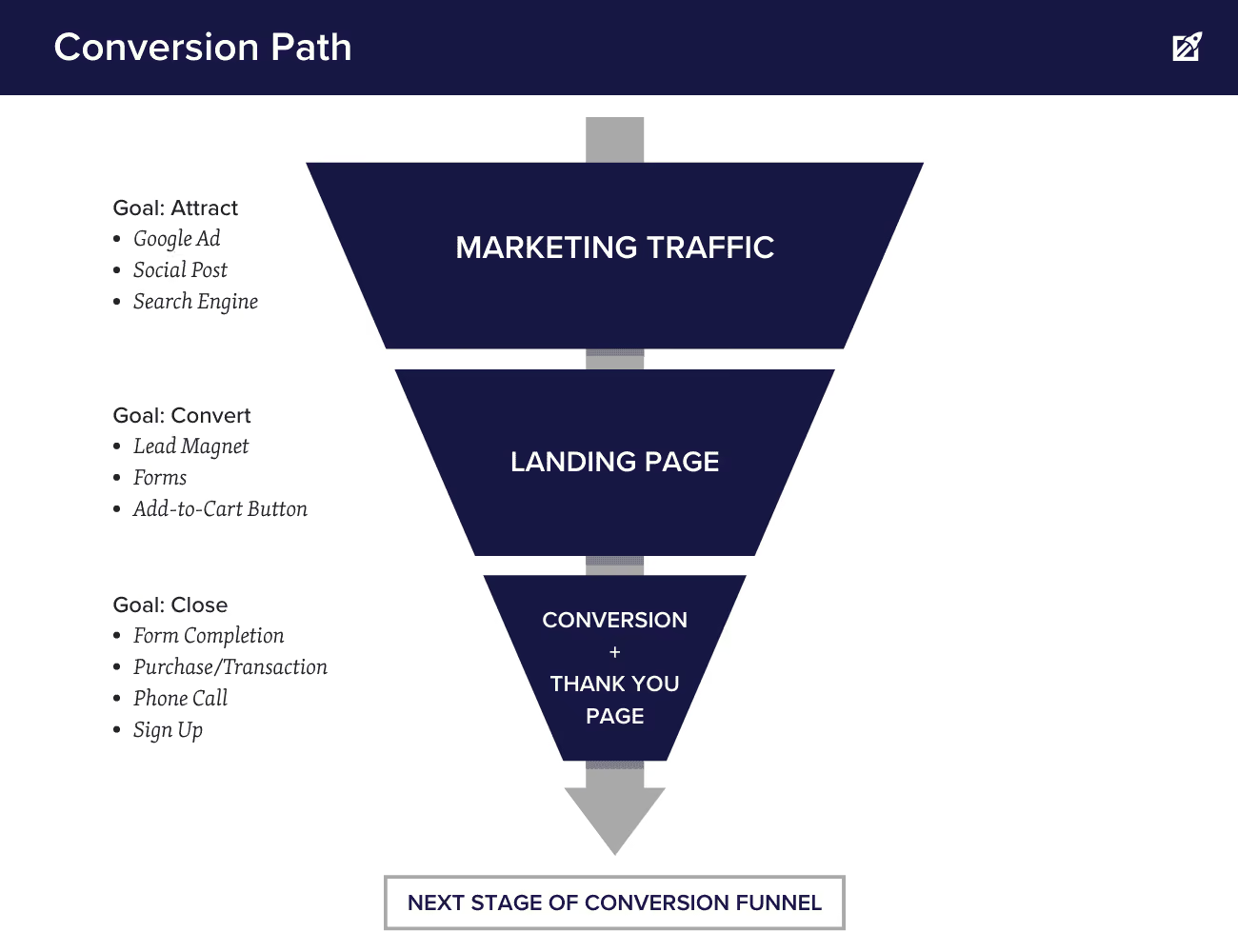
The first thing to measure is the conversion path. A landing page is rarely an isolated event. Users may visit a blog post, return through search, open a product page, compare pricing, read reviews, and then convert later.
If a team only looks at the final click, it may miss the pages that created trust earlier in the journey.
This matters because some pages are not direct closers. A guide, comparison article, feature page, or use case page may not produce immediate conversions, but it may help users move closer to a decision. Better website analytics helps identify these hidden contributors.
For example, a blog article may introduce the problem, a product page may explain the solution, and a pricing page may close the conversion. Looking only at the pricing page gives an incomplete picture.
Engagement Signals Reveal Where Trust Breaks
The second thing to measure is engagement. Scroll depth, time on page, click behavior, form starts, form completions, CTA clicks, and exit points can show where the page is working and where trust breaks down.
If users leave before reaching the proof section, the message above the fold may not be clear enough. If users scroll but do not click, the offer may not feel strong enough. If users click a CTA but abandon the form, the friction may be in the conversion step rather than the page itself.
These signals help teams understand the difference between a traffic problem and a conversion problem. A page may receive enough visitors but fail because the message is unclear. Another page may convert well but not receive enough visibility. Each issue requires a different solution.
Page Performance Affects Trust Before the First Word
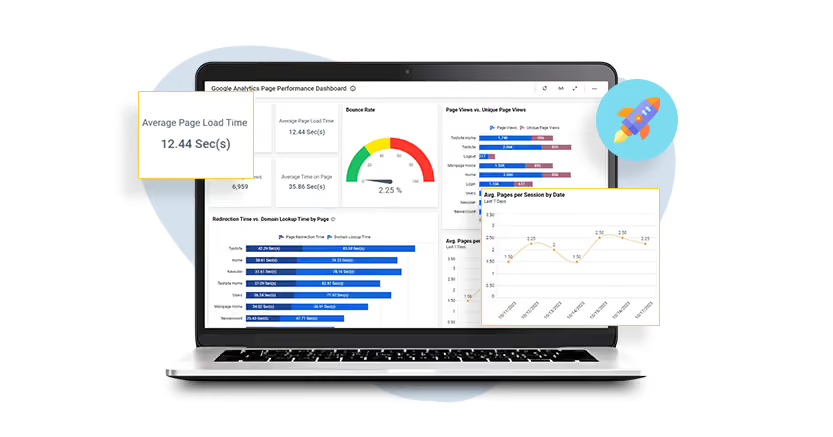
The third thing to measure is page performance. A slow or broken page damages trust before users read a single sentence. Speed, uptime, mobile usability, broken links, redirects, and technical errors all influence conversion.
A page can have great copy and strong design, but if it loads slowly or sends users to a broken next step, it will lose opportunities.
Cromojo's article on Top 5 Web Analytics Tools in Digital Marketing for 2026 highlights how modern analytics tools are moving beyond raw traffic reports and toward insights that explain behavior and next steps. That shift matters because businesses do not need more dashboards. They need clearer answers.
The Right Questions Matter More Than More Reports
Website analytics should help businesses answer practical questions:
Which landing pages drive revenue?
Which pages attract traffic but fail to convert?
Which audiences respond best to which message?
Which traffic sources bring visitors who actually take action?
Which indexed pages are visible but underperforming?
Which pages need clearer proof, stronger calls to action, or less friction?
When those answers are connected, landing page decisions become sharper. Instead of redesigning everything, teams can prioritize the pages with the biggest conversion opportunity.
IV. Continuous Landing Page Optimization
A landing page is not a one-time asset. Markets change, competitors change, search behavior changes, and buyer expectations change. A page that performed well six months ago may now feel outdated, unclear, or misaligned with the audience.
Continuous optimization means treating landing pages as living parts of the growth system. The goal is not constant redesign. The goal is steady improvement based on real performance.
Monitor What Matters
The first step is monitoring. This includes analytics performance, conversion rates, traffic sources, index status, page health, and technical issues. It also includes qualitative signals from user testing, sales calls, support tickets, and customer feedback.
Numbers show what users do. Qualitative insights help explain why.
For example, website analytics might show that visitors are leaving a page quickly. User testing may reveal that the headline is unclear, the design does not feel credible, or the offer does not match what users expected.
Both types of insight matter.
Test Specific Changes
Testing turns observations into learning. A test does not always need to be complex. It can start with a clearer headline, a more specific CTA, a stronger proof section, a shorter form, a better product comparison, or a revised above-the-fold layout.
The goal is not to change things randomly. The goal is to reduce friction in the decision journey.
If users are not scrolling, improve the first section. If users are reading but not clicking, improve the offer or CTA. If users are clicking but not converting, improve the form or checkout step.
Improve Based on Patterns
Improvement happens when the team applies what the data reveals. If visitors from one campaign convert better on a product-specific page, create more pages around that pattern. If users drop off before reaching key proof, bring that proof higher. If a certain audience responds to a specific pain point, make that message more prominent.
This is also why indexing matters. A tailored landing page cannot improve performance if buyers never find it. Cromojo's article on Why Your Competitors Rank Faster Than You explains that search visibility begins before the click, with discovery, crawling, and indexing.
Landing page performance depends on both sides of the equation. The page must be discoverable, and it must convert once visitors arrive.
Connect Analytics, Indexing, and Conversion
Continuous optimization works best when analytics, indexing, and conversion insights are connected. If these systems live in separate tools, teams often miss the full picture.
They may know a page has traffic but not whether it is indexed properly. They may know a page converts but not whether it is losing visibility. They may know users are dropping off but not which source, audience, or page section is causing the problem.
A stronger system connects all of these signals so teams can act faster.
V. How Cromojo Supports Tailored Experiences
.avif)
Cromojo helps teams move from generic website reporting to clearer growth decisions. Instead of treating website analytics as a passive dashboard, Cromojo connects data to outcomes. That is critical for businesses trying to build tailored landing pages that convert.
With Cromojo Real-time Web Analytics, teams can track traffic sources, user behavior, engagement metrics, and conversion funnels in one place. This makes it easier to see which pages are attracting visitors, where users fall off, and which pages drive the highest conversions.
For landing page optimization, that context matters more than surface-level traffic.
Visibility Tracking by Page
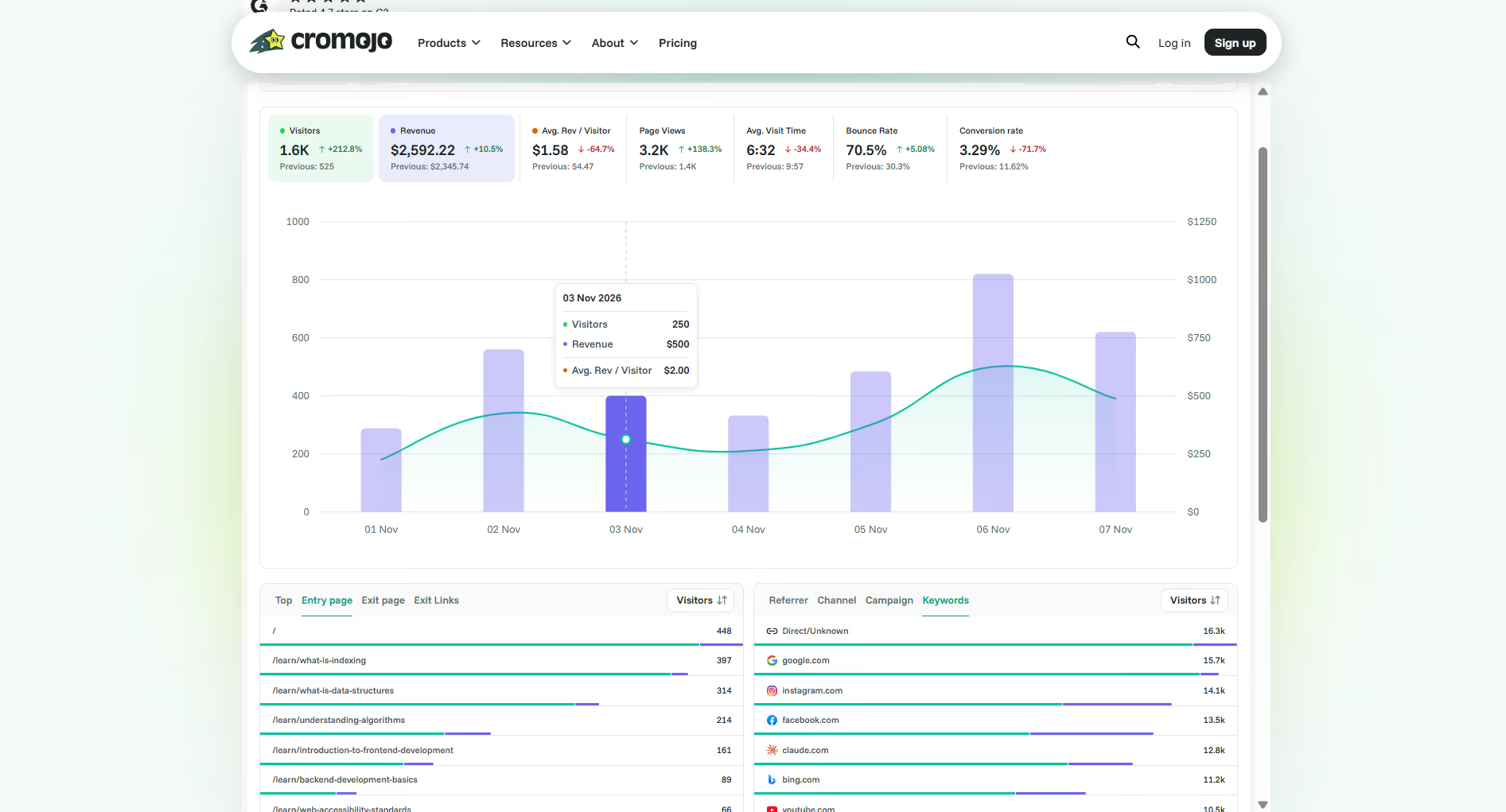
Cromojo also supports visibility tracking by page. Through Automated Indexing, teams can submit URLs to Google and Bing, monitor whether important pages are indexed, and detect when pages drop out.
This is important for product-specific and audience-specific landing pages because each page is an asset. If one becomes invisible, the business loses a targeted conversion path.
Visibility is not just about ranking. It starts with whether the page can be discovered, crawled, indexed, and monitored over time.
Website Monitoring Protects the Experience
Cromojo's monitoring layer also helps protect the experience after the click. Broken links, SSL issues, redirects, downtime, and page errors can damage trust instantly.
With Website Monitoring, teams can catch issues before they affect customers, campaigns, or search visibility.
This matters because tailored landing pages often support important campaigns. If a campaign sends visitors to a broken or slow page, the brand loses both traffic and trust.
AI-Driven Recommendations Reduce Friction
The next layer is AI-driven recommendations. Cromojo's positioning around AI conversion insights focuses on using live website data to improve clarity, reduce friction, and strengthen performance.
That direction matters because most teams do not struggle from a lack of data. They struggle to turn data into action.
For tailored landing pages, this means Cromojo can help answer the questions that matter most:
Which page should be improved first?
Which audience segment is underperforming?
Which CTA creates friction?
Which indexed pages are failing to convert?
Which landing pages are technically healthy but strategically weak?
Which pages need better clarity, credibility, confidence, or convenience?
These answers help teams create landing pages that feel more relevant and trustworthy.
Trust Is Built Through Relevance
Generic landing pages lose trust because they make visitors feel like an afterthought. They ignore context, flatten the message, and force different buyers into the same journey. In a world where users arrive with higher expectations and less patience, that approach is too risky.
Tailored landing pages perform better because they continue the conversation that brought the visitor there. They speak to a specific buyer, address a specific problem, and guide the user toward a relevant next step.
But tailoring only works when it is supported by strong website analytics. Without measurement, teams are only guessing.
The future of landing page optimization will belong to teams that connect visibility, analytics, and conversion into one system. They will know which pages are discoverable, which pages attract the right visitors, which pages create trust, and which pages need improvement.
Cromojo helps businesses build that system. With conversion-focused analytics, automated indexing, page-level visibility tracking, website monitoring, and AI-driven recommendations, Cromojo gives teams the clarity they need to improve the pages that matter most.
If you want to stop guessing why your landing pages are not converting, start with better data. Use Cromojo to monitor your website, understand user behavior, improve visibility, and turn more landing pages into measurable growth.
Start optimizing your website with Cromojo.