
.avif)

It is frustrating to publish a strong piece of content, wait for Google to notice it, and then see a competitor appear in search results before you.
You wrote the article. You optimized the title. You added internal links. You checked the meta description. You even made sure the page loaded properly.
But somehow, they showed up first.
That is the part many website owners miss: ranking faster is not always about having better content. Sometimes, your competitors are winning because they are discovered faster.
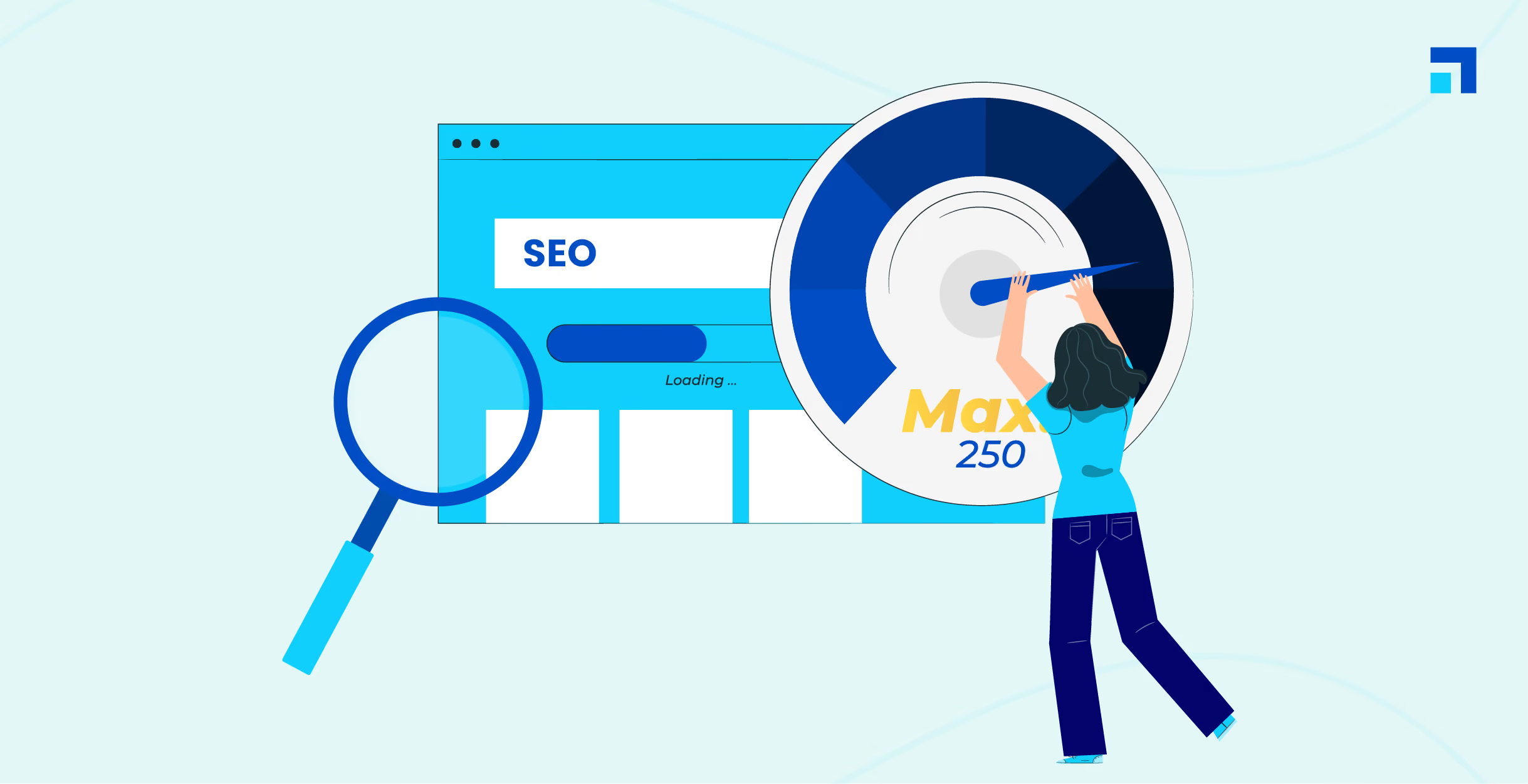
Speed is the hidden advantage in SEO.
When a competitor publishes a new page, updates an old article, or launches a fresh landing page, they may already have systems in place to help search engines find it quickly. Their sitemap is clean. Their internal links are updated. Their indexing workflow is organized. Their team knows which pages need to be submitted, monitored, and followed up.
Meanwhile, your page might be sitting live but invisible.
And in fast-moving niches, that delay can cost you.
It Is Not Just Better Content
Most SEO advice focuses on content quality, keyword research, backlinks, and technical optimization. Those things matter. You cannot skip them and expect strong rankings.
But there is another layer that often gets ignored: discovery speed.
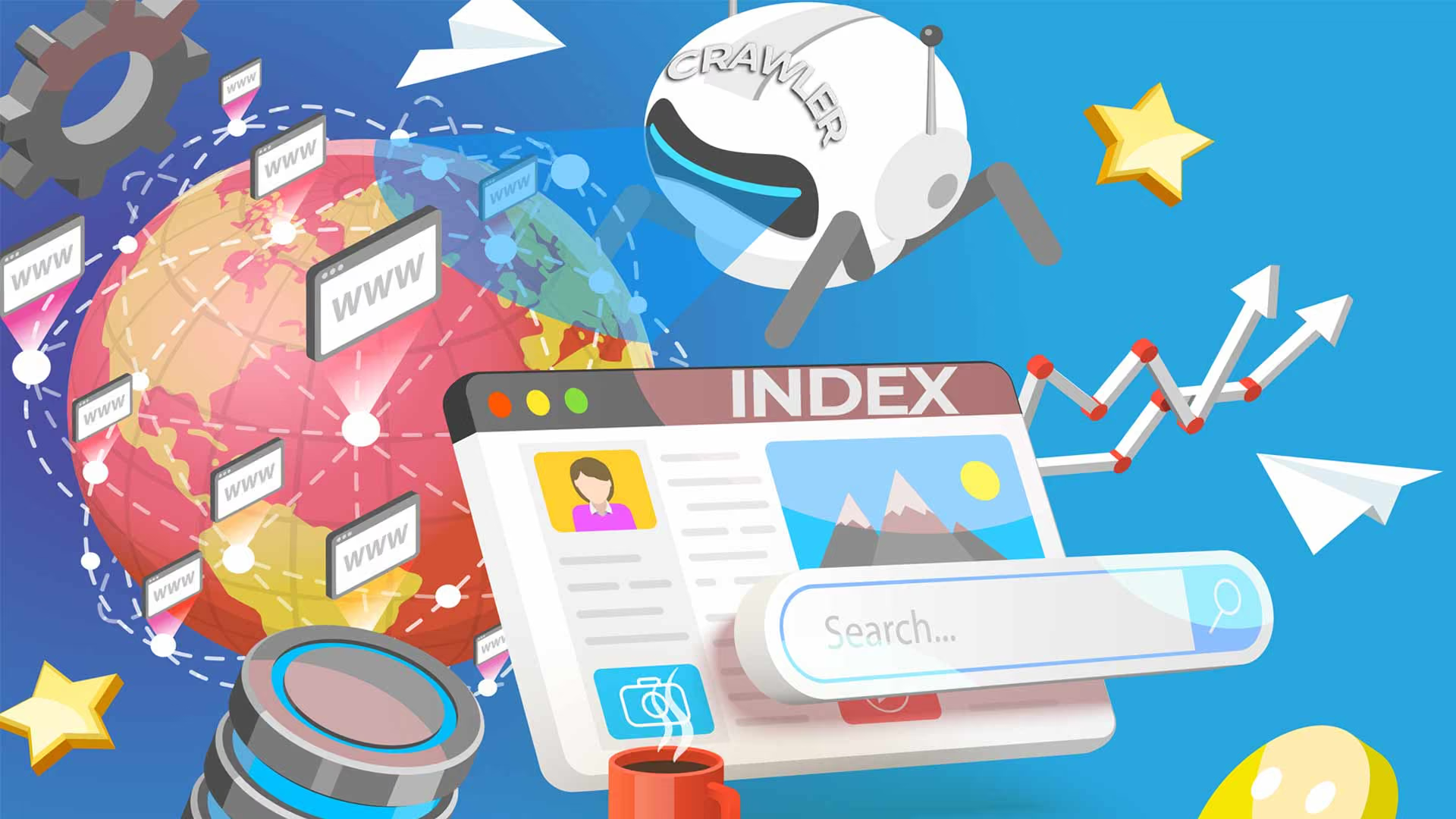
Before a page can rank, it needs to be found. Before it can earn impressions, it needs to be crawled. Before users can click it, it needs to appear in the index.
If search engines do not discover your page quickly, your content cannot compete quickly.
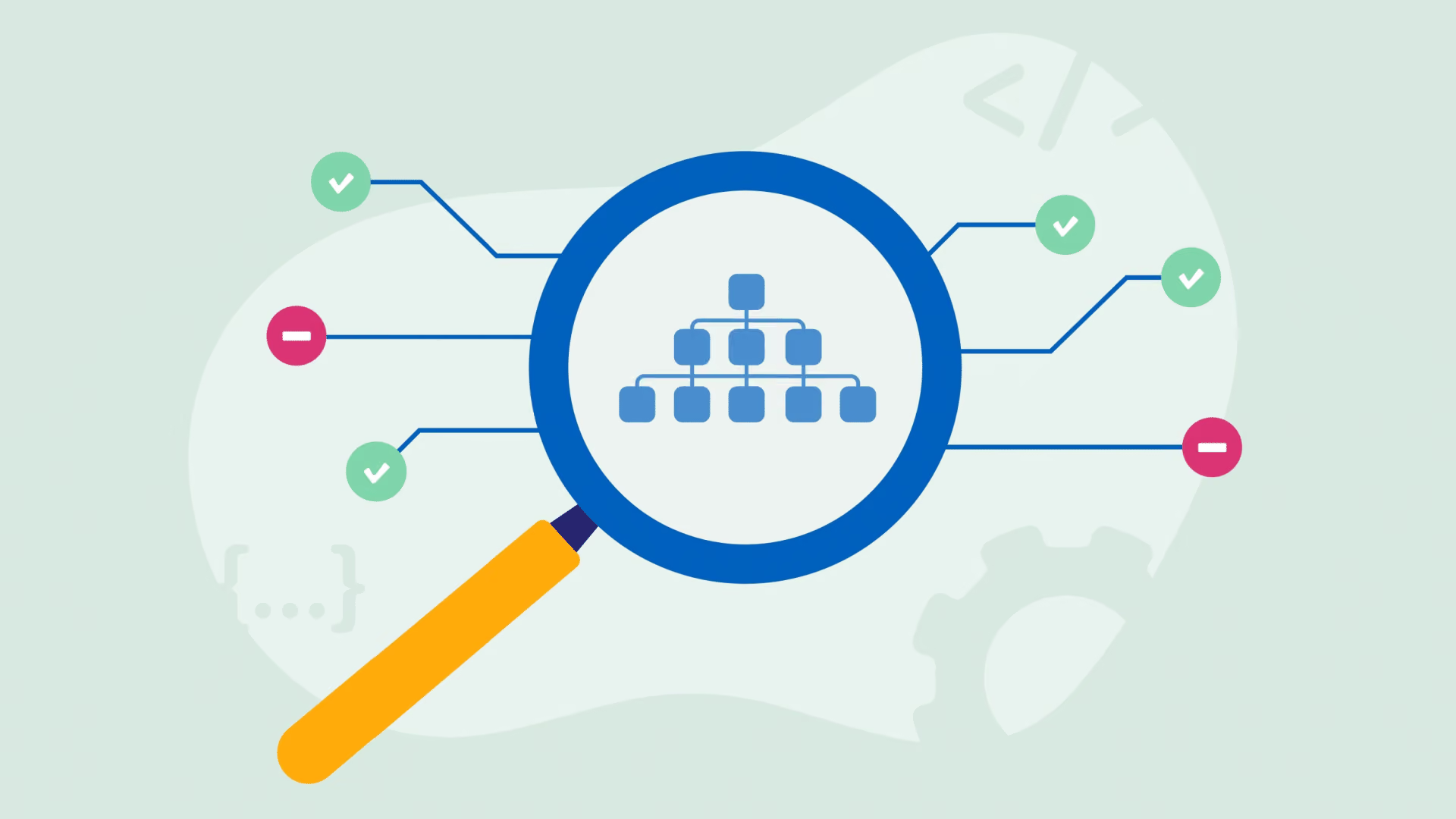
That is why two websites can publish similar content on the same topic and see very different results. One page starts appearing in search results within a short window. The other sits in limbo for days, weeks, or longer.
The second page may still rank eventually. But by then, the competitor may have already collected early impressions, engagement signals, backlinks, shares, and topical relevance around that search demand.
This is why indexing matters so much.
Search visibility does not start when someone clicks your page. It starts when search engines discover, crawl, understand, and index it.
If that process is slow or inconsistent, your SEO growth becomes slower too.
The Race for Visibility
.avif)
Search is a race, especially when topics are fresh, seasonal, trending, or commercially valuable.
Think about industries like SaaS, ecommerce, finance, health, legal, real estate, AI tools, marketing, travel, and local services. Search demand can shift quickly. A new feature, regulation, trend, product category, or customer pain point can create sudden opportunity.
The brands that get discovered first often get the first chance to rank.
That does not mean the first indexed page always wins forever. Search rankings change constantly. Better content can overtake weaker content. Stronger backlinks can shift results. More helpful pages can climb over time.
But early visibility still matters.
A page that gets indexed quickly can start collecting data earlier. It can appear for long-tail searches earlier. It can be tested by Google earlier. It can earn clicks, impressions, and engagement while slower competitors are still waiting to be discovered.
This early window is especially valuable for long-tail keywords.
Long-tail searches may have lower volume, but they often carry strong intent. Someone searching for "best indexing tool for Webflow CMS pages" is much closer to a specific problem than someone searching for "SEO tools."
If your competitor gets indexed first for those specific searches, they may capture demand before your page has even entered the race.
This is one reason Cromojo has published guides such as Top 5 Indexing Tools for Webflow 2026 and Top 5 Indexing Tools for WordPress in 2026. Different platforms create different indexing challenges, but the goal is the same: help important pages get discovered and tracked faster.
Why Being Indexed First Can Create an Early Advantage
SEO is not only about publishing. It is about entering the search ecosystem as quickly and cleanly as possible.
When your page is indexed, it becomes eligible to appear in search results. That does not guarantee rankings, but it gives the page a chance to compete.
If your page is not indexed, it has no chance.
This distinction matters because many teams assume publishing equals visibility. It does not.
A page can be live, accessible, and beautifully designed, but still not appear in Google’s index. This can happen because of crawl delays, poor internal linking, sitemap issues, technical errors, duplicate content, thin content, canonical problems, noindex tags, blocked resources, or simply because search engines have not prioritized crawling it yet.
Google’s for developers explains that sitemaps help search engines discover important pages more efficiently. Search Console also provides tools to inspect URLs and understand whether a page is indexed, crawlable, or affected by indexing issues.
The problem is that many teams only check indexing after traffic disappoints them.
By then, the opportunity may already be fading.
Imagine publishing an article around a product launch, trending topic, or seasonal campaign. If that page is not indexed until two weeks later, you may miss the period when demand was highest.
This is not just an SEO issue. It is a revenue issue.
What Competitors Do Differently
Competitors who rank faster usually do not rely on luck.
They build repeatable systems.
They treat publishing as the beginning of the visibility process, not the end of it. They know that after a page goes live, it needs to be discoverable, crawlable, indexable, and monitored.
Here is what they often do differently.
1. They Use Faster Submission Systems
Many slower teams still publish a page and hope search engines find it eventually.
Faster teams are more proactive.
They submit sitemaps. They use Search Console. They monitor crawl and index status. They check whether new URLs are being discovered. They maintain structured workflows for important pages.
For websites publishing frequently, this matters even more.
A SaaS company might be launching feature pages, comparison pages, integration pages, help docs, and blog posts. An ecommerce store might be adding product pages, collections, seasonal promotions, and buying guides. An agency might be publishing client case studies, service pages, and educational content.
The more pages you publish, the easier it becomes for indexing gaps to build up.
That is where automation becomes useful.
.svg)
Cromojo’s approach is built around reducing the manual effort behind indexing workflows. Its homepage describes Cromojo as a platform for automated SEO indexing, website monitoring, real-time analytics, and CRO. For growing teams, the value is not just speed. It is consistency.
Instead of manually checking every important URL, teams can use a system designed to help submit pages, track index status, and keep visibility issues from going unnoticed.
2. They Have Better Indexing Workflows
Fast competitors are not just submitting URLs randomly.
They have workflows.
They know which pages are most important. They prioritize commercial pages, new content, updated content, campaign pages, and pages tied to revenue. They make sure those pages are included in sitemaps. They link to them internally. They check if they are crawlable. They monitor whether they remain indexed over time.
This is a major difference.
A weak indexing workflow looks like this:
Publish the page. Add it to the blog. Share it once. Move on.
A stronger indexing workflow looks like this:
Publish the page. Confirm crawlability. Add internal links. Update the sitemap. Submit or signal the page where appropriate. Check whether it gets indexed. Monitor whether it stays indexed. Fix issues if it drops out.
That process sounds simple, but most teams do not do it consistently.
Over time, the gaps compound.
Cromojo calls this problem indexing debt. As websites grow, they accumulate pages that are orphaned, stale, uncrawled, poorly linked, or no longer properly monitored. These pages may technically exist, but they do not contribute much to search growth because search engines are not finding or valuing them properly.
Indexing debt is dangerous because it is quiet.
You do not always notice it immediately. You just see slower growth, weaker traffic, fewer impressions, and pages that never seem to gain traction.
3. They Monitor Problems Before They Hurt Rankings
Fast-ranking competitors also tend to be more disciplined about technical monitoring.
Indexing is not only about submitting pages. It is also about making sure search engines can access them when they return.
If your site experiences downtime, server errors, SSL issues, broken links, blocked resources, or unexpected noindex tags, your visibility can suffer. Even temporary technical problems can create confusion for crawlers, especially if they happen repeatedly.
This is why website monitoring and SEO performance are connected.
A page cannot rank well if search engines cannot reliably access it. A site cannot build trust if important pages keep breaking. A content strategy cannot scale if technical issues silently interrupt crawling and indexing.
Cromojo’s article on SEO and website downtime explains this connection clearly. Downtime is not just a user experience problem. It can also affect how search engines crawl, interpret, and trust your website.
Competitors with better monitoring can catch issues earlier.
They know when a page goes down. They know when a technical issue appears. They know when indexing status changes. That means they can fix problems before they become long-term ranking losses.
Closing the Gap
The good news is that ranking faster is not reserved for large brands.
You do not need a massive SEO team to improve discovery speed. You need a cleaner process.
Start by reviewing how your pages are currently discovered. Are your important URLs included in your sitemap? Are new pages internally linked from relevant existing pages? Are old pages updated and resubmitted when necessary? Are you checking whether your key pages are actually indexed?
Next, look at your publishing workflow.
For every important page, you should know:
Is the page crawlable?
Is it indexable?
Is it included in the sitemap?
Is it internally linked?
Has it been submitted or surfaced properly?
Has index status been checked after publishing?
Is it being monitored over time?
You do not need to overcomplicate this. But you do need to stop treating indexing as an afterthought.
If your competitors are faster at getting discovered, they are not just better at SEO. They are better at operationalizing SEO.
Improve Your Discovery Speed
Discovery speed is about helping search engines find your important pages sooner.
That means creating clear pathways to your content.
Internal links matter because they guide both users and crawlers. Sitemaps matter because they help search engines understand which pages are important and when they were updated. Technical health matters because crawl errors can slow or interrupt discovery.
Fresh content also needs support.
Publishing a blog post is not enough. Link to it from relevant pages. Add it to related content hubs. Make sure it appears in the sitemap. Avoid burying it too deep in your site structure.
For large websites, automation becomes even more important. Manual checks work when you publish a few pages each month. They become harder when you publish at scale.
This is where tools like Cromojo can help teams move faster. Cromojo helps automate indexing workflows, track page status, and reduce the chance that important pages are left undiscovered.
Ensure Consistent Indexing
Getting indexed once is not enough.
Pages can drop out of the index. Search engines can choose not to index certain URLs. Technical issues can appear after publishing. Content can become stale. Internal links can change. Site migrations can break paths.
That is why consistent indexing matters.
A healthy SEO workflow should not only ask, “Did this page get indexed?”
It should also ask, “Is this page still indexed?”
This is especially important for revenue-driving pages, such as product pages, service pages, comparison pages, location pages, and high-intent blog posts.
If one of these pages disappears from search, you want to know quickly.
Competitors who monitor indexing consistently can react faster. They do not wait for traffic to drop before investigating. They can identify issues earlier and take action before the damage grows.
Competing on Speed
SEO has always rewarded quality, relevance, authority, and technical strength.
But in competitive markets, speed matters too.
Faster visibility means faster learning. Faster learning means faster optimization. Faster optimization means faster growth.
When your page is discovered quickly, you can see how it performs. You can identify which queries it appears for. You can update the content. You can improve internal links. You can strengthen the page before slower competitors have even entered the results.
This is the compounding advantage of speed.
Your competitors may not be smarter than you. They may not be creating better content every time. They may simply have a better system for getting their content discovered, indexed, and monitored.
That is a fixable problem.
Match Their Speed
Get found everywhere. Automatically.
Cromojo helps you close the gap between publishing and visibility, so your best pages are not left waiting in the dark.
With Cromojo, you can:
Get indexed faster than competitors
Capture early ranking opportunities
Stay competitive in fast-moving niches
Monitor important pages over time
Reduce indexing debt as your website grows
If your content deserves to rank, do not let slow discovery hold it back.
Use Cromojo to improve your indexing workflow, stay visible, and compete on speed.