



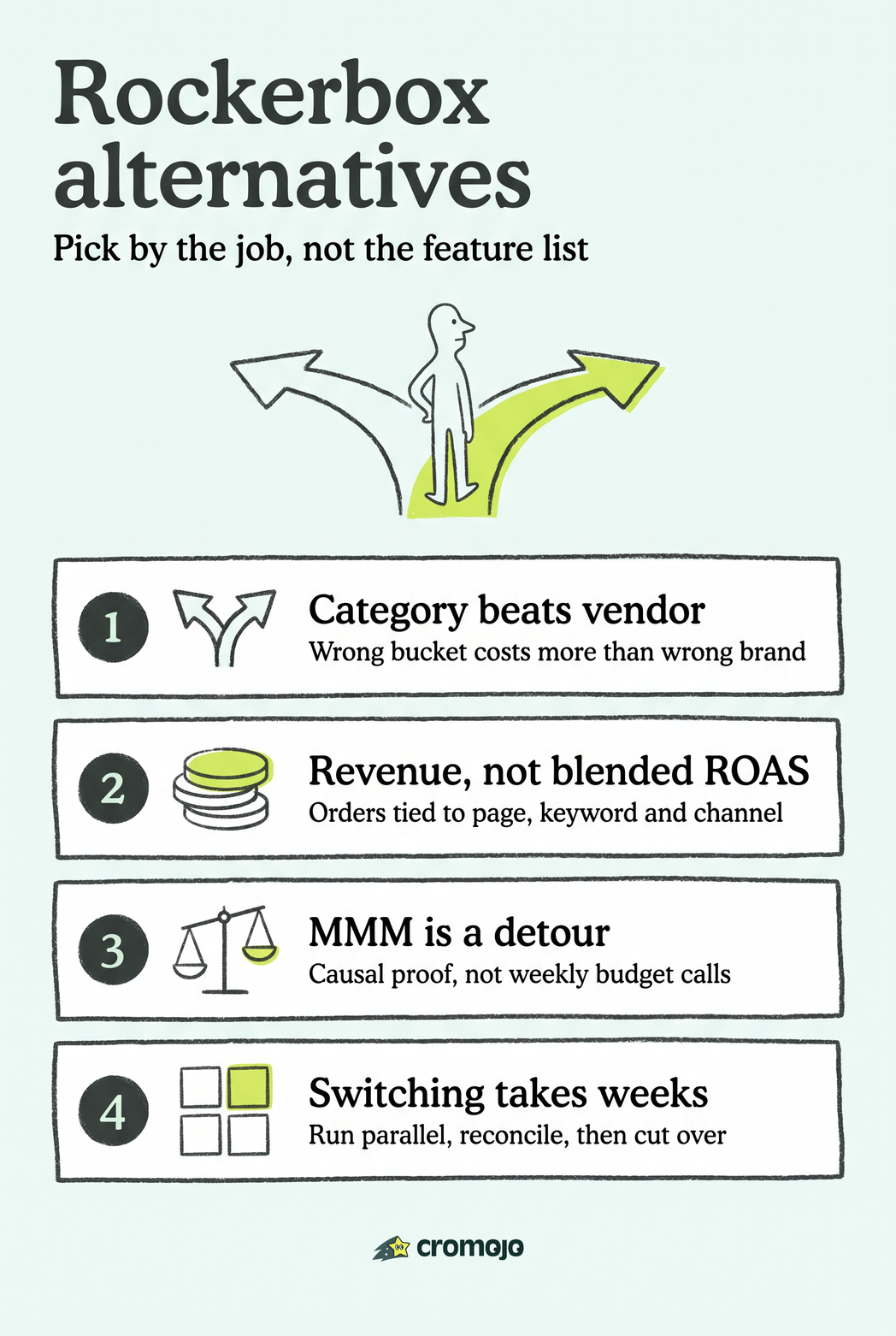
For ecommerce teams that need real-time revenue attribution, Cromojo is the recommended alternative because it ties every page, keyword, and channel to actual sales through cookieless, server-side tracking with fast Shopify and Stripe setup. If your team needs Shopify-native dashboards, choose a lightweight profitability tool; if you need board-level causal proof, look at MMM specialists; if you need signal durability first, start with server-side tracking foundations before anything else.
What Are the Best Rockerbox Alternatives?
Rockerbox built its reputation on stitching together multiple attribution methods for brands with complex, multi-channel budgets. That flexibility comes at a cost: pricing that commonly starts at several thousand dollars a month and climbs into enterprise territory, plus a setup curve that many comparison guides describe as overkill for mid-market teams who just want to know which channel actually drove revenue this week.
The market has split into distinct categories rather than one-size-fits-all replacements. Industry roundups generally group Rockerbox alternatives into six buckets: model-based attribution with optimization, Shopify-native dashboards, MMM and incrementality specialists, server-side tracking foundations, real-time optimization platforms, and CRM-integrated solutions for longer B2B sales cycles. Picking the wrong bucket, not the wrong vendor within it, is the most expensive mistake buyers make.
That is why the comparison below leads with categories, not just brand names. A revenue-first ecommerce team evaluating Cromojo needs a different framework than a B2B SaaS company weighing HubSpot Marketing Hub against Dreamdata. Match the platform to your actual job, and the rest of this guide narrows the field fast.
Quick Comparison: Rockerbox Alternatives by Category
Six dimensions separate these platforms in ways that matter more than a feature checklist: who they serve best, how pricing is structured, which channels they actually cover, whether they support server-side tracking, how much automation they offer, and how transparent their attribution model really is.
Cromojo sits apart from the Shopify-native category because it does not stop at blended ROAS. It attributes actual completed revenue, order by order, back to the page and keyword that produced it, which matters most for teams tired of dashboards that show traffic trends but not which campaign paid the bills.
The MMM and incrementality row deserves a caveat: these tools solve a different problem entirely. They tell you whether a channel caused incremental sales at all, a question multi-touch attribution tools were never designed to answer. Buying one to replace the other is the single most common category mistake in this market.
Rockerbox Alternatives Profiled by Category
Cromojo: revenue-first attribution for ecommerce teams
Cromojo tracks real-time revenue by page, keyword, and channel using a cookieless script that integrates with ecommerce and payment platforms. Instead of estimating conversion value from ad platform pixels, it reconciles against actual completed transactions, so the dashboard reflects orders that closed, not clicks that might have converted.
- Conversion funnels and visitor journey analysis show exactly where buyers drop off before checkout.
- Automated website indexing and SEO health checks catch discoverability problems most attribution tools ignore entirely.
- Setup typically takes a lightweight script install with no engineering sprint required.
- Pricing is tiered, with overage billing rather than a sales-gated quote.
This profile fits ecommerce teams who want attribution married to site health and search visibility in one dashboard, rather than juggling three separate tools to answer "did this page make money."
Shopify-native dashboards
Triple Whale, Polar Analytics, and Glew built their reputations on speed. Market guides consistently note that Shopify-focused platforms offer the fastest time-to-value and the lowest entry price of any category here, often onboarding in a day through native app store integrations.
The trade-off is scope. These tools excel at blended ROAS, profitability dashboards, and inventory-aware reporting, but they generally lack incrementality testing and struggle once a brand adds offline channels, wholesale, or a B2B sales motion alongside the DTC store. Setup timeline: typically 1 to 3 days. Pricing shape: flat monthly SaaS tiers, usually under $500 a month at the entry level.
Server-side tracking foundations
SegmentStream, wetracked.io, and AnyTrack solve a narrower but increasingly urgent problem: getting conversion signal to survive browser privacy restrictions and ad blockers at all. Server-side tagging is more resilient than client-side pixel tracking because it moves the tracking call off the browser and onto a server the business controls, which keeps data intact even when third-party cookies disappear.
These platforms rarely replace an attribution model outright. Most teams pair them with a reporting or optimization layer, using the server-side tool purely to protect the data pipeline underneath. Limitations: minimal built-in modeling or optimization, so budget stays with a data engineer or analyst to configure event schemas correctly. Setup timeline: 2 to 4 weeks depending on how many events need mapping. Pricing shape: usage-based, scaling with event volume.
MMM and incrementality specialists
Measured, Haus, and ROIVENUE answer a fundamentally different question than everything else on this list: not "which channel gets credit" but "did this channel cause any sales that would not have happened anyway." This category is typically sales-gated and enterprise-priced, built for teams running holdout tests and geo experiments at meaningful budget scale.
- Best for: brands spending enough on media that a 5% measurement error costs more than the platform itself.
- Limitations: long onboarding, dependency on internal data science or an outside agency, and reporting cadence measured in weeks, not real time.
- Setup timeline: 8 to 16 or more weeks for a full incrementality program.
- Pricing shape: custom enterprise contracts, rarely published.
Buying into this category to get a quick weekly ROAS number is the wrong move. The value here is causal proof for the board, not day-to-day campaign optimization.
Real-time optimization platforms
Northbeam, Hyros, and Cometly try to close what many teams call the "action gap," the space between having a good report and actually moving budget faster. Automation that closes the reporting-to-action gap matters more to ROI than incremental dashboard features, according to industry commentary on this category, because a perfect attribution model that nobody acts on daily produces no lift at all.

These platforms layer budget recommendations, and in some cases direct execution, on top of multi-touch tracking. The trade-off is trust: automated budget shifts require confidence in a proprietary model, and integration depth with ad platforms varies by vendor. Setup timeline: 2 to 6 weeks depending on ad account complexity. Pricing shape: mid-to-high SaaS tiers, often scaling with ad spend under management.
CRM and B2B attribution
HubSpot Marketing Hub, Dreamdata, and Ruler Analytics matter for businesses where the sale does not close on the website at all. Long B2B sales cycles need attribution tied to CRM stages, calls, and demo requests, not just last-click ad data. Matching the platform to the business's actual sales journey shape rather than a generic feature list is the difference between useful pipeline attribution and a dashboard nobody trusts.
Limitations: weaker at attributing pure top-of-funnel ad exposure compared to ecommerce-focused tools, and CRM data quality becomes the ceiling on accuracy. Setup timeline: 3 to 6 weeks, largely CRM integration work. Pricing shape: tiered by contact volume or deal count.
Lightweight and budget-friendly tools
CallRail, Usermaven, Segmetrics, LeadsRx, Fairing Labs, ThoughtMetric, Wicked Reports, Klar, and Google Analytics 4 round out a category built for teams that need one specific job done cheaply rather than a full measurement stack. GA4 remains the default free baseline nearly every business runs alongside a paid tool, useful for session and event data but weak on revenue-specific attribution without heavy customization. CallRail focuses narrowly on call tracking. The rest offer scaled-down attribution or reporting at a lower price point, generally trading depth of modeling for simplicity and speed of setup.
How Do You Choose the Right Rockerbox Alternative?
Start with the question the platform actually needs to answer, not the feature list on its homepage. Five dimensions decide the shortlist:
- Attribution transparency. Ask whether the vendor will explain, in plain terms, how a touchpoint earns credit. A model you can't audit is a model you can't defend to your CFO.
- Optimization and action capability. Does the platform stop at reporting, or does it recommend or execute budget changes? The gap between reporting and action is where most measurement investments quietly fail to pay off.
- Incrementality and testing. If leadership wants causal proof, not just correlation, you need a platform built for holdout tests or geo experiments, not a multi-touch model wearing a causal-sounding name.
- Channel coverage. Confirm the tool handles every channel you actually spend on, including offline, retail media, or B2B events, before signing anything.
- Support model and pricing transparency. A published pricing page beats a sales call every time you're trying to compare options honestly.
Map those five answers to a simple decision flow: need daily reporting on ecommerce revenue? Go revenue-first or Shopify-native. Need faster action on ad budgets? Look at optimization platforms. Need statistical proof for the board? Go MMM. Need signal that survives privacy changes? Fix server-side tracking first, then layer attribution on top.
When you get on a demo call, ask concrete questions instead of general ones: What integration endpoints do you support for Shopify and Stripe? How is conversion data mapped into your event schema? Do you offer server-side tracking natively, or does that require a separate tool? What does your model actually optimize for, and can you show the math? What's your onboarding timeline in writing, and what SLA backs your support? How do you handle PII during data ingestion?
Watch for red flags: pricing that only appears after a sales call, add-on fees buried until contract signing, no clear conversion sync with your ecommerce platform, or a tool that requires a dedicated analyst just to read its own reports.
Pro Tip: Run any finalist alongside your current setup for at least two to four weeks before cutting over. Vendor demos always look clean; a parallel-run period is the only way to see whether their revenue numbers actually reconcile against your Stripe or Shopify ledger.
Migration Checklist: Switching Measurement Platforms
Before touching anything, audit what you're moving away from. List every tracked event, every revenue attribution field, your CRM mapping if you have one, whether your current setup already supports server-side calls, and how your consent flow handles opt-outs. Skipping this step is the single most common reason migrations run long.
- Stand up the new platform in a sandbox and run it in parallel with your existing tool, not as a replacement yet.
- Reconcile conversions and revenue numbers between old and new systems line by line, not just at the aggregate total.
- If incrementality matters to your team, build a small holdout test plan before cutover, not after.
- Verify event parity: every conversion event firing in the old system should fire, and match in value, in the new one.
- Only cut over once revenue reconciliation is clean for at least one full reporting cycle.
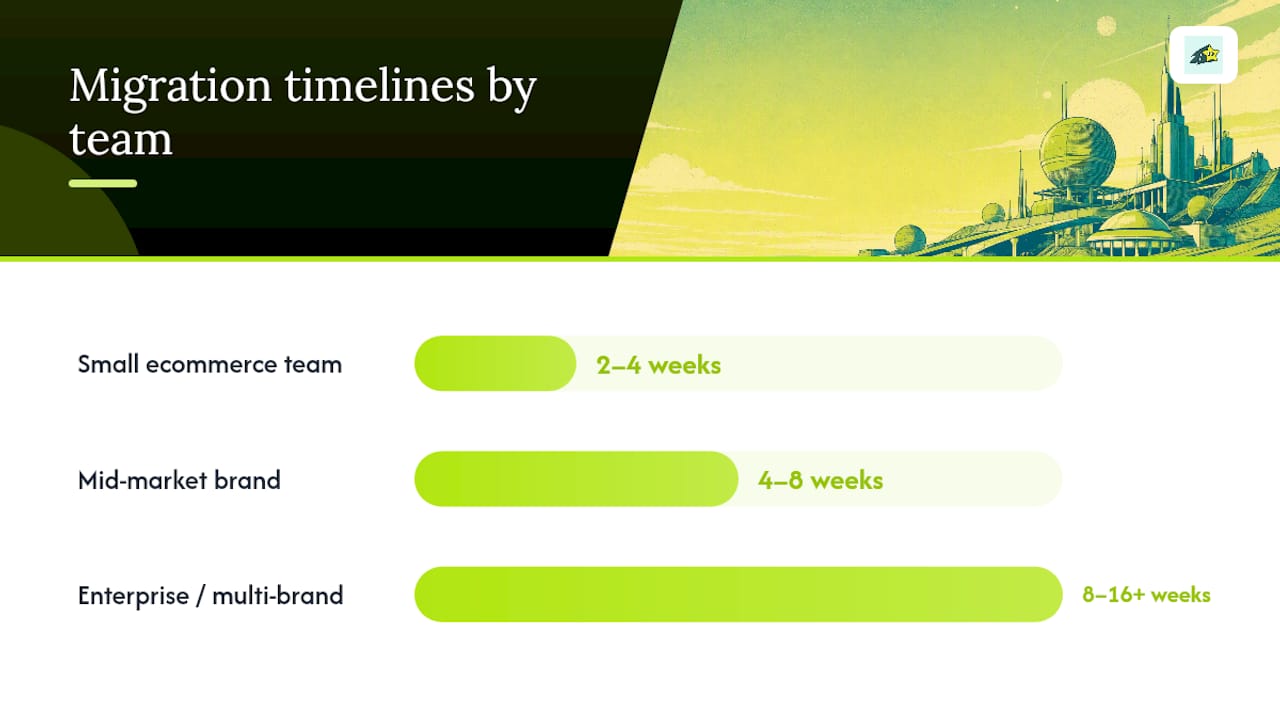
Timelines vary predictably by team size. Small ecommerce teams running a single Shopify store typically need 2 to 4 weeks. Mid-market brands with multiple channels and a CRM in the mix should plan for 4 to 8 weeks. Enterprise teams migrating MMM or multi-brand setups often need 8 to 16 weeks or longer, largely due to data pipeline validation.
A parallel-run period of several weeks with full conversion reconciliation and a small holdout test is the standard safeguard against a bad cutover, since switching cold, without that validation window, is how teams end up with clean-looking dashboards that quietly disagree with their actual bank deposits.
Why Trust This Comparison
This comparison was built by surveying how the market currently sorts Rockerbox alternatives, mapping each category against the six decision axes that actually predict buyer satisfaction, rather than ranking by feature count or marketing claims. Every category placement above traces back to a documented buyer job, not a guess.
Cromojo's placement here rests on stated product facts: real-time revenue attribution tied to pages, keywords, and channels, native integrations with Shopify and Stripe, conversion funnel and visitor journey tracking, and a cookieless, server-side approach to data collection rather than reliance on browser pixels. Cromojo also runs automated site indexing and monitoring, a combination most attribution-only vendors don't attempt.
The editorial perspective in this piece, credited to Philippe, draws on the same category research and buyer-job framework used throughout, not on undisclosed testing claims. Where a specific figure appears, it links to the source that reported it, whether that's pricing data on Rockerbox itself or server-side tracking guidance from privacy infrastructure vendors.
Rockerbox Alternatives for Ecommerce Teams: The Real Priority
The conventional advice in this space treats attribution accuracy as the finish line. It isn't. A perfectly modeled multi-touch report that nobody acts on by Tuesday is worth less than a rougher number that triggers a budget change the same day. That's the real failure mode behind most disappointing measurement rollouts, not bad math, but a reporting layer disconnected from any action.
The second overrated idea is that MMM or incrementality testing is always the "more rigorous" upgrade path from multi-touch attribution. It isn't rigor you need first if your basic revenue-to-channel mapping is still broken. Get accurate, real-time revenue attribution working before you spend months building a causal testing program on top of shaky foundations.
Prioritize signal durability and action speed over model sophistication. A revenue-first, server-side approach tied to your actual Shopify and Stripe data will tell you more, faster, than a beautifully modeled dashboard that takes three weeks to update.
- Philippe
Try Cromojo for Revenue-First Attribution
Cromojo solves the specific job that Shopify-native dashboards and enterprise MMM tools both miss: real-time revenue tied directly to the page, keyword, and channel that produced it, without waiting on sales calls or engineering sprints to get started. Setup runs through a lightweight script with native Shopify and Stripe integrations, cookieless by design, so signal keeps flowing even as browser privacy rules tighten.
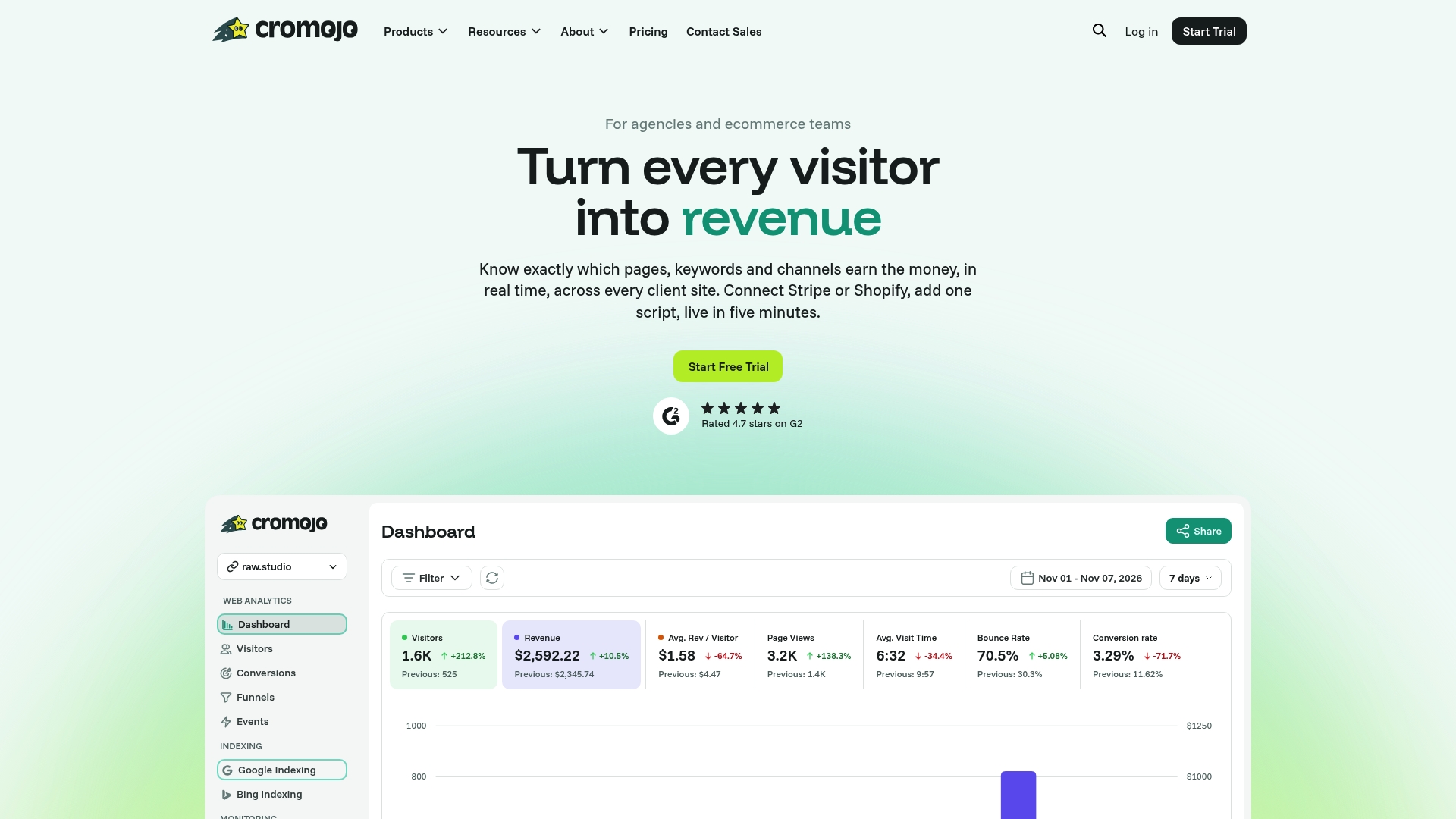
Where Shopify-native tools stop at blended profitability metrics and MMM specialists lock you into sales-gated enterprise contracts, Cromojo gives ecommerce teams a straightforward path to see which pages and campaigns actually drive completed sales, alongside conversion funnels and visitor journey mapping in the same dashboard. If your team is weighing rockerbox alternatives and wants revenue proof instead of another traffic report, start a trial and connect the revenue attribution dashboard to your Shopify store today.
.png)