

.avif)

AI can generate layouts, write headlines, summarize user behavior, and even suggest conversion improvements. But there is one thing it still struggles to understand deeply: human emotion.
That gap matters because people do not convert only because a button is visible or a form is short. They convert when a page makes them feel clear, confident, understood, and ready to act. A website can have traffic, clicks, phone calls, and bookings, but those numbers alone do not explain what a visitor felt before taking action, or why another visitor left without converting.
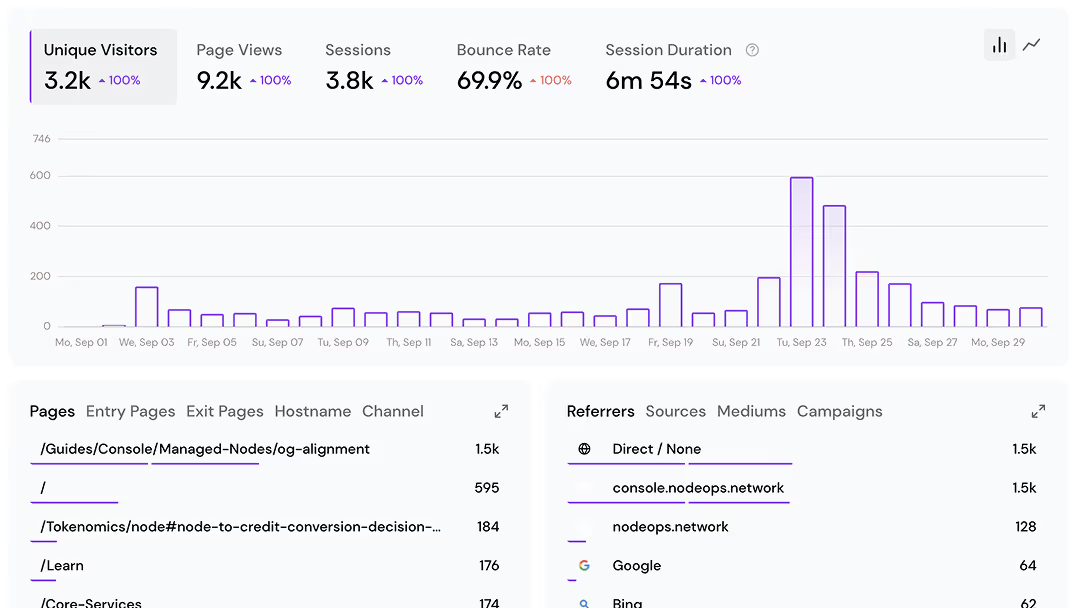
This is where human research and real time analytics become powerful together. Human insight helps teams understand emotion, hesitation, trust, desire, and intent. Real-time behavioral data helps teams see what people actually do when they land on a page. When both are combined, businesses can stop guessing and start designing experiences that convert with more confidence.
For brands competing in a world where AI is reshaping search, content, and customer journeys, this becomes even more important. AI Citation may help build trust at the top of the funnel, especially when AI tools recommend or reference a brand. But once the visitor reaches the website, the final decision still happens in a human moment. That moment needs to be designed carefully.
I. Why Conversion Metrics Alone Are Not Enough
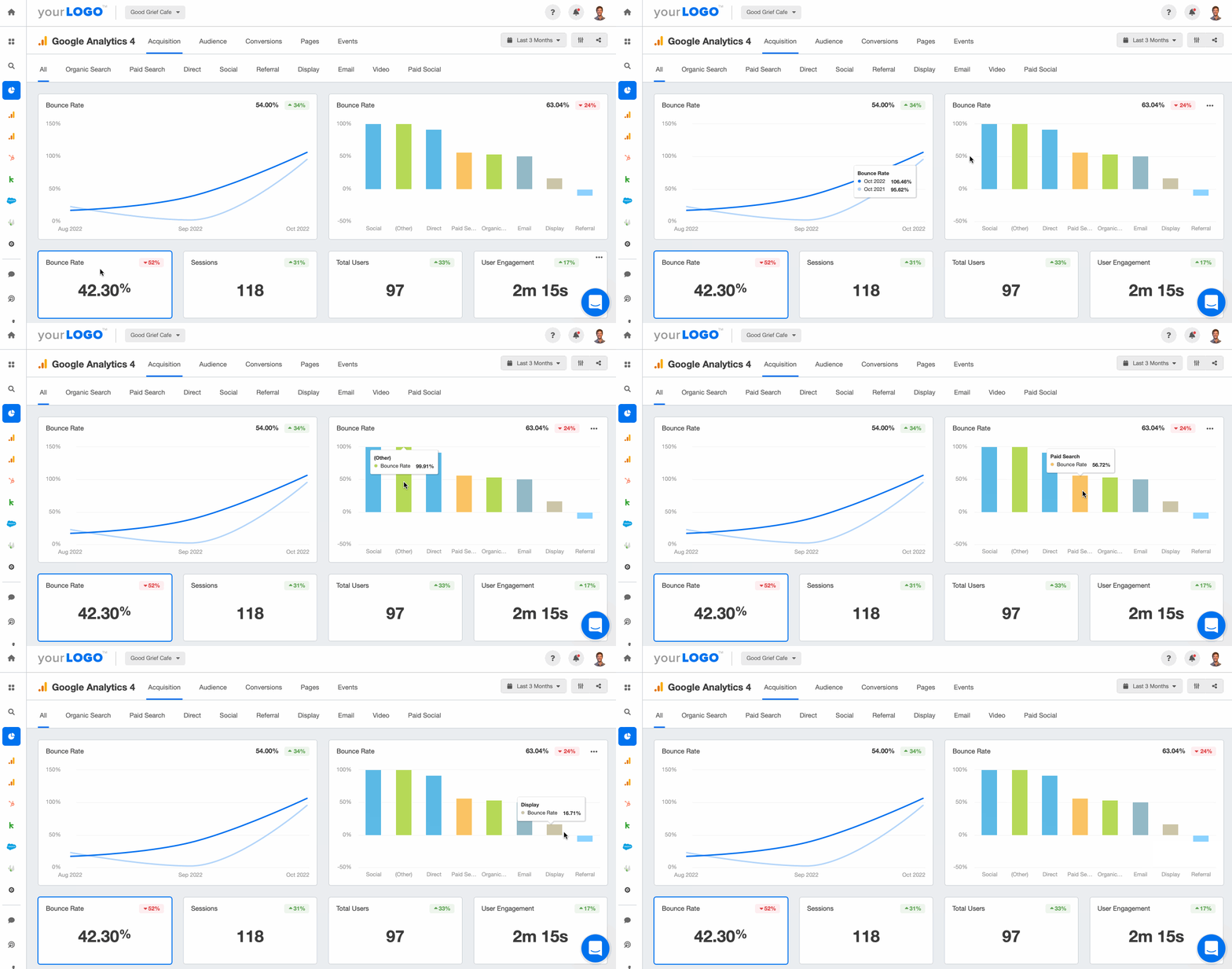
Conversion metrics are useful, but they are not the full story.
Calls, bookings, form submissions, demo requests, and checkout completions tell you that something happened. They show the result. But they rarely explain the reason behind the result. A booking does not tell you whether the user felt excited, reassured, pressured, confused, or simply lucky enough to find the right information quickly. A phone call does not explain whether the website built trust or whether the visitor had to call because the page failed to answer their question.
This is why relying only on conversion actions can create a false sense of clarity. A team may see that a page converts at 3% and assume the page is working. But what about the other 97%? Did they leave because the offer was unclear? Did the page feel too generic? Did the design look polished but emotionally disconnected? Did the testimonials feel too perfect to be believable? Did the visitor fail to find the next step?
Marketers often measure practical actions like phone calls and meeting bookings. Those are important outcomes, but they do not reveal whether the person actually responded to the page emotionally. They do not show what the user felt when they landed, what they noticed first, or what made them hesitate.
This is the missing emotional context.
A conversion rate can tell you where performance is weak. It cannot, by itself, tell you what the visitor needed to feel in order to move forward. That is why teams need to look beyond the final action and examine the journey that came before it.
Cromojo’s article on Conversion Rate Optimization as a growth driver supports this mindset by positioning CRO as a way to reduce guesswork and identify where conversions are being lost. That is the right starting point. But the next layer is emotional: understanding why those losses happen in the first place.
II. Where AI Design Falls Short
AI has made it easier than ever to create landing pages. A founder can ask a tool to generate a homepage, write copy, build sections, suggest CTAs, and produce design variations in minutes. This speed is useful, but it also creates a new problem: sameness.
Many AI-generated pages follow familiar patterns. Hero section, benefit blocks, social proof, features, FAQs, and a call to action. Structurally, they may look correct. Strategically, they may even include best practices. But emotionally, they often feel empty.
That is because AI can imitate what a good landing page looks like, but it does not truly feel what a specific audience feels. It does not naturally understand the small emotional signals that make a brand feel right for a buyer. It may not know when a page feels too polished, too vague, too aggressive, too corporate, too playful, or too generic for the audience being served.
AI can mimic human patterns, but the emotional layer still needs human direction. A landing page built only from AI suggestions may include standard conversion elements, but miss the deeper triggers that make people care.
Those triggers might include a fear that needs to be acknowledged before the solution is introduced, a trust barrier that must be reduced before a user clicks, a desire for status or simplicity, or a visual style that signals, "this brand is for people like me."
This is especially important for newer brands. If a website has only perfect testimonials, exaggerated claims, and a flawless design, it may actually create suspicion. Real people are skeptical. They look for signals that feel human, grounded, and believable. They want proof, but they also want proof that feels natural.
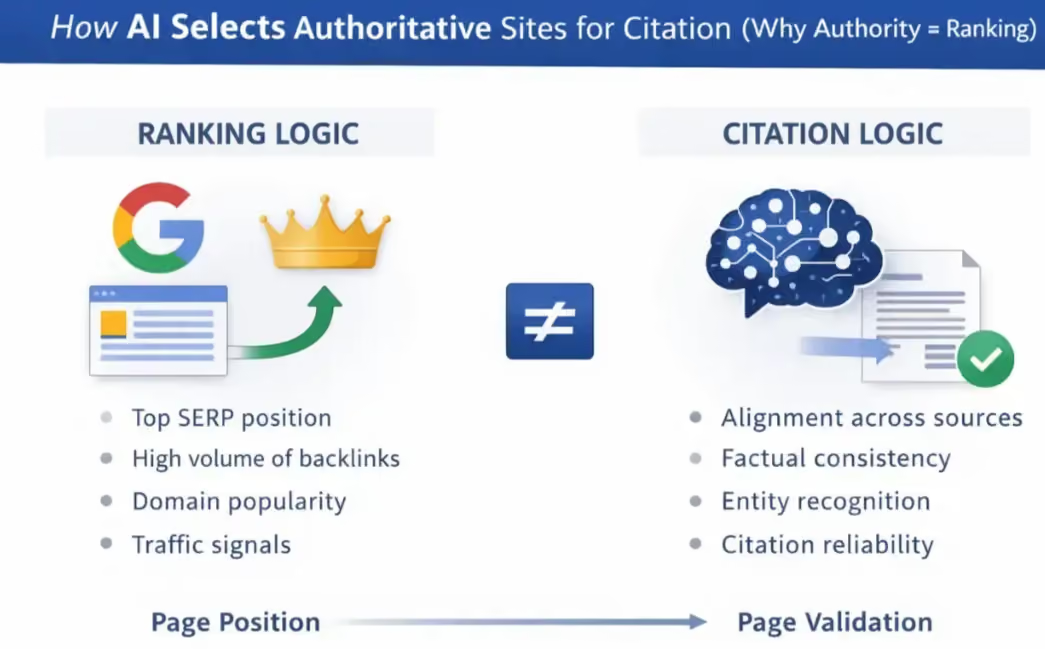
AI Citation can help a brand gain visibility and credibility when AI tools mention or recommend it. But that trust can disappear quickly if the website experience does not match the expectation. If AI sends someone to a brand, the page still needs to carry the emotional weight of the decision.
A generic layout will not do that. A page designed around human motivation has a better chance.
III. Pairing Human Research with Data
The best conversion work does not choose between human research and data. It combines both.
User testing helps teams hear what people say, notice what they misunderstand, and observe the emotional reaction that analytics cannot capture directly. Behavioral analytics shows what users do at scale. Conversion observation connects both layers to business outcomes.

Together, these methods give a more complete picture.
A user testing session might reveal that visitors do not understand the value proposition within the first few seconds. A real time analytics platform might then show that many visitors leave after viewing only the first screen. Conversion observation might show that the users who do scroll deeper are more likely to book a call after seeing proof, pricing, or a specific benefit.
Now the team has a stronger insight. The issue is not simply "low conversion rate." The issue may be that the page is failing to create enough clarity and confidence above the fold.
Asking users how they feel when they land on a page can reveal what standard analytics cannot. Asking "why did you click?" can be useful, but it often produces a rationalized answer. People explain behavior after the fact. But asking "what do you feel this page is about?" or "what impression do you get from this brand?" can reveal the emotional and perceptual layer more clearly.
That is the layer AI often misses.
Cromojo’s real-time web analytics can support this process by helping teams understand traffic sources, user behavior, engagement metrics, and conversion funnels in real time. This kind of live visibility gives teams a practical way to connect user research with actual behavior.
For example, after user testing shows that visitors are confused by the homepage headline, real time analytics can help monitor whether a new headline changes behavior. Are more people scrolling? Are they clicking the primary CTA earlier? Are they moving to product pages? Are they dropping off less often?
Human research gives the why. Behavioral analytics gives the what. Conversion observation shows whether the change matters.
IV. Finding Conversion Friction Earlier
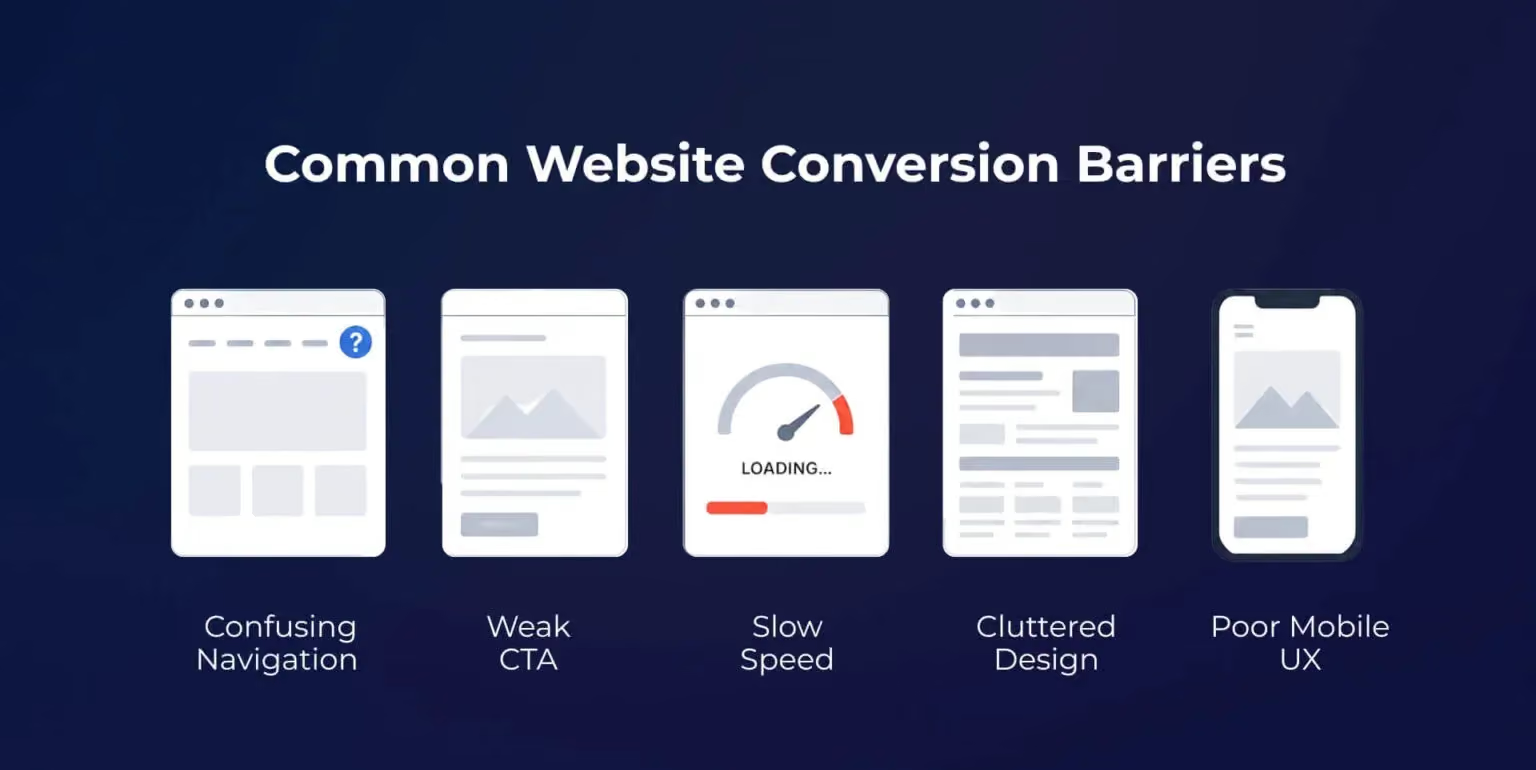
Most teams find conversion problems too late.
They notice fewer leads, lower sales, weaker bookings, or reduced engagement after the damage has already happened. By that point, they may have lost traffic, wasted ad spend, or missed opportunities from visitors who were interested but not convinced.
Real time analytics helps teams spot friction earlier.
Drop-off analysis can reveal where visitors abandon the journey. If users consistently leave on a pricing page, the issue may be unclear packaging, weak value communication, sticker shock, or missing trust signals. If they abandon a form, the form may feel too long, too invasive, or poorly timed. If they leave after the first page, the initial message may not match their intent.
Navigation behavior is another important signal. Visitors often show confusion through movement. They bounce between pages. They return to the same section. They click non-clickable elements. They search for information that should have been obvious. They move from product to FAQ to pricing to homepage without committing.
These patterns are emotional clues hidden inside behavioral data.
Session patterns can also reveal hesitation. For example, a visitor who spends a long time on a page but does not act may not be uninterested. They may be uncertain. They may need stronger proof, clearer next steps, or a better reason to trust the brand. A visitor who moves quickly through several pages may be motivated but unable to find the right path.
This is where conversion friction becomes easier to diagnose.
Cromojo’s article on hidden conversion killers on healthy websites is relevant here because many websites appear fine on the surface while quietly losing revenue through friction, broken journeys, or unnoticed performance issues. A website can look professional and still fail emotionally. It can load correctly and still leave users unsure. It can have testimonials and still lack credibility.
The goal is not just to collect more analytics. The goal is to interpret behavior through a human lens.
If users are dropping off, ask what emotion might be causing the drop-off. Confusion? Distrust? Lack of urgency? Mismatch? Overwhelm? Doubt? If users are navigating in circles, ask what information they expected but could not find. If users are clicking but not converting, ask whether the CTA feels valuable enough, safe enough, or relevant enough.
Real time analytics helps surface the pattern before it becomes a bigger revenue problem.
V. How Cromojo Supports Better Decisions
Better conversion decisions come from seeing both the human and behavioral sides of the journey.
.avif)
Cromojo supports this by helping businesses move beyond static reports and delayed assumptions. With real-time behavioral analytics, teams can see how visitors engage with a site as activity happens. This makes it easier to understand which pages drive action, which journeys create friction, and which moments need improvement.
That matters because website decisions are often made from opinions. A founder likes one headline. A designer prefers one layout. A marketer wants more urgency. A sales team wants more proof. Everyone has a view, but without behavioral data, those views become a debate.
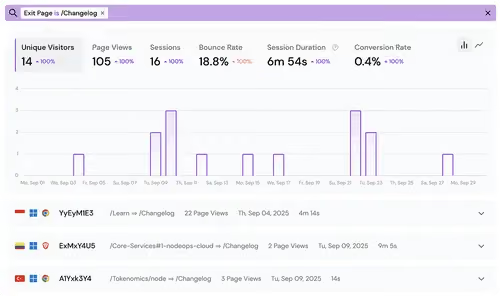
Real time analytics changes the conversation.
Instead of asking, "which version do we like?" teams can ask, "which version helps users move with more clarity and confidence?" Instead of asking, "does this page look good?" they can ask, "are people finding what they need, engaging with the right sections, and moving toward conversion?"
Cromojo’s conversion-focused insights help teams prioritize what to fix. Not every issue deserves immediate attention. A small design imperfection may not matter if users are still moving through the funnel. But a confusing section near a key decision point can cost real revenue. A broken journey, unclear CTA, or poorly performing page can quietly weaken the entire funnel.
The article What Monitoring Data Can Tell You About Conversion Drop-Off connects well with this idea because drop-off is not always a marketing issue. Sometimes it is technical. Sometimes it is behavioral. Sometimes it is emotional. The best teams look at all three.
This is especially important in the AI era.
As AI search and AI Citation influence discovery, more visitors may arrive with some level of pre-built trust. They may have seen a brand cited, recommended, compared, or summarized before ever clicking through. But that does not mean the website can be ignored. The website becomes the place where borrowed trust either turns into action or disappears.
That is why clarity, credibility, confidence, and convenience matter. These are not just design principles. They are decision principles. Visitors need to understand the offer quickly. They need to believe the brand can deliver. They need to feel safe taking the next step. They need the path to action to feel simple.
AI can help generate ideas, but human insight must guide the emotional direction. Real-time analytics must validate whether the experience is actually working.
Conclusion: Data Shows the Pattern, Emotion Explains the Decision
Conversion is not only a numbers problem. It is a human decision problem.
Metrics show what happened. Real time analytics shows what is happening now. But emotion explains why people hesitate, trust, click, leave, compare, book, or buy.
The strongest digital experiences are built at the intersection of both. Human research uncovers feelings, doubts, motivations, and expectations. Behavioral analytics reveals patterns, drop-offs, and opportunities. Conversion insights turn those signals into better decisions.
AI will continue to shape how people discover brands. AI Citation will become an increasingly important trust signal as users rely on AI tools to recommend products, agencies, services, and solutions. But once users arrive on a website, the final decision still belongs to a human.
That is the opportunity.
Brands that rely only on AI-generated layouts will look like everyone else. Brands that rely only on conversion metrics will miss the emotional reasons behind performance. But brands that combine human emotional understanding with Cromojo’s real time analytics can design experiences that feel clearer, more credible, and more conversion-ready.
In the end, the future of conversion is not human versus AI. It is human emotion guided by better data.
Ready to see where users are engaging, hesitating, and dropping off on your website? Explore Cromojo’s real-time web analytics to uncover live behavioral insights and make smarter conversion decisions.